Creating a more humane world for animals often involves rallying support for laws that will protect animals from harm. But it also involves sounding the alarm when efforts to weaken legal protections for animals emerge. Recently, a petition surfaced in front of the California Fish and Game Commission that, if successful, would have allowed private individuals to keep some species of primates as pets. Our wildlife team knows that the wild animal pet trade causes immense suffering on a massive scale, so they took immediate action. They worked quickly to organize opposition to this proposal—and they won. Here, Gabe Wigtil, program director for wildlife trafficking and trade for Humane World for Animals, tells the story of this victory and why it is so important to keep wild animals wild.
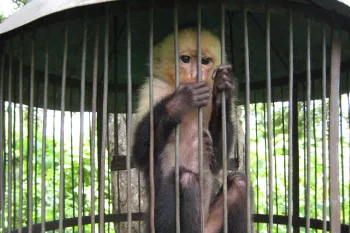
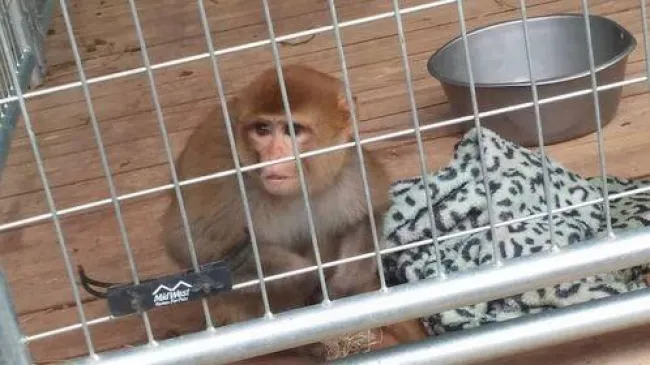
On an August Sunday several years ago, a woman getting pizza with her children at their local pizzeria in Beaumont, California stepped outside to make a phone call. She didn’t get a chance to finish her meal. Outside, the woman’s afternoon took a dangerous and unexpected turn when she encountered a stranger with three "pet" primates in tow. When one—a capuchin monkey—escaped, the woman was bitten and had to be treated at a hospital, where she not only received stitches, but also shots to prevent rabies. The three “pets” were confiscated by the state wildlife agency.
This is just one of hundreds of incidents across the U.S. that our team tracks that illustrate what many of us may understand as quite obvious—wild animals are not pets, and when we force them to live in such unnatural circumstances that thwart all of their natural instincts, they are prone to stress and fear and can and do lash out—putting our communities in danger.
I regularly send summaries and tallies of these types of incidents to our state directors and other colleagues who talk with policymakers about the dangers and welfare concerns associated with keeping wild animals as pets, but revisiting the original reporting of the Beaumont incident is a sobering reminder that these incidents leave lasting consequences. They inflict real harm on the people involved and underscore the suffering of wild animals confined to lives that bear little resemblance to the rich and complex existence they would experience in the wild. Unfortunately, these types of incidents seem to show up in our inboxes every week.
A new petition to keep primates as pets surfaced in California this year
You might think that having a commonsense law that prevents individuals from keeping primates as pets would be safe once on the books. But earlier this summer, a proposal surfaced to undermine these longstanding protections in California. This proposal, a petition to the California Fish and Game Commission, asked the state to allow individuals to keep some primate species, including marmosets, capuchins, macaques and spider monkeys, as pets.
When we heard about this petition, we responded in the same way we do whenever existing wild animal protections are at risk. We organized quickly. We built a plan with our state director to defend the regulations. We activated our members and supporters in the state—over 4,000 responded to our action alert opposing the change—alerted allied organizations and other interested parties, and lobbied vigorously against the change.
Because of this organized response and sound reasoning as to why this petition was dangerous, the California Fish and Game Commission denied the petition. In saying “no,” California upheld the commonsense, longstanding safeguards protecting public safety and preventing harm to animals.
More than 380 incidents nationwide underscore why there’s no such thing as a ‘pet’ monkey
Primates are highly intelligent, social, wild animals and they do not belong in private homes. Becoming strong, territorial, and difficult to control as they mature, primates can bite and escape, burdening law enforcement agencies, animal control officers, veterinarians, sanctuaries and others who respond to keep our communities safe.
Like the Beaumont incident, dangerous and troubling incidents with pet primates occur far too often across the United States. We’ve catalogued more than 380 dangerous incidents since 1990, which is undoubtedly a significant undercount because not every incident is reported or publicized. These incidents have resulted in injuries to 273 people, including 89 children, and the deaths of more than 40 primates.
Beyond physical injuries, primates can also spread viral, bacterial, fungal and parasitic infections that pose serious health risks to humans, such as tuberculosis, herpes B and simian immunodeficiency virus.
Recent cases, including several in California, also show how the primate pet trade intersects with the illegal wildlife trade and other criminal activity. In Vallejo, authorities seized an illegally possessed spider monkey from a home where rattlesnakes and methamphetamines were also found. In Madera County, California Highway Patrol officers confiscated a six-month-old spider monkey during a traffic stop; the driver was arrested for several charges, including possession of drugs for sale. In Calexico, U.S. Fish and Wildlife seized three infant Mexican spider monkeys who were being smuggled through a border port of entry.
The dangers facing primate species all over the world
Many primate species face serious threats like habitat loss in their native habitats. Over 60% of primate species are threatened with extinction, a crisis that is being seriously exacerbated by wildlife trafficking for the pet trade. That’s why, for primates and many other wildlife species, we support the rescue, rehabilitation and sanctuary care for wildlife trafficking survivors in their native range countries, including in Guatemala, Costa Rica and South Africa, to name a few of the nations in which we are active.
The goal is not to rescue a never-ending stream of former pets and place them into sanctuary settings but to prevent primates from being bred, traded and confined as pets in the first place.
The trade systems that harm animals taken from the wild also leave lasting marks on animals who end up in U.S. sanctuaries. I’ve visited our Black Beauty Ranch in Texas, where marmosets Cali and George, rescued from the wild animal pet trade, now live together in an environment where they can climb, leap, forage, groom one another and build the kind of companionship that marmosets need. I’m grateful to know they and other primates previously kept as pets will have lifelong care and a natural environment in which to live at our Black Beauty Ranch, but it should not obscure the larger problem that puts them and countless other animals at risk. The goal is not to rescue a never-ending stream of former pets and place them into sanctuary settings but to prevent primates from being bred, traded and confined as pets in the first place.
Jo Pauly
That prevention work includes confronting the images and encounters that make people want to own wild animals as pets. While the number of primates kept as pets in the U.S. is unknown, there is reason to fear that increasing demand is being driven by social media, entertainment portrayals and zoos and other facilities selling public encounters with primates or other wild animals that present them as cute, cuddly or manageable playthings.
Public contact encounters with wild animals do not enhance conservation efforts or meaningfully raise awareness about the plight of imperiled species. Instead, they can undermine conservation by leading people to falsely believe these animals are not threatened in the wild; inspire people to seek out wild animals as pets; and create the mistaken impression that captive wild animals are not physically dangerous or do not pose risks to human health, while discounting the serious stress and other welfare risks to the animal.
How you can help protect primates from the pet trade
Individuals can help by refusing to buy or keep primates as pets, avoiding attractions that offer hands-on contact or photo opportunities with wild animals, reporting suspected illegal possession or trafficking to appropriate authorities, and only sharing content that respects animals as wild beings—not props, performers or accessories.
But individual choices must be matched by stronger laws. A federal bill, the Captive Primate Safety Act (H.R. 3199/S.1594), would address this problem by prohibiting private ownership of nonhuman primates as pets throughout the U.S. The National Sheriffs’ Association supports the Captive Primate Safety Act because the association “recognizes that the private ownership of non-human primates in America is a serious public safety problem.”
Photo by Martin Shields/Alamy/
Help protect primates!
Tell your U.S. legislator to support the Captive Primate Safety Act and protect primates from cruelty.
The California State Legislature had an opportunity earlier this year to address the practice of allowing public contact with primates in captive settings, but unfortunately, failed to move the bill forward. So, while we celebrate the California Fish and Game Commission’s rejection of the misguided petition and we are grateful to the thousands of Californians and allied organizations who responded rapidly to our call to action, we know more work remains ahead.
As long as primates can be bred, traded and kept in private homes, they will suffer, communities will face preventable health and safety risks and responders will be asked to shoulder the consequences. California held the line. Now we need Congress, and every state that still allows this trade, to do the same.
Gabe Wigtil is program director for wildlife trafficking and trade at Humane World for Animals.