Tucked away inside a tropical rainforest in Alajuela, Costa Rica, Rescate Wildlife Rescue Center receives more than 3,000 wild animals every year, including those who have been injured, trafficked, orphaned or surrendered. Some are victims of the wildlife trade while others have experienced the effects of habitat loss—traffic accidents, negative interactions with humans, or attacks from dogs and other predators.
Since 1989, Rescate’s mission has been to help heal these animals in their rehabilitation center and return them to the wild, where they belong. But not every animal is able to return. If they’re too dependent on humans for survival or have permanent medical conditions, they will spend the rest of their lives safe in Rescate’s sanctuary, located on the same property.
Humane World for Animals Costa Rica has partnered with Rescate since the early 2000s to provide grants, collaborate with law enforcement, promote humane environmental education and ensure the best possible care. And while our team partners with local authorities to strengthen legal frameworks and build capacity for wildlife, ongoing habitat destruction still puts animals at risk—even as progress is made.
That’s where Rescate comes in. Every animal here has a story, and each represents the best of what humans can do when conservation is met with compassion.
Monkeys
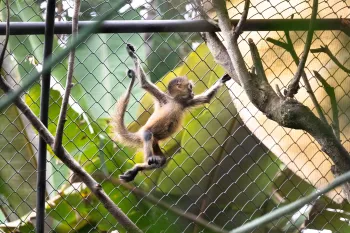
Four species of monkeys are native to Costa Rica: white-faced capuchin monkeys, Central American squirrel monkeys, mantled howler monkeys and Geoffroy’s spider monkeys. While they all face human and environmental threats, spider monkeys are the most vulnerable and endangered of these species.
Like other arboreal species in Costa Rica, monkeys are often left with no choice but to use power lines to travel through areas where trees have been cut down. According to Sustainable Electrification Group in Costa Rica, more than 6,000 cases of wildlife electrocutions are reported every year in the country due to human development and forest fragmentation.
Meredith Lee/Humane World for Animals
As social animals, monkeys form close bonds in their troops. When one monkey gets electrocuted, others often come to help and get electrocuted themselves. Dr. Isabel Hagnauer, Rescate veterinarian, recalls the first monkeys she received at the rehab center: Four from the same family had been electrocuted and injured.
Meredith Lee/Humane World for Animals
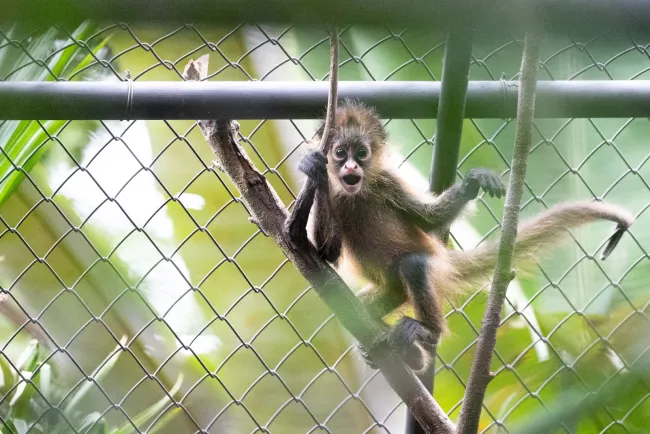
Unlike other monkeys, spider monkeys eat a low-calorie diet of fruit, leaves and flowers, so it takes them years to mature. Their rehab is a longer process than most other wild animals, getting released when they’re 4 to 6 years old to increase their chances of surviving. At Rescate, the current troop preparing for release includes spider monkeys of various ages so they can learn from and protect each other once they’re in the wild.
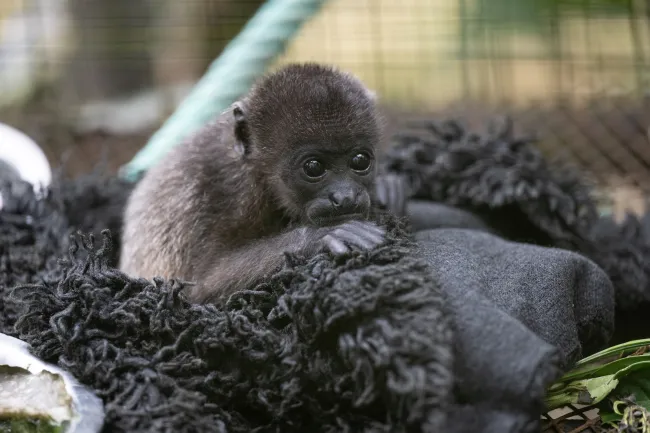
The two newest orphaned babies were each found next to the bodies of their dead mothers. The team is working to get an older female spider monkey who arrived at the rescue center with her own 3-year-old, to adopt and teach them so they can be released with the larger group.
Meredith Lee/Humane World for Animals
Sloths
A female two-toed sloth was brought to Rescate’s rehab center in 2019 after being electrocuted. One of her arms had to be partially amputated due to the injuries she sustained. The team helped her heal and released her back to the wild.
One year after she was released, this female sloth returned to the sanctuary’s surrounding land on her own through wildlife corridors meant to connect the fragmented rainforest for arboreal species. She gave birth to her first cub on Rescate property, raised and weaned him before they traveled back into the wild together. Since then, she has returned every four to six months to give birth—a total of six cubs so far. Each time, she chooses to raise her young on Rescate’s land.
This is an encouraging sign for the team that the animals they rehabilitate and release are not only surviving, but reproducing and thriving.
Like many wild animals who have been popularized on social media, there’s global demand to keep sloths captive for tourism encounters or as pets. In 2024, a Humane World for Animals undercover investigation revealed the poor conditions and physical abuse of eight captive sloths at a facility in Long Island, New York. Disturbing footage captured wild animals in deplorable conditions, including two sloths fighting one another due to overly crowded and stressful conditions.
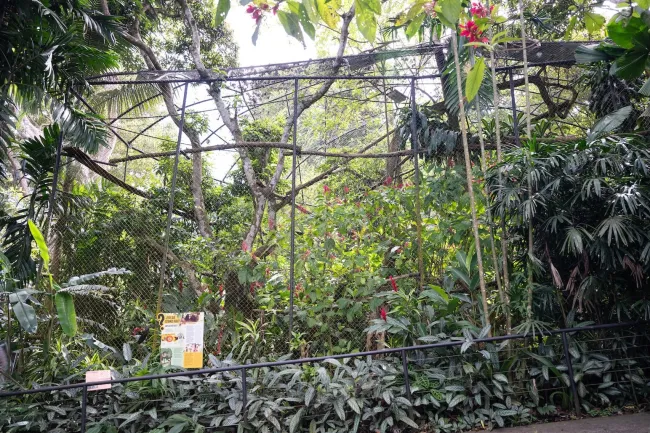
At Rescate’s sanctuary facility, sloths previously kept in captivity or permanently injured live the rest of their days in safety. With densely planted foliage that gives the sloths lots of options to retreat and stay camouflaged, their enclosures are designed to prioritize the animals’ well-being, not visitors’ entertainment.
Meredith Lee/Humane World for Animals
Macaws
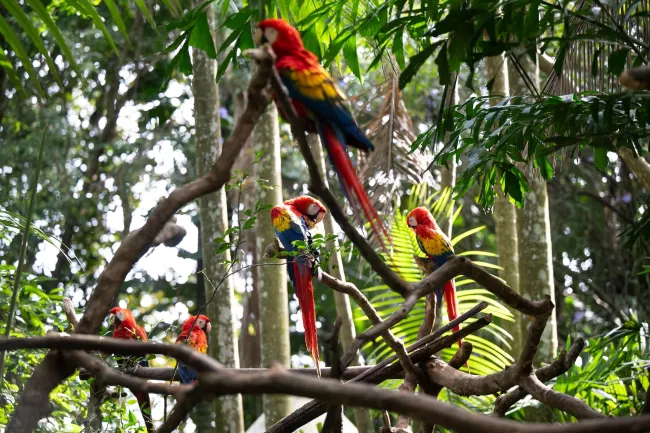
When you first walk into Rescate, you are welcomed by a kaleidoscope of colors—the macaws. All were kept as pets before arriving at the rescue center, and many of them have been injured and can no longer fly. Their sanctuary enclosure has plenty of enrichment options lovingly crafted by the care team and wood perches at many different levels to give them the ability to climb and move around as freely as they’d like.
Scarlet and great green macaws, native to Costa Rica, are not the only macaw species residing at Rescate. Hybrid macaws also find sanctuary here. These hybrid species are often sterile and have genetic issues due to being crossbred by humans to create new feather color variations.
In the wild, macaws play a crucial role in promoting plant diversity and protecting the rainforest ecosystem by dispersing seeds. Capturing macaws from the wild for the pet trade harms their populations and keeping them in captivity can lead to physical and behavioral issues due to stress or boredom without proper enrichment.
Several macaw species are endangered across Central America due to the illegal pet trade, but our partners Rescate in Costa Rica and ARCAS in Guatemala both work to protect this magnificent species in their natural habitat.
Meredith Lee/Humane World for Animals
Jaguars
Jaguars are critical to the health of Costa Rica’s rainforests and are considered keystone species, meaning the whole ecosystem can collapse without them. After decades of conservation efforts, the country is seeing a rise in healthy populations in certain areas. By monitoring their behaviors and how they relate to other species, conservationists can take meaningful actions that ensure their survival and success in the wild.
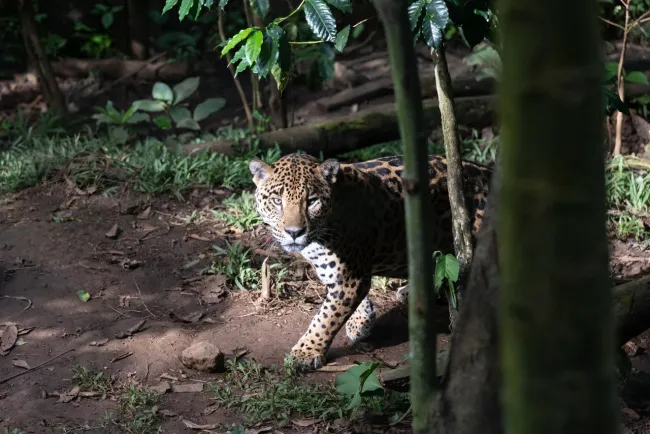
Rescate is home to several jaguars, once kept in captivity as pets or in commercial facilities with poor welfare and health conditions, who are unable to survive in the wild on their own. One of those permanent sanctuary residents is Sixto.
Sixto was discovered in someone’s backyard, where he was kept as a pet inside a small cement cage. He was in poor condition when he first arrived at the Rescue Center: Having been confined in tight quarters and lacking proper nutrition, he developed several bone deformities. This, coupled with his dependence on humans and inability to hunt, made it impossible for him to return to the wild.
Despite his past, he has found a long-term home at Rescate’s sanctuary, where he has a large enclosure with many platforms, trees, shelters and even a big pool to swim in.
Meredith Lee/Humane World for Animals
Capybaras
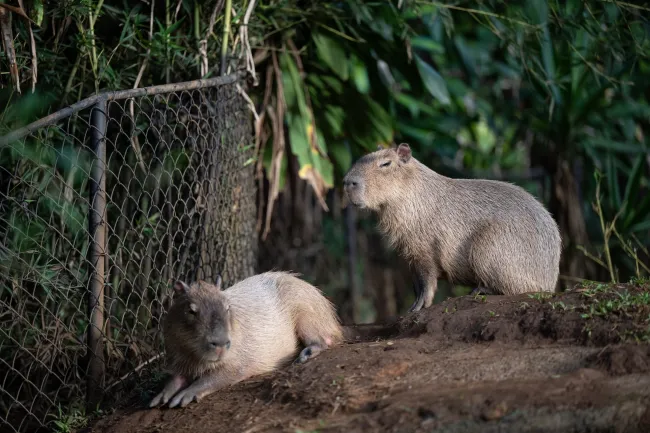
In May 2025, local authorities stopped a suspicious vehicle at a security checkpoint. They discovered the illegal trafficking of guns, drugs and five severely underweight capybaras inside a plastic box.
The capybaras were brought to Rescate for medical attention, and after receiving full exams, staff veterinarians discovered their digestive systems were completely empty. They hadn’t been fed in days. One of the capybaras didn’t survive because of the conditions they endured.
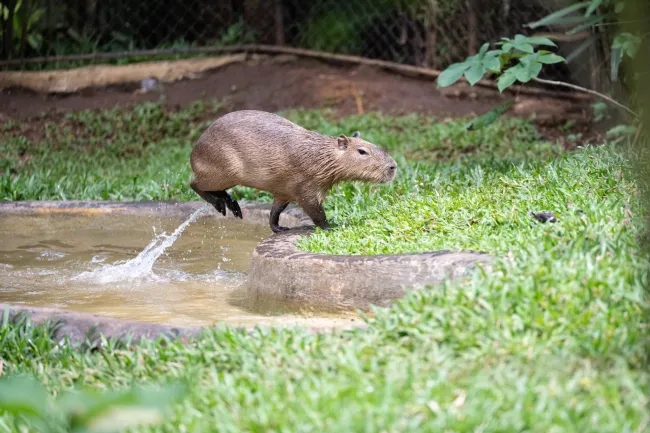
Capybaras are native to countries in South America and not to Costa Rica, so they are not eligible to be released into the Costa Rican rainforest and are now permanent residents at Rescate’s sanctuary. The increasing popularity of seeing wild animals up close or even keeping them as pets fuels the illegal wildlife trade—and animals like these suffer because of it.
Today, the rescued capybaras have gained a healthy weight and learned to trust their caregivers. They spend their days safe in sanctuary—chasing each other, splashing in their pool and getting curious about the iguanas that wander into their enclosure.
Meredith Lee/Humane World for Animals
How you can help
Not all wild animals who have been victims of the illegal pet trade and wildlife trafficking are as lucky as those who end up at Rescate. But you can make a difference! Talk to friends and family about how wild animals suffer in facilities that profit from animal encounters, and how their exploitation harms populations in the wild.
And only visit legitimate sanctuaries that do not buy, breed or sell animals or allow human-wildlife encounters, that meet the animals’ physical, behavioral and social needs, and that focus on compassionate conservation. By speaking up and making informed choices, we can help keep wildlife where they belong—in the wild.
Related stories
Meredith Lee/Humane World for Animals
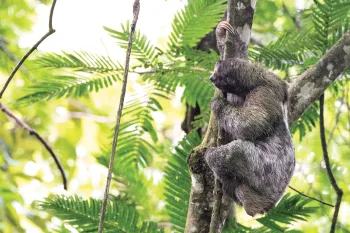
The demand for close encounters with sloths is threatening their population in the wild. Learn how ethical tourism and rescue efforts are helping protect wild populations.
Meredith Lee/Humane World for Animals
Follow pygmy owls, opossums, a northern tamandua and more as our team in Central America rescues and helps wild animals return to the wild.
Sofía Herra/Humane World for Animals
Humane World for Animals continues crucial work in Costa Rica. Learn how our local team improves the lives of animals, protects biodiversity and helps people, pets and wildlife coexist.