Editor's note: As of Aug. 1, 2026, the U.S. Fish and Wildlife Service has not released a decision on listing pangolins under the Endangered Species Act.
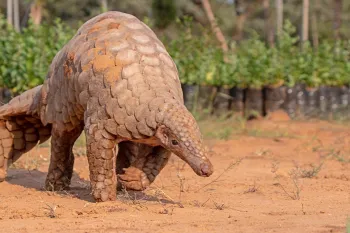
In late 2020, South African authorities found an odd pinecone-shaped animal in the trunk of a car. The animal was a pangolin, who are believed to be the most trafficked mammals in the world. The two people in the vehicle were transporting her to sell into the illegal wildlife trade, which is a tragic and common occurrence for this shy mammal. They were arrested. The pangolin, meanwhile, was brought to a veterinary clinic where she began her long journey back to the wild.
The nonprofit organization African Pangolin Working Group has been leading efforts to reintroduce rescued pangolins into natural habitats since 2014. Over 50 pangolins have been reintroduced so far. Humane World for Animals joined the project in 2017.
The tiny pangolin spent a month recovering at the veterinary clinic after being rescued from the wildlife trade. “Like all trafficked pangolins, [she] was emaciated, dehydrated and terrified,” says Nicci Wright, co-chair of the African Pangolin Working Group and a wildlife rehabilitation specialist.
After recovering, the pangolin, named Bhuti by rescuers, was brought to the South African province KwaZulu-Natal. Temminck’s pangolins like Bhuti have been locally extinct here for around four decades. The coalition of nonprofits has been working to bring the species back to the region.
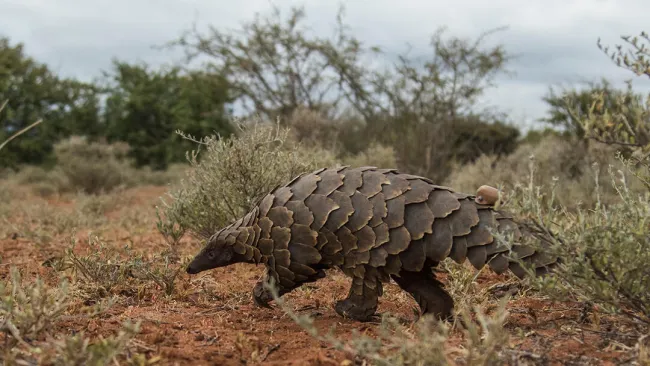
Bhuti was fitted with telemetry tags so rescuers could track her movements. She then spent time exploring her new environment under the watchful eye of a rescuer before she was fully released into the wild. Since going off on her own, Bhuti has thrived, Wright says. She has birthed multiple pups, and in December 2025, one of her children even had a pup of her own.
Having a second-generation offspring born in the wild is a major signifier that the reintroduction program is working, Wright says. Pangolins could certainly use the help.
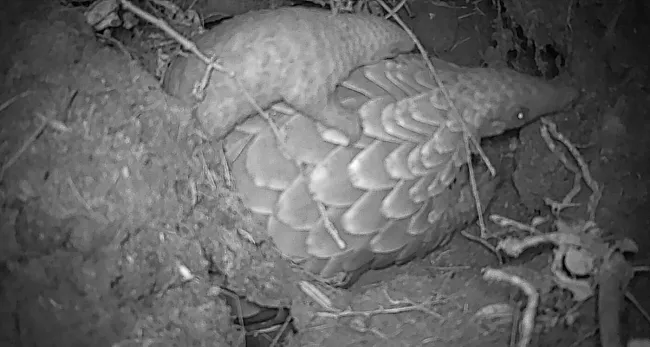
Phinda Private Game Reserve and Munyawana Conservancy
Inside the pangolin trade
Between 2016 and 2024, trafficked parts and products equal to an estimated 550,000 individual pangolins were seized across the globe. Many more pangolins likely went through the wildlife trade undetected.
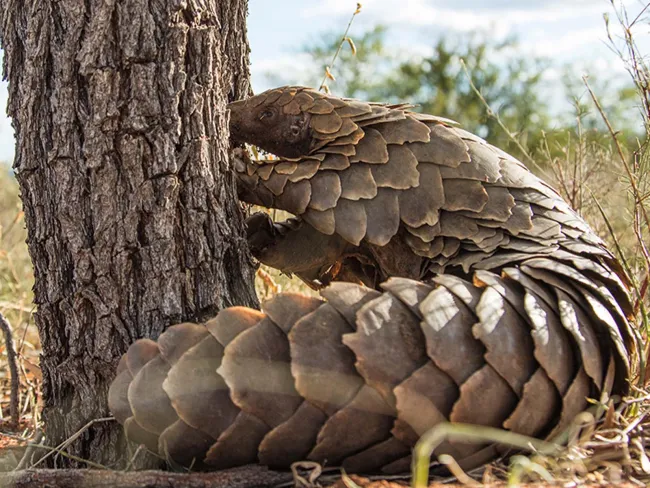
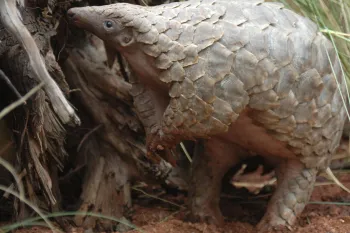
In addition to being the world’s most trafficked mammal, pangolins are also the only mammals covered in scales. This feature, which has protected the shy and slow-moving animals from predators for millions of years , is now the reason people are killing them in massive numbers.
Pangolin scales, made of the same keratin in human fingernails, are used in traditional medicine to treat ailments ranging from lactation difficulties to arthritis. The scales, often ground into a powder, have no proven medicinal value. People also eat pangolin meat in parts of Africa and Asia and historically made leather products from their skin in places like the United States.
Natural History Media/Alamy Stock Photo
Help protect pangolins
Small and gentle pangolins are the most trafficked mammal in the world. Despite this, the majority of pangolin species are not protected.
Today, all eight pangolin species are at risk of extinction. Pangolin populations in Asia are particularly struggling. Three of the four Asian species are now assessed as critically endangered under the IUCN Red List, the world’s most comprehensive source on the global extinction risk status of animals; the fourth is endangered. As Asian pangolin populations have plummeted, the trade has recently shifted to African pangolins. Two of the four African species, the giant ground pangolin and white-bellied pangolin, are now considered endangered under the IUCN Red List.
These timid animals are an easy target for poachers. Pangolins move slowly and curl into a ball when they feel threatened, enabling poachers to quickly snatch them from the wild. Because of their poor eyesight, they often walk into traps and snares too.
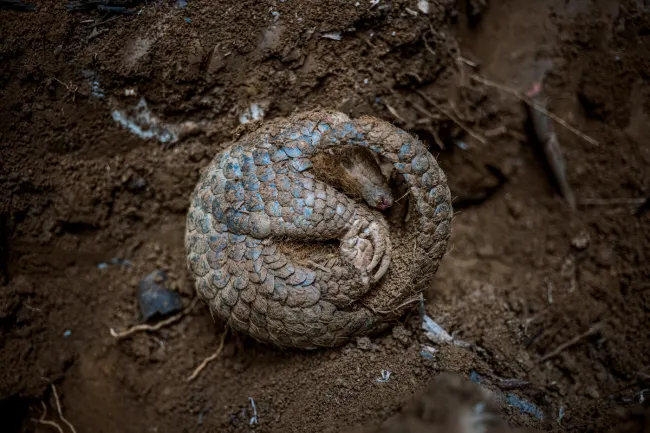
Kindred Guardians Project/We Animals
After they are captured from the wild, pangolins and their body parts enter the illegal wildlife trade. Even when live pangolins are trafficked, many of them likely die in transit, says Wright. Trafficked pangolins are rarely given food or water, she says, sometimes for weeks on end. The animals also become susceptible to other health issues because they are highly stressed.
Pangolins and their parts are often trafficked long distances across country borders before making it to their final destination, including to the United States. The most recent publicly available data shows that U.S. border officials seized 76 shipments of pangolin parts between 2016 and 2020.
Pangolin parts are usually trafficked in massive quantities, leading experts to believe organized crime networks are behind much of the trade.
Over a decade, government officials around the world seized more than 370 metric tons of pangolin scales—almost the weight of two Statues of Liberty.
Humane World for Animals recognized the scale of this threat over a decade ago. In 2015, we worked with a coalition of nonprofits to petition the U.S. federal government to list seven species of pangolins under the Endangered Species Act. The eighth pangolin species, the Temminck’s ground pangolin, was listed as endangered back in 1976.
In 2016, Humane World staffers attended the CITES (Convention on International Trade in Endangered Species of Wild Fauna and Flora) conference, where government officials from around the world vote on international trade rules for wild animals and plants. At this meeting, we worked to secure the support of country governments who voted almost in consensus to ban the international commercial trade of all pangolin species.
These protections were a major win but federal protection under U.S. law is still urgently needed, says Drew Robertson, regulatory program manager at Humane World Action Fund.
Francois Meyer/African Pangolin Working Group
How the Endangered Species Act protects wildlife
The ESA was passed in 1973 to protect species at risk of extinction. Under the Act, species are listed as either threatened (likely to become endangered in the foreseeable future) or endangered (currently at risk of extinction).
Many of the protections under the law regulate how we treat animals and their habitats within U.S. borders. Still, the ESA is also an important tool for conserving species around the world. If pangolins are listed as “endangered” under the ESA, the commercial import and interstate sale of pangolin parts would be banned in the United States. It would also open up additional funding for combatting pangolin trafficking.
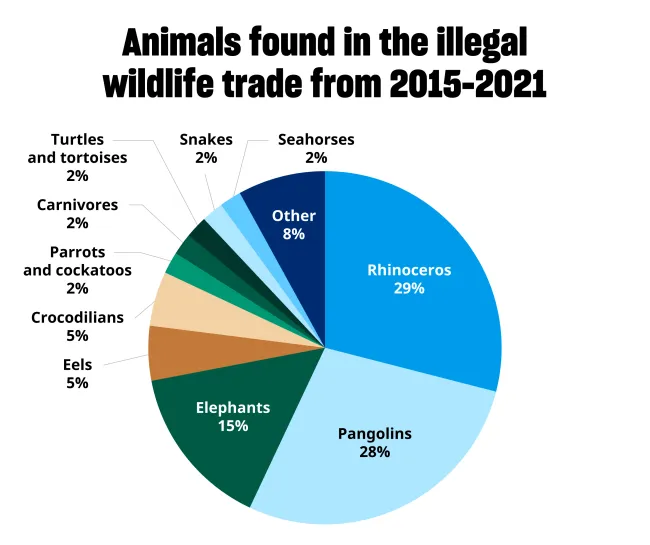
Source: Graph adapted from United Nations Office on Drugs and Crime, “World Wildlife Crime Report,” 2024
Despite the growing threats pangolins face, the U.S. government—across multiple administrations—has been incredibly slow to act. In 2020, Humane World sued the U.S. Fish and Wildlife Service to force them to make a decision on our 2015 petition. The agency settled the case later that year, stating they would consider listing pangolins under the ESA.
In June 2025, the U.S. Fish and Wildlife Service officially proposed listing seven species of pangolins as endangered. The agency has one year from that date to finalize the listing or extend their decision another six months.
Francois Meyer/African Pangolin Working Group
Next month marks that one year deadline. After more than 10 years of work to get here, Humane World staff are anxiously awaiting the agency’s final decision.
“A failure to finalize protections for pangolins would do more than just harm wildlife—it would benefit those who profit from the illegal trade,” says Gabe Wigtil, wildlife trafficking program director at Humane World. “The Endangered Species Act is one of the strongest tools the U.S. has to disrupt wildlife trafficking, and choosing not to list pangolins would be a missed opportunity with real consequences.”
Pangolins, like Bhuti, are hurtling toward extinction due to human action. Human inaction may be their final death knell. The U.S. government can change that trajectory.
Related stories
Casey Pratt/Love Africa Marketing for Manyoni Private Game Reserve and the Zululand Conservation Trust-Project funders with the African Pangolin Working Group
Stuffed in a sports bag in Johannesburg, South Africa, the small pangolin was far from her natural environment. She’d been poached from her home and now was up for sale. This is her story.
Tikki Hywood Trust
Pangolins are sometimes called the “guardians of the forest” because they hold termite destruction at bay. Yet they are also the world’s most trafficked mammal.
Doug Steakley/Getty Images
Political attacks threaten the Endangered Species Act, which has saved hundreds of species from extinction.