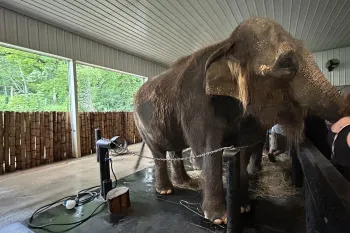
Wild animals are not commodities. They are living, breathing creatures with strong wills and instincts to be free.
And yet, we’ve all seen the photos: People posing next to sloths, otters, primates and other animals, while beaming at the lens. These images stream through our feeds, especially during vacation seasons. And each year it can feel like a more humane world for these captive, stressed animals—thwarted in every direction when they try to express their natural behaviors—is still beyond reach.
The best way to love a wild animal is to let that animal be free. But too often our society turns animals into spectacles, and as wildlife selfies gain so many likes and comments on social media, it can obscure the wrong that is right there in front of our eyes. When people smile for the camera while posing next to a captive wild animal, they become part of the problem. They perpetuate the idea that this is a reasonable and normal way to relate to animals and the natural world. But the truth is: What may seem like a harmless encounter causes the animals involved chronic stress and fear and endangers people’s safety.
That’s why it’s so important to remind friends and family to avoid attractions that offer close encounters and photo-ops. It’s a small step that can make a big difference for animals. Because as soon as there’s no longer demand for these exhibits, there will be no reason to keep these animals languishing, tethered, restrained and confined for entertainment.
Progress is possible. For years, we have been working to raise awareness about the harms and dangers and of keeping wild animals captive for human whimsy. We are fighting for a world in which wild animals are valued and respected not because of photo ops but because of who they are and the complex ecosystems in which they play a part.
A wildlife selfie is not a pretty picture.
When the Big Cat Public Safety Act was signed into law, big cat cub-petting became illegal in the United States. This was a significant win, and we fought for it for years. But many wild animals are still being treated like objects at captive display facilities, and a number of species are increasingly being exploited for these encounters.
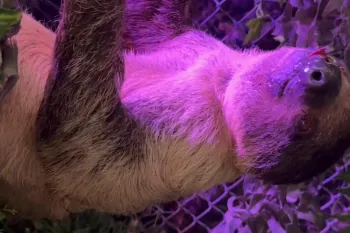
In the U.S. alone, more than 300 wild animal petting zoos, roadside zoos and other facilities offer up-close experiences with sloths, primates, otters, capybaras, kangaroos or wallabies—animals whose popularity in zoos and other facilities has grown significantly in the last decade. According to our analysis of U.S. Department of Agriculture inspection reports, over the last decade—between 2015 to 2025—the number of sloths and capybaras held in zoos and other exhibition facilities each roughly doubled and the number of macropods (kangaroos, wallabies and wallaroos) and otters has also steadily risen.
These animals are either captured from the wild or bred in captivity, often taken from their parents at a young age, often in deplorable conditions that deprive them of parental nurture and socialization, along with the chance to engage in their most fundamental natural behaviors. Operators often use fear and physical and psychological abuse to make the animals appear “tame” for handling. Exhibitors have relied on food and water deprivation, social isolation or painful mutilations, such as removing animals’ claws, teeth or scent glands, to facilitate close contact with paying customers.
It isn’t only the animals who are harmed in these encounters.
Stressed wild animals may bite or scratch, risking transmission of diseases. Primates can be especially unpredictable, and yet they remain popular in animal encounters, at roadside zoos and with traveling exhibitors who bring leashed and sometimes diapered wild animals into libraries, day care centers, birthday party venues and other events.
Records show that over 60 people, nearly half of them children, have been injured during encounters with nonhuman primates in the U.S. since 2005, not to speak of incidents never reported. Primate experts warn that handling the animals as if they are cuddly and cute playthings can make them appeal suitable as pets—they are not—and skew and obscure perceptions of the animals’ conservation status—which causes still further harm.
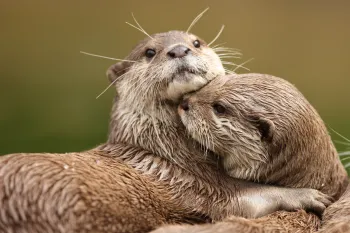
Otters are another popular species for public handling. They have sharp teeth and powerful jaws strong enough to crack open mollusks, and yet more than 60 U.S. facilities offer hands-on encounters and even swimming experiences with them. Since 2019, otters used for public handling experiences in the U.S. have bitten at least 21 people.
A wildlife selfie is more than just a photo.
The wildlife selfies that saturate social media undermine conservation efforts and fuel the global market for both traded and trafficked wild animals. Because they essentially provide free advertising on a vast scale for the wild animal pet industry, they are stoking a terrible demand pattern: A recent study found that younger generations are more interested in keeping wild animals as pets than older generations.
In the humane world we are trying to build, human beings do not tear baby animals away from their mothers to use them for entertainment, nor do people endanger children or teach them that animals exist solely for our whim and caprice.
Meredith Lee/Humane World for Animals
Cruel wildlife attractions are a problem worldwide.
Getting too close to wild animals isn’t a problem confined to the U.S. In other countries, too, demand for wildlife encounters is driving the exploitation of wild animals.
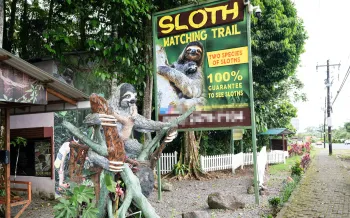
The craze for wildlife encounters is prevalent in Latin America, home to some of the most unique wildlife species in the world. Humane World for Animals Latin America works on initiatives to encourage tourists to support ethical tourism activities and to raise awareness of the negative impacts of close and direct contact with wild animals. In Costa Rica, more than 100 organizations, embassies, municipalities and tourist operators have pledged to support ethical wildlife tourism, reaching thousands of citizens and visitors.
Across Southeast Asia, wildlife “cafes” have recently become popular, offering customers interactive dining experiences with wild animals. Visitors hold, pet or take pictures with wild animals, such as capybaras, otters, owls, slow lorises and pythons. These wild animals are forced to live in unnatural environments that do not meet their behavioral or dietary needs. As a result, they undergo constant stress from disturbed sleep schedules, handling, noise and lack of access to the outdoors. These cafes often feature wildlife species whose populations are declining in the wild.
Pseudo-sanctuaries are on the rise in Southeast Asia, particularly in Thailand where approximately 200 facilities allow visitors to interact with Asian elephants. It complicates matters that many of these operations advertise themselves as legitimate rescue and rehabilitation facilities.
Many in-the-know tourists now stay clear of elephant-riding attractions, but there is plenty of cruelty associated with other forms of public interactions with elephants. Any interaction with elephants—like riding them, bathing them or watching them produce paintings for spectacle—is almost always made possible because the elephants were separated from their mothers at a very young age, forced into confinement, deprived of food and water and disciplined with pain and fear—all to break their wild spirits.
Small steps can make a big impact for captive wild animals.
At a time when the natural world is in such serious crisis—and entirely at the mercy of humankind—we must keep fighting to change popular perceptions of wild animals. We must harness our natural curiosity about wildlife to fight for these animals—not allow ourselves and others to become consumers feeding the industries that profit from so much cruelty and suffering.
It’s truly tragic that tourist attractions around the globe are taking advantage of people’s love of animals, twisting it and skewing it to further their bottom line. All over the world, we advocate for the passage of stronger laws prohibiting public contact and selfies with wild animals, but to ensure their safety and well-being we need everyone to get involved to change perceptions of these encounters. Animals kept captive at these operations need us all to see them for who they are: stressed, scared and desperate individuals who want nothing more than the comfort of their families and natural environments, and critical figures in maintaining our global ecosystems.
You can curb these trends and be a humane traveler by never visiting attractions that use wild animals as props. Tell your family and friends why these attractions are inhumane for animals.
Finally, you can do something so simple to help shape the kind of humane world we envision: Never add a like to photos posted on social media of people handling wild animals, and if you come across social media content showing poor treatment of animals, make sure to report it to the platform.
Kitty Block is president and CEO of Humane World for Animals. Follow Kitty Block.