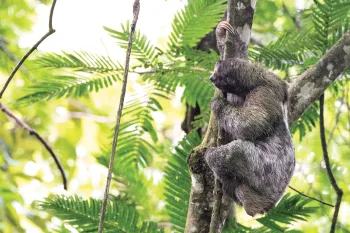
Slow and steady, calm and solitary—sloths are at odds with the world’s ever-increasing pace. Native to the rainforests of Central and South America, they spend most of their time moving slowly through the canopy to conserve energy. Their low-calorie, leafy diet fuels their exceptionally slow metabolism and movement—so slow, in fact, that sloths only need to descend to the forest floor once a week to defecate.
Conserving their energy is a strategy that has helped them survive for more than 60 million years, all while playing a crucial role in preserving the rainforest. Their fur hosts algae, fungi and small insects like moths and beetles, forming a tiny ecosystem on their backs that promotes plant diversity and the health of other species, while camouflaging them from predators.
People all over the world have fallen in love with their “smiley” faces and curious behaviors, but the demand for close encounters with these mysterious animals has done more harm than good. What many may not realize is that these encounters don’t happen by chance—they are fueled by the wildlife trade. Behind every photo opportunity or hands-on experience is a hidden pipeline that removes sloths from the wild, placing them into captivity for profit.
Meredith Lee/Humane World for Animals
In November, I traveled undercover to Costa Rica to document how the illegal pet trade and unethical wildlife tourism is affecting sloths in their natural habitat. While bearing witness to the conditions faced by animals in captivity was difficult, I also had the opportunity to experience the lifesaving conservation efforts led by our local team and partners who rescue, rehabilitate and liberate sloths and other wildlife.
Scientists are still working to understand many aspects of sloth biology and behavior, but the threats they face are clear. Human intervention—from trafficking to habitat loss—is putting pressure on wild populations that have persisted for millions of years.
Suffering for the world’s entertainment
Since the early 2000s, sloths have become internet-famous due to celebrity obsessions, animated film characters and the anthropomorphizing of the species on social media. And in 2021, they were officially recognized as a national symbol of Costa Rica.
This fame has fueled a growing public desire for the rare, once-in-a-lifetime experience to hold, or even see, a sloth up close—but it’s a dream that comes at a cost. Sloths are being captured from the wild to supply tourist attractions and private collectors, leaving fragile populations at risk and emphasizing the need for stronger regulation.
Cuteness is their downfall…which makes both adults and juveniles appealing to unethical facilities and public demand.”
Grettel Delgadillo, Humane World for Animals
Though that demand extends far beyond the countries where sloths naturally live, the U.S. is one of the world’s largest importers of sloths. Customs data from the Fish and Wildlife Service show that the U.S. imported at least 764 sloths for commercial purposes between 2016 and 2021.
According to federal wildlife import records, more than 99% of live sloth imports to the U.S. are captured from their native forests, meaning any sloth seen in captivity today could have been taken from the wild to meet the public’s demand for close encounters.
In 2024, we released an undercover investigation revealing the poor conditions and physical abuse of eight captive sloths at a facility in Long Island, New York. Footage captured staff hitting and roughly handling the animals, and male sloths fighting one another due to overly crowded and stressful conditions.
Laura Hagen, Humane World for Animals managing director of wildlife protection, says our team has tracked at least 140 other sloth exhibitors like this in the United States—likely only a fraction of the total—that force these reclusive, shy animals to be handled, petted or photographed for long hours, day after day, by the paying public.
Each year, an average of 127 sloths are captured and imported into the U.S. to feed public demand. But it’s not just the United States—there’s a global demand for sloths, and they’re being traded or trafficked to all parts of the world.
“Many attractions selling wild animal encounters market the experiences as conservation, leading visitors to believe that they are supporting legitimate efforts to help animals in the wild,” says Hagen. “But the opposite is true. Buying these experiences simply supports an exhibitor’s bottom line.”
Sloths are shy, solitary animals unsuited for public interactions. Being near humans or being handled by them can cause a sloth extreme stress, increased blood pressure, illness, inability to reproduce and premature death.
In captivity, they’re deprived of their natural diet and lifestyle, leading to nutritional issues, digestive disorders, respiratory problems and severe tooth and claw overgrowth. And like many animals, sloths can become defensive, using their sharp teeth and claws to protect themselves when they feel threatened.
“Cuteness is their downfall,” says Grettel Delgadillo, Humane World for Animals program and policy director in Costa Rica. “Even at a young age, sloths are highly attractive to people, which makes both adults and juveniles appealing to unethical facilities and public demand.”
According to the United Nations Environment Programme, organizations responsible for the protection of sloths in Central and South America estimate that 80 to 90% of sloths die during capture and captivity. With such high mortality rates and low reproduction rates, facilities must replenish their numbers if they want to remain in business—which directly affects vulnerable wild populations. And this all begins in sloths’ native countries.
Meredith Lee/Humane World for Animals
Facing an unprecedented threat in Costa Rica
Costa Rica is known as a global leader in environmental protection for its comprehensive wildlife conservation laws. Under a regulation that our team helped draft, it is illegal to keep wild animals as pets or even feed wildlife in the country.
Passed in 2017, the regulation requires that wildlife rescue centers operate as nonprofits and remain closed to the public. Sanctuaries and zoos may open for environmental education purposes only, never for animal encounters or photo ops.
“These regulations have helped ratify the country’s commitment to animal welfare,” says Andrea Borel, executive director of our Costa Rica office. “We will continue working together with the Ministry of Environment, as well as other government institutions and law enforcement agencies, to achieve and implement the legal framework, ensuring more humane treatment of wildlife throughout the country.”
But with more than 200 captive wildlife facilities in Costa Rica, verifying that they’re all following the law and best practices can be a challenge. Businesses profiting from sloth encounters in the country have found ways to slip under the radar, says Delgadillo.
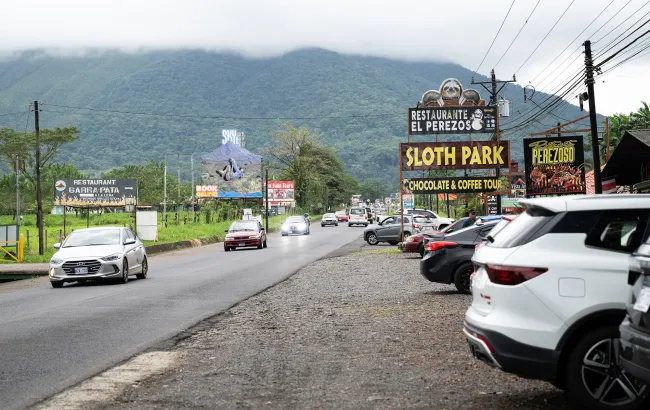
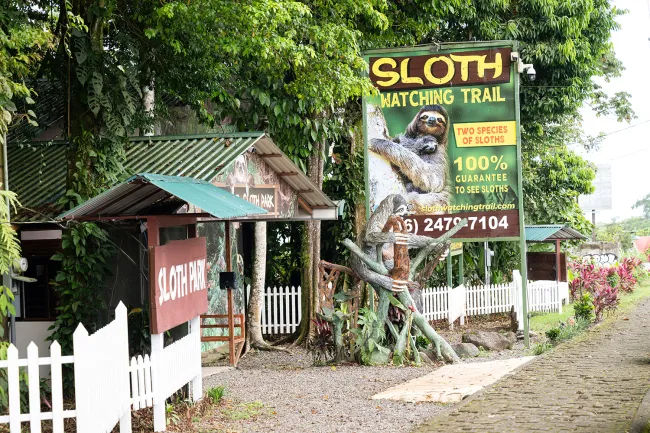
Soon after the pandemic, our team and conservation partners heard about so-called “sloth parks” appearing in popular tourist destinations like La Fortuna and Bijagua. Some of these facilities claim to be natural habitats where sloths have always lived. But there’s an ugly truth buried deep beneath the surface.
Together with our national government partners, we’ve received tips from local sources informing us of illegal captures of sloths, who are then transported and sold to these parks for public entertainment. The sloths in these parks appear free because they’re up in the trees and not in cages, which makes it challenging for authorities to prove illegal activity and take action.
Meredith Lee/Humane World for Animals
There are approximately 15 “sloth parks” registered in Costa Rica, though our team says that’s likely only a fraction of the true number. This model for keeping sloths in captivity has never been seen before, but our team is concerned it could be replicated in neighboring countries.
Residents and visitors have reported concerns about guide behavior at some parks. Because sloths are largely nocturnal and spend much of the day resting, guides allegedly have used tactics to provoke movement for tourists, including playing recordings of harpy eagles—one of their primary predators—or of female mating vocalizations. Sources also described guides shaking trees to prompt movement and using laser pointers to help visitors locate animals—practices that wildlife experts say can cause stress.
When wildlife becomes a commodity
As we drove along the busy tourist strip near Arenal Volcano last year, we passed restaurants, zip-line tours and spas catering to international visitors; the peak of the volcano barely visible in the eerie afternoon fog. I was undercover with Meredith Lee, Humane World for Animals senior photo editor, and Andrea Borel to document conditions at one of the region’s sloth attractions. At the entrance, a sign promised “100% guarantee to see sloths”—an assurance that differs sharply with the reality of encountering these elusive animals in the wild.
Inside the park, sounds of loud music and traffic from the nearby street were constant, a stark contrast to the quiet these animals experience in the wild. For a species that naturally sleeps 15 to 20 hours during the day, the noise adds considerable stress.
Meredith Lee/Humane World for Animals
Meredith Lee/Humane World for Animals
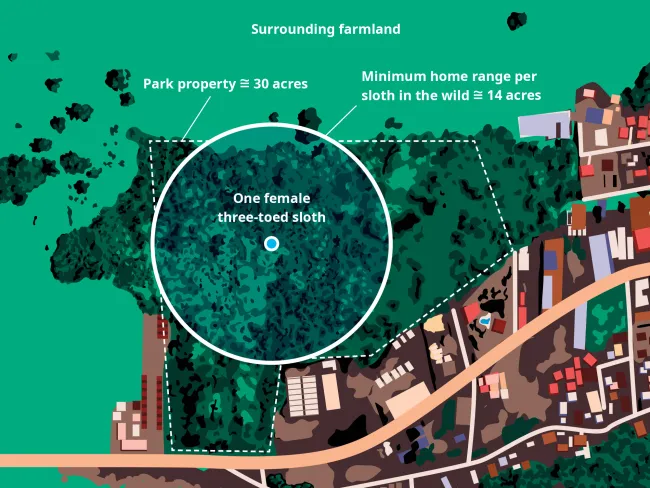
Moving further into the park, we overheard a guide tell a group the park has over 30 sloths on the property which, according to the website, sits on 30 acres of privately owned land.
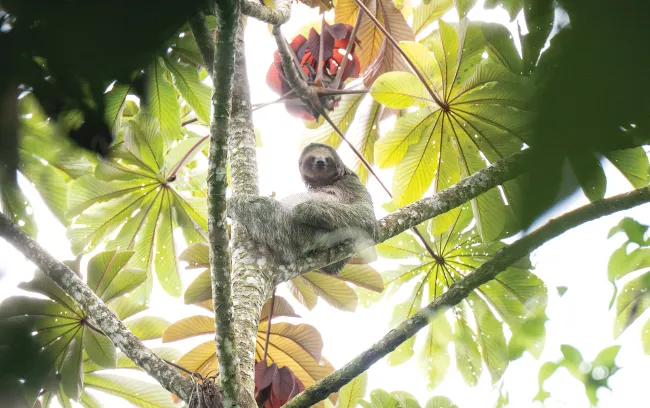
Thirty sloths confined to 30 acres is an unnatural density. In the wild, one female three-toed sloth’s home base can range from 14 to 22 acres, while a male’s range is 22 to 130 acres. They remain in their favorite spots within these areas and maintain a reasonable distance from each other, only coming into close contact to mate. Two-toed sloths, on the other hand, roam the forest, exploring new regions and the freedom of the wild.
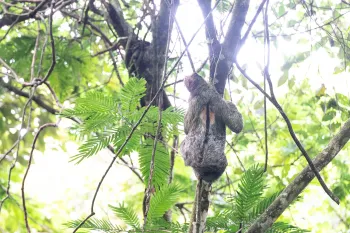
Both two-toed and three-toed sloths were present at this park located in the northern part of Costa Rica. “But their behavior and ecology differ greatly,” says Delgadillo. “It is unusual to see multiple sloths sharing the same tree—especially when they belong to different species—which suggests that these animals may have been intentionally placed there by people.”
Meredith Lee/Humane World for Animals
Three-toed sloths, famous for dark facial markings that give the impression of a permanent smile, are also the calmer of the two species, making them easier to capture and move to parks like this. These sloths often spend years in captivity as entertainment attractions. Visitors may leave such a park having seen a dozen or more sloths in a single day—an experience that can feel extraordinary, but one that does not reflect natural conditions.
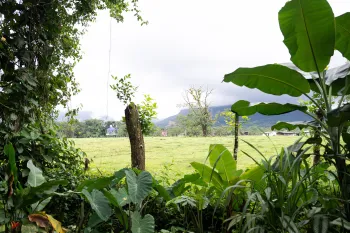
Unlike legitimate sanctuaries in the country, the park lacks natural pathways that would allow animals to move safely beyond the confined space to the forest. The property is surrounded by open farmland and tourist attractions, and the foliage is markedly thinner than in the wild. This makes animals easier to see but leaves them without the dense canopy they depend on for camouflage and protection.
Rachel Stern/Humane World for Animals
Despite all of this, visitors flock to these facilities, believing such parks allow them to observe sloths ethically—and in the wild. While undercover, we spoke to a couple from the U.S. who said they had chosen this park specifically after researching options. Their experience reflects how effectively some animal attractions market themselves, blurring the distinction between accredited sanctuaries and facilities where animals are kept for profit.
And the financial incentives are real. Our partners at Rescate Wildlife Rescue Center have noted that the demand for sloths has created monetary motivation for residents to capture them from the wild and sell to these parks—sometimes for as low as $100 per animal.
This is a call to attention for similar tourist attractions exploiting wildlife.”
Grettel Delgadillo, Humane World for Animals
Since our visit, local authorities have conducted five seizures in Bijagua, including from several sloth parks, revealing what appears to be the illegal trade of wild animals for local tourist attractions. Five sloths were confiscated by authorities, along with snakes, frogs and a tapir. The animals were taken to Rescate and another of our rescue partners in the country, where they will be safe and cared for. “This is a call to attention for similar tourist attractions exploiting wildlife,” says Delgadillo. “Authorities take these crimes seriously and the welfare of wildlife in the country is under the vigilance of the law.”
Protecting sloths around the world
In December 2025, countries voted unanimously to extend trade protections to additional sloth species at the twentieth meeting of the Conference of the Parties to CITES (the Convention on International Trade in Endangered Species of Wild Fauna and Flora).
Amid mounting evidence that wild capture for international trade is impacting populations, new restrictions targeting their exploitation in tourism will come into effect in 2026 and beyond. Because CITES regulates international wildlife trade, this decision dictates that exporting sloths across borders requires stricter permits and oversight, making it harder for traffickers to remove animals from the wild and sell them abroad.
Meredith Lee/Humane World for Animals
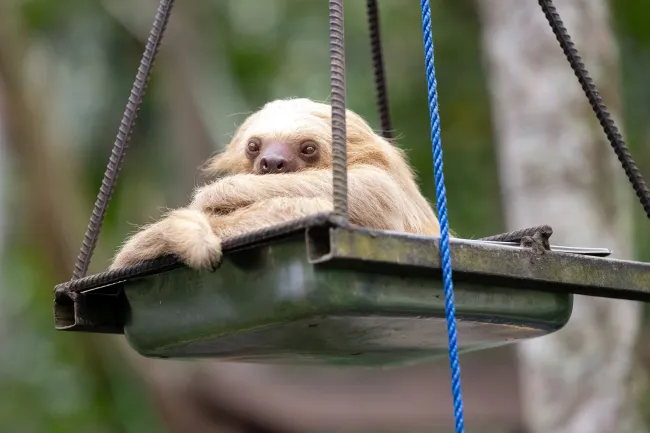
“It’s an added layer of protection that strengthens the work of our team and local partners who strive to protect sloths and other native wildlife from all kinds of harm while promoting human-wildlife coexistence,” says Delgadillo. Sloths—like other tree dwelling animals—are at risk of serious injuries or even death due to forest fragmentation and human-caused interventions. Every year in Costa Rica, thousands of sloths are killed or injured in traffic accidents, dog encounters or power line electrocutions.
Across Central America, our team works on capacity building, enforcing wildlife protection laws, and partnering with government authorities and electrical companies as part of a Sustainable Electrification Group creating safer protections for wild species to travel through their fragmented habitat.
who have been injured, trafficked or orphaned are received by Rescate every year. Their goal is to rehabilitate and return them to their natural habitat.
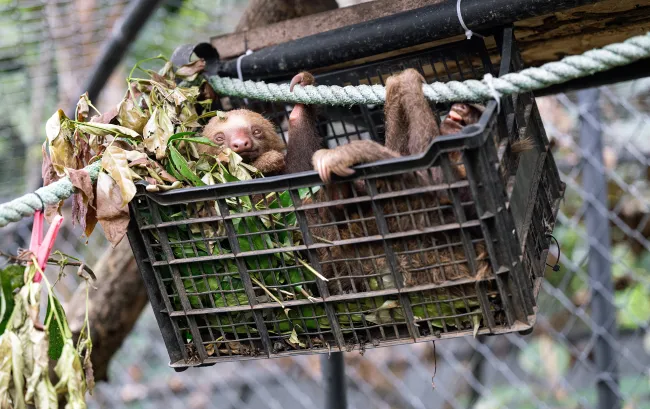
Together with local partners Rescate and Proyecto Asís, we work to rehabilitate and liberate injured or confiscated wildlife from illegal trade and negative human-wildlife interactions. The goal is always to return the animals to the wild where they belong, keeping the ecosystem in balance and giving each individual the best possible outcome.
In the U.S., our teams have been working to strengthen the enforcement of federal animal protection legislation with the Better CARE for Animals Act, but existing laws only go so far to protect wildlife over profit. And keeping sloths in captivity is a lucrative industry.
Meredith Lee/Humane World for Animals
The U.S. has a sloth problem
Sloth World, a tourist attraction marketing itself as conservation-focused, was set to open its doors in Orlando, Florida, earlier this year. Compared to 30 sloths per 30 acres at the Costa Rica sloth park we visited, Sloth World would’ve housed over 40 sloths in a 7,500-square-foot indoor facility, with tours taking place every day for 12 hours a day.
Before it ever opened to the public, the business imported dozens of wild-caught sloths from South America, housing them in small cages in a warehouse with no running water, no electricity, and heating that repeatedly failed during an Orlando cold front. According to news reports, at least 52 sloths have died, some from cold, stress, emaciation and a virus. A 9-month-old baby sloth named Kiwi died weighing less than 3 pounds.
Thanks to the advocacy of concerned citizens, the horrors happening behind the scenes at Sloth World have come to light. Now, Sloth World’s operator expects to file for bankruptcy and no longer plans to open its doors to the public. Thirteen sloths were placed under the care of the Association of Zoos and Aquariums for long-term placement.
“What these sloths endured is heartbreaking, but it also shows that progress is possible when cruelty is exposed and public action follows,” says Hagen. “Each of us has the power to be part of that change by making informed, compassionate choices. By refusing to visit facilities that profit from wildlife encounters and leaving exploitation off our itineraries—whether close to home or when traveling—we can help protect and keep animals in the wild, where they belong.”
This year, our global wildlife teams will continue to closely track and educate the public about both ends of illegal wildlife trafficking and pet trade—from their native countries to the facilities they’re imported to around the world.
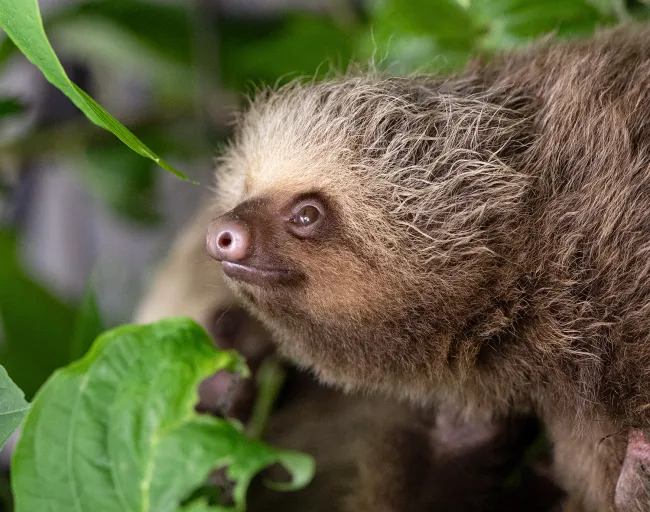
“Because it’s not just sloths,” says Delgadillo. “Many other wild animals such as birds, other mammals, amphibians and reptiles are suffering the same fate. We need to look at the issue of pet trade as a whole.”
Meredith Lee/Humane World for Animals
Stand up for sloths
You have the power to help protect wildlife by making more compassionate choices
Visit only GFAS accredited sanctuaries. Don’t support captive facilities that take animals from the wild or sell animal encounters.
Do your research. Look beyond marketing materials and website claims, which can overstate a facility’s conservation efforts or the animals’ welfare.
If you see something, say something. If you notice unsafe or unethical treatment of animals, contact local authorities or reach out to us, and leave reviews online so other animal lovers will know which places to avoid.
Don’t share or engage with harmful social media images of sloths or other wildlife. This includes wild animals posing with humans, using props or in unnatural settings, which promotes the idea that wild animals can be kept as pets.
Share this story to help raise awareness.
Kathy Milani /Humane World for Animals
Help captive wildlife
Wild animals belong in their natural habitats, not kept in roadside zoos and circuses for our entertainment. With your help, we are working to end this cruelty.
Related stories
Meredith Lee/Humane World for Animals
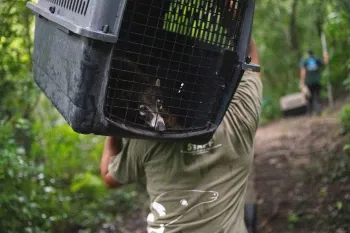
Follow along as our team in Costa Rica and local partners release 34 rehabilitated wild animals back into their native habitat in Guatemala.
Meredith Lee/Humane World for Animals
When wild animals become internet celebrities, the wildlife pet trade and tourism industries respond.
M Swiet Productions/Getty Images
Keeping wild animals wild so often depends on building trusting relationships between people.