The midterm elections in the U.S. showed one thing loud and clear: That voters are ready to take action around issues that affect their daily lives and the lives of animals.
And while Americans may disagree on many issues, concern for animals is remarkably universal. Whether it's keeping pets with the families who love them, decreasing the use of animals in research, ending cruel commercial practices that ignore animal suffering or treat animals as mere commodities, or strengthening protections for wildlife, these causes routinely attract support from people across the ideological spectrum.
That's because animal welfare is ultimately about the values that come from our shared moral perceptions: When people see cruelty, neglect or needless suffering, they want it addressed. Compassion for animals is not unique to any one political party—it’s human.
There is always an opportunity to expand compassion and work together for a more humane future. That’s because caring about animals continues to be one of the rare issues capable of bringing people together. The encouraging news is that Americans have repeatedly shown they are willing to do exactly that.
What nonpartisan progress looks like
Recent years have provided powerful examples of what can happen when elected officials at all levels of government work together on behalf of animals.
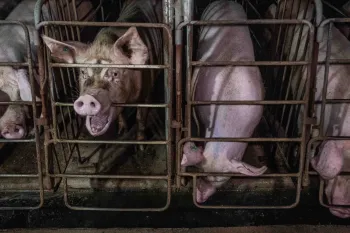
- In the U.S. Congress, over 140 members have formed the bipartisan Congressional Animal Protection Caucus often uniting behind issues as diverse as the fight to uphold Proposition 12, considered the strongest law for the protection of farmed animals—and the 14 other similar laws in red, blue and purple states—as well as supporting legislation and rules to address animal suffering and neglect at puppy mills, roadside zoos and laboratories.
- Republican, Democratic and Independent members of Congress are working to end the breeding and use of cats and dogs for experimentation, end cruel testing and advance science without using animals.
- Across the country, nonpartisan efforts to stop the puppy mill-to-pet store pipeline have continued to gain momentum. Today, 10 states and more than 530 localities across 31 states prohibit the retail sale of puppies in pet stores.
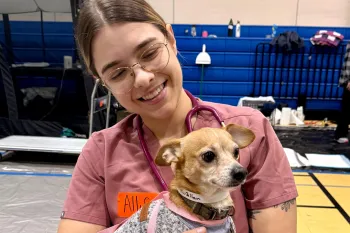
- States including Colorado and Pennsylvania have joined 16 others in ensuring that dogs and cats in laboratories have the opportunity to be adopted when the experiments end, potentially giving thousands of animals a chance to live in loving homes.
- Lawmakers in Illinois strengthened protections for wild animals used in traveling acts and circuses, while a similar bill awaits final action in New York.
- In Oregon, we were part of a bipartisan coalition that helped to pass the 1.25% for Wildlife law, which will generate $36 million every year to support wildlife recovery, coexistence, rehabilitation, habitat restoration, wildlife crossings, anti-poaching efforts and much more.
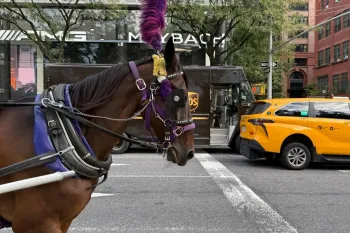
- New York City officials voted overwhelmingly to phase out horse-drawn carriage operations, addressing a long-standing animal welfare concern. Philadelphia, too, banned horse drawn carriages in June.
- Iowa became the final state in the U.S. to make intentional animal torture a felony on the first offense. And Florida made it a felony to tether and abandon a dog during a declared natural disaster or evacuation.
These victories occurred in different regions of the country, under different political leadership and at different levels of government. Their common denominator was a willingness to prioritize animal welfare over political divisiveness.
During this cycle, we supported two ballot measures, and we’re very pleased that both measures passed. The first, Denver’s Ordinance 311, bans the sale of foie gras from force-fed birds. The second, Missouri’s Amendment 6, united many of the state’s Republican and Democratic Party leaders, past and present, to support this protection of citizen ballot initiatives.
We also opposed Colorado’s Amendment 83, a “right to hunt and fish” amendment because it promised to undermine the public’s ability to protect animals from special interest groups trying to bring back the cruelest hunting methods like trapping, bear hounding and baiting. Most voters agreed with our position, and the amendment was defeated.
Concern for animals is part of living a human life
For millions of Americans, concern for animals is part of daily life.
Families with companion animals face rising veterinary costs. Renters struggle to find pet-friendly housing. Communities prepare for disasters that threaten both people and animals. People increasingly want assurances that animals raised for food are treated more humanely. And they also want to feel confident that medicines and other products are developed using modern, effective and responsible research and testing practices that align closely with human biology.
These concerns cross political boundaries because they are rooted in real-life experiences.
When policymakers recognize that animal welfare is inextricable from human wellbeing, they can advance smarter and more humane policy solutions.
Jo-Anne McArthur/Montreal SPCA / We Animals
Help pass critical legislation
Animals deserve to be protected. Tell your U.S. Senators and U.S. Representative to cosponsor the Better CARE for Animals Act (H.R.3112/S.1538), which will strengthen Animal Welfare Act enforcement.
The work ahead
The next Congress and state legislatures will face no shortage of challenges. But regardless of which party holds power, at whatever level of government, there is ample opportunity to come together to prevent cruelty, support families with pets, modernize animal-related policies and promote more humane practices.
Most Americans believe animals deserve care, protection and humane treatment. That shared belief has driven some of the movement's most significant accomplishments, and it can continue to do so in the years ahead.
And while election results may change political dynamics, they don't change what animals need from all of us: compassion, action and a commitment to creating a more humane world.
Kitty Block is president and CEO of Humane World for Animals. Follow Kitty Block on X. Sara Amundson is president of Humane World Action Fund.