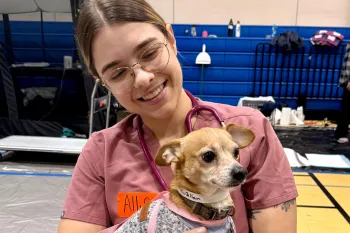
Driving to the Standing Rock Sioux Reservation in North Dakota last week, I was struck by the vastness of the landscape. There was beauty in these immense distances—but also the knowledge that with this remoteness come challenges in providing resources for families living here who care for beloved companion animals.
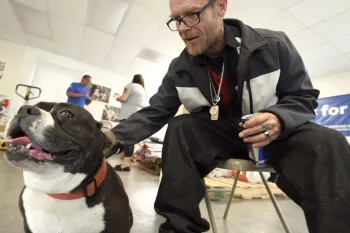
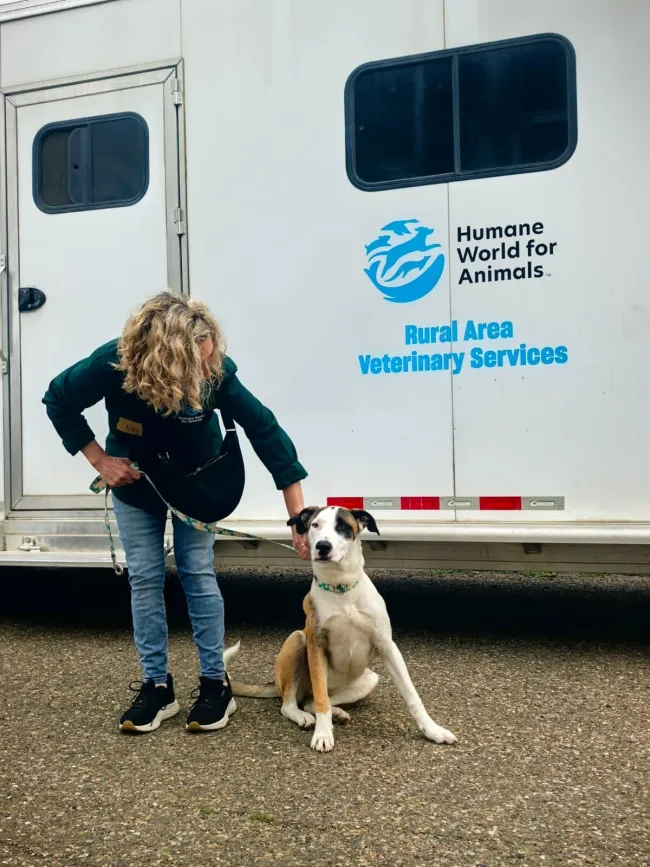
When I arrived at 7 a.m., a line had already formed in front of the community center where the Rural Area Veterinary Services clinic was set up. Families were waiting with their pets sitting beside them on leashes or peering out from carriers.
Everyone had come for the same reason: to make sure their animal family members received the care they needed.
Nicole Paquette/Humane World for Animals
Wherever I travel to observe our veterinary response work—whether it be our Pets for Life events in the U.S. or community dog work in India, Boliva or Chile—I see the stress and anguish families experience when they can’t secure the care they need for all family members, including their pets, and the relief that comes when they can.
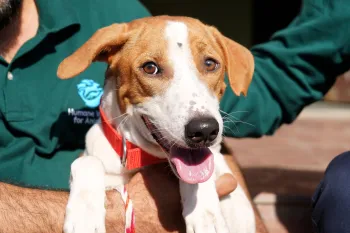
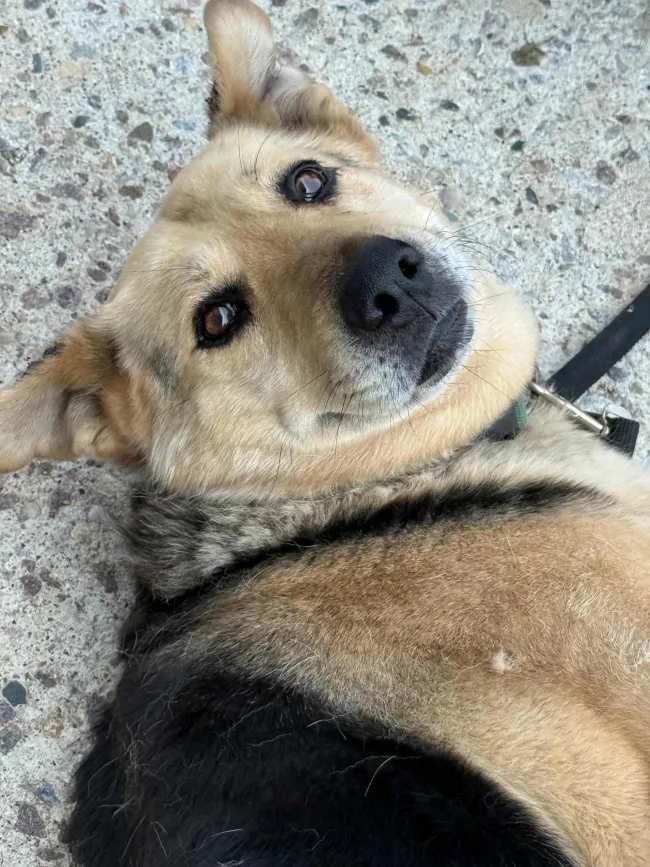
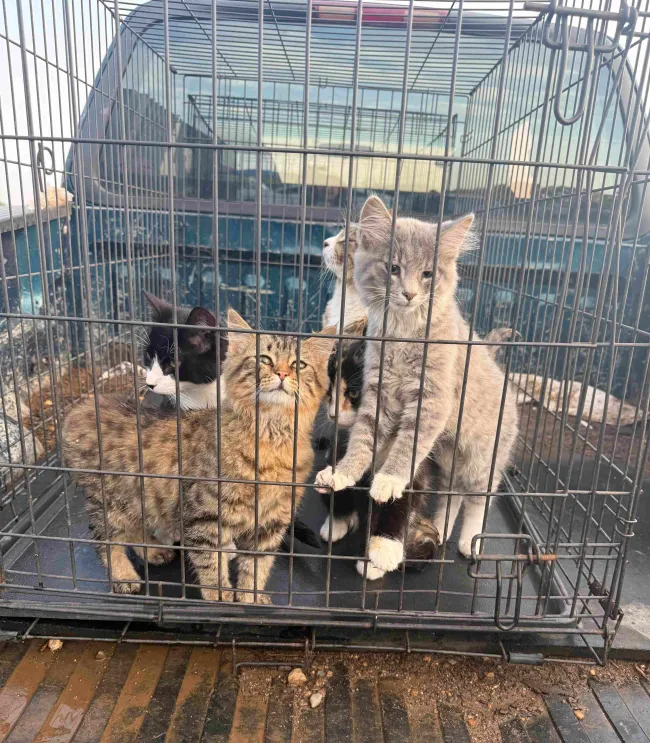
One thing that stood out here was how many people were there with animals they had just taken in—puppies, kittens and adult dogs and cats they had found, rescued or simply decided needed care. Despite having very limited access to veterinary and basic services themselves, community members were opening their hearts and homes to animals in need. It was a powerful reminder that compassion for animals is not determined by income or geography.
Still, while the love people have for their animals is universal, their access to reliable veterinary care is not.
Volunteers from across the U.S. help people and pets
Walking into the RAVS clinic, I was struck by the rows and rows of small tents set up all over, in the main room, hallways, closets and basically anywhere there was space. It took me a moment to understand that this was where our team—made up of staff and volunteer veterinarians, veterinary technicians and students—were sleeping for the week, all so they could provide vital services for animals.
Nicole Paquette/Humane World for Animals
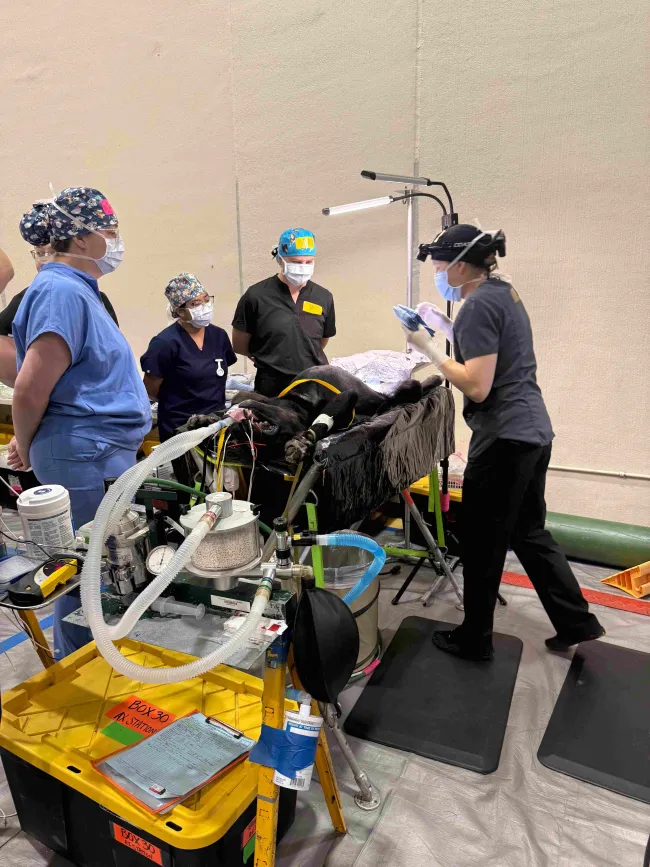
Inside the clinic, the RAVS team moved from patient to patient, performing wellness exams, administering vaccines and other preventive care, and performing spay/neuter surgeries. These MASH-style clinics are set up to provide a range of services, delivering thoughtful, sophisticated medical and surgical care with efficiency and scale. Every member of the team plays a role in ensuring the best outcome for each patient.
The volunteers came from around the country just to support this work. There were some veterinarians who had been volunteering with RAVS every year for well over 10 years.
I met one such veterinarian who practices in the San Francisco Bay Area. I couldn’t stop thanking her for her support over so many years. But she stopped me. She said she should be the one thanking us; if it weren’t for this program, she added, these animals wouldn’t get the care they need, and she wouldn’t get the privilege of tending to the animals and their people without having to turn anyone away because they can’t afford the cost of care. Working with RAVS, she explained, was a gift she gave to herself.
Nicole Paquette/Humane World for Animals
Spending the day with our RAVS team was both inspiring and humbling. What struck me most was not just the extraordinary work being done by veterinarians, veterinary technicians and other volunteers. It was the deep bond between people and their animals and the love, dedication and commitment I witnessed in every interaction.
Addressing the veterinary care crisis through RAVS
Currently, there’s a crisis of veterinary care occurring in rural communities all over the world. Geographic isolation, financial barriers and limited practitioner availability can make even routine care difficult to obtain. Programs like RAVS help bridge that gap.
RAVS has long provided direct care services to Native nations through programs built upon long-term partnerships. Invited and hosted by tribal agencies, the program operates in close collaboration with community partners to coordinate clinics and support ongoing outreach efforts. These are not one-time visits. They are relationships rooted in trust, respect and a shared commitment to improving the well-being of animals and their families.
It’s hard to convey exactly how meaningful each interaction at the clinic was. One man, wanting to show gratitude for the care his family’s animals received, went home and returned later with a dish of food for our staff, saying he only wished he could feed all of us.
Nicole Paquette/Humane World for Animals
Each year, RAVS provides essential veterinary care to more than 9,000 animals. Since the program began, more than 195,000 animals have received services. The value of that care exceeds $38 million.
Yet, the impact extends far beyond the clinic walls. Through its long-term partnership with Chewy, RAVS has helped deliver more than $40 million worth of pet food and supplies to Native nations across the country. To date, that includes 559 truckloads carrying more than 13.6 million pounds of food and over 3,200 pallets of supplies. These resources support families long after the veterinary teams have packed up and gone home.
Building a more humane future, one veterinarian at a time
One of the most rewarding parts of the visit was seeing the transformational impact this program is having on future generations of veterinary professionals. It is an experience like no other.
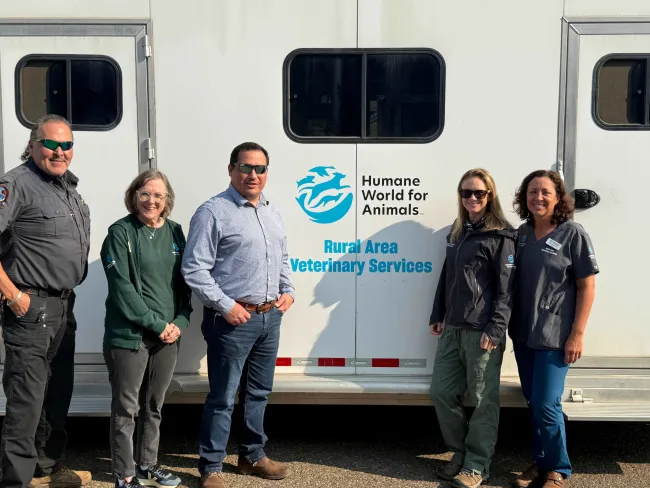
Working alongside experienced veterinarians and veterinary technicians were students and early-career professionals gaining hands-on experience unlike anything they could receive in a traditional classroom. Under close mentorship, they were learning field medicine, surgery, preventive care and practical approaches to delivering care in resource-limited settings.
But the things they were learning went far behind the acquisition of clinical skills. They were gaining a deeper understanding of the challenges many families face in accessing veterinary care. They were seeing firsthand how social, economic and geographic barriers affect both people and animals. And they were discovering the powerful role they can play as advocates, practitioners and change agents within the profession.
To date, more than 10,000 veterinary professionals and students have participated in RAVS teaching clinics, contributing an astonishing 960,000 volunteer hours while helping provide care to animals in underserved rural communities.
Nicole Paquette/Humane World for Animals
Animal welfare does not exist in a vacuum
As I reflect on my visit to Standing Rock, I keep returning to something larger.
Animal welfare does not exist in a vacuum. It is connected to broader issues of equity, access, history and opportunity. We take seriously our responsibility to acknowledge and understand these impacts. We also recognize that our work provides a unique opportunity to build bridges, deepen relationships and support communities in meaningful ways.
That philosophy is reflected in the way RAVS operates. The program works alongside communities, listens first, responds to identified needs and invests for the long term. It seeks not only to provide services but also to help remove barriers, build local capacity and increase equity in access to care.
Nicole Paquette/Humane World for Animals
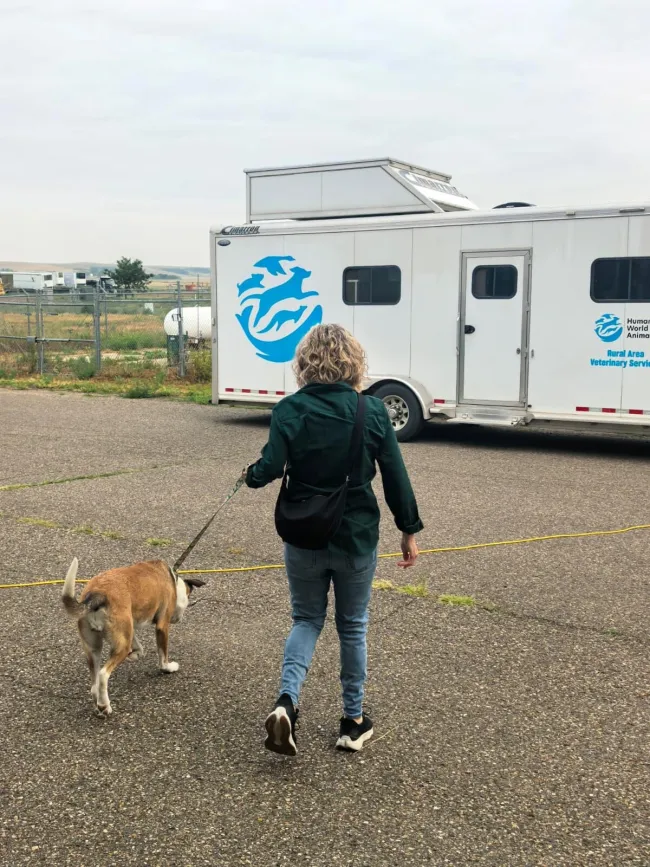
As I left Standing Rock, I carried with me many memories: families arriving before sunrise, dedicated volunteers working tirelessly, veterinary students discovering their sense of mission and purpose, and dogs and cats receiving care that otherwise might have been out of reach.
But perhaps most of all, I carried a renewed appreciation for the extraordinary power of compassion. The power of that compassion goes beyond the dogs and cats served by the RAVS clinics—they reverberate through communities and through veterinary circles.
This work is at the very heart of who we are as a global organization. It shows what is possible when communities, veterinary professionals and animal welfare organizations come together with a shared goal.
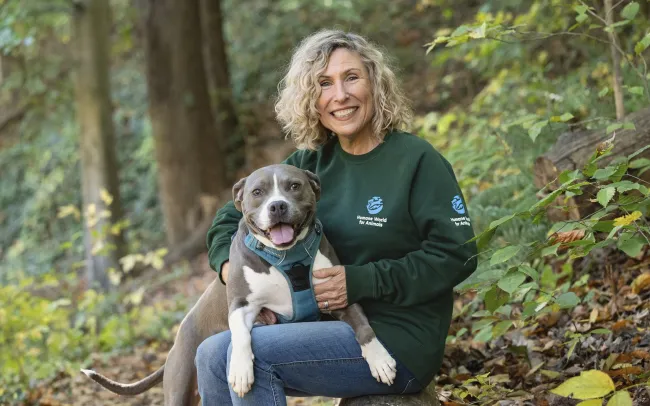
Kitty Block is president and CEO of Humane World for Animals. Follow Kitty Block.