Last week, Pennsylvania passed the “Beagle Bill” into law, making it the 18th state to establish a pathway for adoption of dogs and cats once used in experiments.
Supported by 80% of Pennsylvania voters surveyed, the Beagle Bill passed unanimously in both chambers of the state legislature. With its enactment, Pennsylvania also becomes the 13th state to prohibit the sale of animal-tested cosmetics.
This is just the latest development in the paradigm shift away from animal experiments toward more humane practices across the United States. Earlier this year, Maryland passed the Animal Research Modernization and Best Practices Act, making it the fifth state to prohibit animal testing for pesticides, chemicals and other non-medical products once non-animal alternatives have been approved by federal agencies. A similar bill has passed the Massachusetts Senate and House and is currently awaiting final legislative action.
It is now common knowledge we need not accept what was previously the status quo in the animal research and testing world. Animals are more than test subjects to be used and then discarded. And many cutting-edge technologies already exist, and continue to be developed, that can prevent the systemic cruelty of using animals in experiments.
This momentum has also reached the U.S. Congress. The bipartisan COMPACT Act—the Companion Animal Protection Against Cruel Testing—would effectively end federal funding for research, testing and breeding of dogs and cats and provides for the lifesaving avenue of adoption for those cats and dogs at federally-funded laboratories used in experiments paid for by other sources.
Jo-Anne McArthur/We Animals Media
Help end experiments on dogs and cats
Taxpayers should not be paying for outdated and cruel animal research and testing. Take action today to support critical animal protection legislation!
That Pennsylvania has passed the Beagle Bill strengthens the prospects of the COMPACT Act, which would also align federal policies with the laws of those states that encourage or require animal adoption after the experiments have ended. The steady passage of bills like the Beagle Bill in recent years underscores the degree to which the landscape surrounding the use of companion animals in research and testing has shifted.
Key federal government agencies, including the U.S. Food and Drug Administration and the National Institutes of Health, are committing their resources to new methodologies that are animal-free. The public has spoken out against the use of dogs and cats in biomedical research and testing, causing the practice to substantially decrease over several decades. And with advanced technologies, there is increasingly a common understanding that phasing out experiments on dogs and cats will not hamper scientific progress.
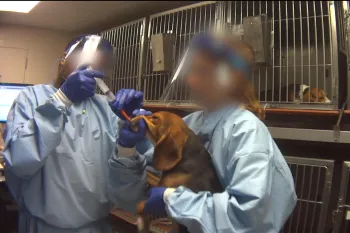
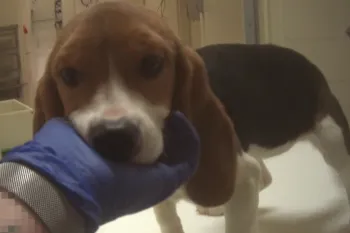
Controversies that show the cruelties involved in breeding animals for animal research and testing have also underscored the systemic suffering inherent in the animal testing and research industry. The Envigo case, for one example, famously resulted not only in our historic rescue of over 4,000 beagles from the company’s Virginia facility but an unprecedented $35 million in federal fines, and raised awareness of the urgency for animals that we change course.
Still, an estimated 37,000 dogs and 11,000 cats are used in experiments in the United States each year. Our analysis determined that over $200 million of the National Institutes of Health funding has been spent on experiments involving dogs over the last five years.
Both Pennsylvania’s new law and the federal bill, the COMPACT Act, contain other constructive measures intended to relieve animal suffering. The Pennsylvania law includes measures intended to strengthen transparency and accountability for animal laboratories. The COMPACT Act proposes robust guardrails to prevent using taxpayer dollars for dog and cat experimentation, along with oversight structures that include annual agency reports and a U.S. Government Accountability Office evaluation of compliance and outcomes.
In the mid-1960s, Pennsylvania was a battleground state in the struggle over legislation at both the federal and state levels to address the procurement and use of dogs for research and testing. In 1965, the state passed a comprehensive dog law regulating dog ownership, licensing, kenneling and protection concerns; it also sought to address the cruelties of the laboratory animal trade, carried out at auctions and through a largely unregulated network of animal dealers. With this focus, it directly anticipated the federal Animal Welfare Act (then called the Laboratory Animal Welfare Act), which passed in 1966 after continuing scandals in Pennsylvania and other states drew the attention of Congress.
That early progress at the state and federal levels made today’s advances possible. Now, we are shaping a system in which animal-free science based on advanced technologies produces wide benefits for humans and animals. With the help and support of millions of caring people worldwide, we’re getting closer to making this more humane vision of the world a reality.
Chimp Haven/
To the Rescue!
Celebrate the remarkable progress being made to replace animal testing with more effective, humane research methods by joining us at our To the Rescue! Gala next week in New York City.
Kitty Block is president and CEO of Humane World for Animals. Follow Kitty Block on X. Sara Amundson is president of Humane World Action Fund.