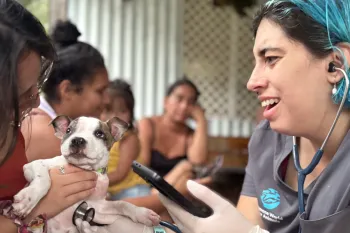
Last year, we shared our journey of bringing veterinary care to animals in need worldwide. This year, we’re continuing that crucial work in Costa Rica.
Nestled within a national park on the Caribbean coast, the village of Tortuguero is accessible only by boat or plane. This lush landscape is one of the most biodiverse regions on Earth: Sea turtles, monkeys, sloths and iguanas are just some of the wildlife who cohabitate with humans and pets.
Addressing human–wildlife conflict in Tortuguero
Negative encounters between companion animals and wildlife are common, says Andrea Borel, director of our team in Costa Rica. Free-roaming (and sometimes unvaccinated) dogs and cats may chase or prey on small reptiles and birds, while jaguars have adapted to prey on unattended pets—risking zoonotic disease transmission and harm to the ecosystem. Without accessible veterinary care, both people and animals are at risk.
Building coexistence between people, pets and wildlife
Humane World for Animals’ work in Tortuguero aims to change that, building a future where people, pets and wildlife can sustainably coexist. Since our wellness program launched in 2024, we have:
Provided 460 free veterinary consultations, including health checks, vaccinations, deworming, microchipping and specialized treatments.
Trained 17 “animal ambassadors” in animal behavior and first aid, directly supporting and extending our clinical services.
Reached about 70% of Tortuguero’s population with education on responsible pet ownership and preventing negative interactions with wildlife.
“Not only do these initiatives improve the lives of animals,” says Sofía Herra, Humane World for Animals senior program manager of companion animals in Costa Rica, “they also protect the area’s biodiversity.”
Related stories
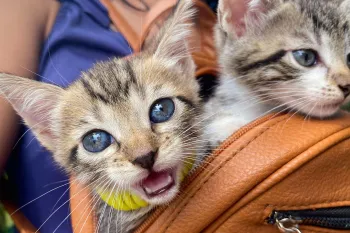
Andrea Induni/Humane World for Animals
Through mobile clinics, partnerships and donations, thousands of dogs and cats receive lifesaving veterinary services each year in Romania, Mexico, Costa Rica and the United States.
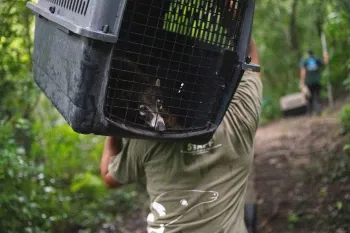
Meredith Lee/Humane World for Animals
Our team in Costa Rica and local partners release 34 rehabilitated wild animals back into their native habitat in Guatemala.
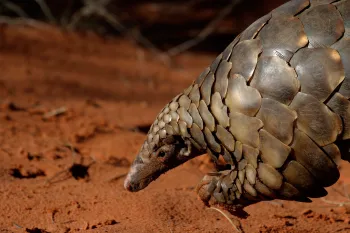
Natural History Media/Alamy Stock Photo
he federal government is expected to make a final decision about whether to list seven species of pangolin as endangered in June 2026.