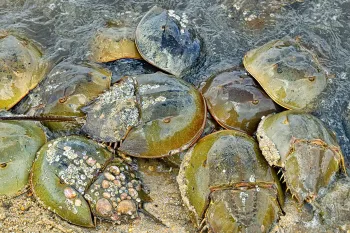
They’re one of the most ancient animals still on earth today. They’ve been here for over 400 million years, predating dinosaurs by around 200 million years. They’ve survived ice ages and multiple mass extinction events (including one that killed around 95% of marine species). But in the midst of our current sixth mass extinction event, this one fueled by human activity, Atlantic horseshoe crab populations have been declining, and the species is now vulnerable to extinction.
The very same biological adaptation that helped them survive so long is now contributing to their overexploitation. Horseshoe crab blood is highly sought after in the biomedical industry. Over one million Atlantic horseshoe crabs are taken from the ocean every year to have a portion of their blood drained. An additional half million are killed to be used as fishing bait. (Tri-spine horseshoe crabs are also taken from the oceans in Asia for the fisheries and biomedical industries.)
Jeff Rotman/Alamy Stock Photo
Horseshoe crabs belong in oceans, not labs!
For almost 450 million years, horseshoe crabs have played a vital role in maintaining the Earth’s coastal ecosystems. Today, they face a grave threat.
Multiple U.S. states have responded to these growing threats. Last year, New York banned the harvest of horseshoe crabs for commercial and biomedical purposes starting in 2029. But in December, neighboring state Massachusetts proposed increasing the quota of crabs that can be harvested for biomedical purposes from 200,000 to 280,000 annually. The number of animals taken for fishing bait would decline from 140,000 to 100,000. Under the state’s “rent-a-crab” program, fishers can sell these crabs to bleeding facilities before they ultimately become bait.
The proposal was “quite shocking,” says Michelle Shaw, with our Animal Research Issues campaign. “Really just a move in the wrong direction.” Humane World for Animals submitted public comments strongly opposing an increase in the biomedical quota.
In March, the Massachusetts Division of Marine Fisheries announced they were withdrawing the proposal due to the “the content and tenor” of public comments in opposition. The reversal was great news, says Shaw Still, horseshoe crab populations continue to remain at threat.
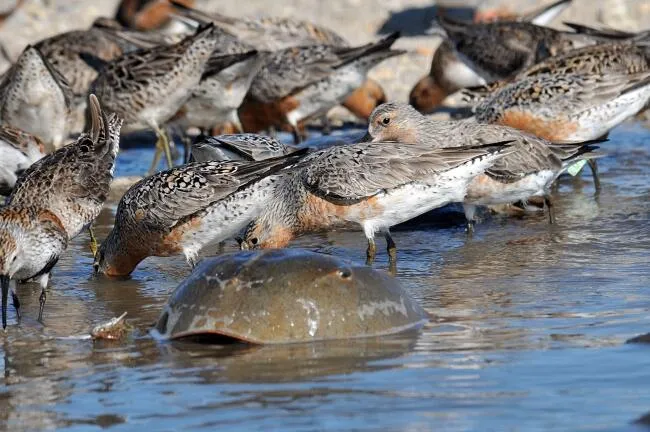
Gregory Breese/U.S. Fish & Wildlife Service
Horseshoe crabs’ ancient origins
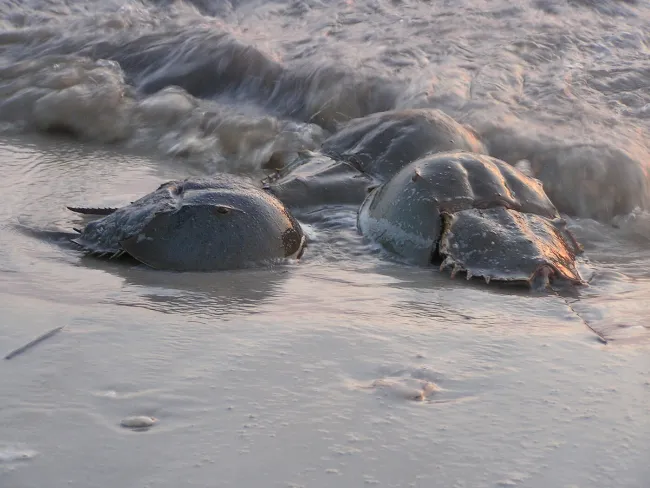
Each spring along the shores of Cape Cod and beaches around the world, horseshoe crabs perform what’s believed to be the world’s oldest wildlife migration. Peaking during the high evening tides of new and full moons, the animals emerge from the ocean and each female buries thousands of eggs in the sand.
Massive numbers of shorebirds are attracted to the beaches, such as the threatened rufa red knot who rely on energy-rich horseshoe crab eggs to nourish them during their own migration. Sea turtles and fish also depend on the eggs.
Much of this phenomenon occurs in Delaware Bay, which hosts the largest population of horseshoe crabs in the world. But Dr. Larry Niles, a wildlife biologist and former head of the Endangered and Nongame Species Program with the state of New Jersey, says there’s evidence Cape Cod was once a major stopover for migrating shorebirds in the early 1900s due to its abundant horseshoe crab populations.
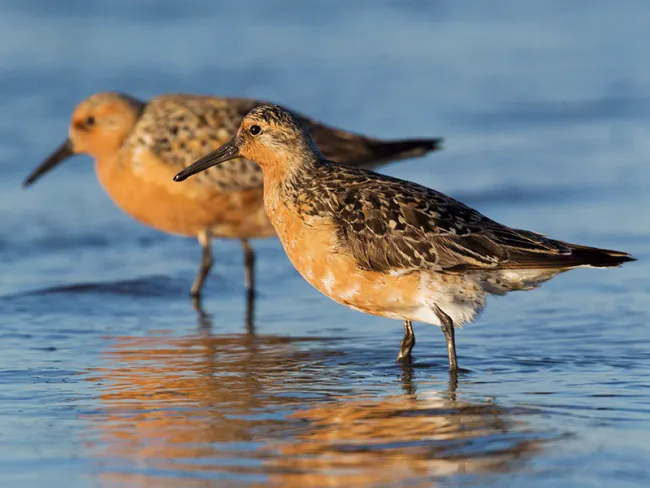
Danita Delimont/Getty Images
Things changed for Massachusetts’ horseshoe crabs around mid-century.
First, Massachusetts towns created bounties for the tails of dead horseshoe crabs, believing the animals threatened fishery operations. Then in the 1960s, Massachusetts researchers discovered horseshoe crabs could be taken from the oceans and used to test vaccines, medical devices and injectable drugs for contaminants. Massachusetts became the first state to collect wild horseshoe crabs for their blood. By the 1990s, fishers were also using horseshoe crabs in massive numbers as fishing bait. In recent years, horseshoe crabs have been losing the sandy beaches they prefer for spawning to climate change and shoreline development.
In recent decades, Massachusetts has taken multiple steps to limit the harvest of horseshoe crabs during their sensitive spawning season. According to state data, the population has been slowly increasing in recent years.
Jeff Rotman/Alamy Stock Photo
How horseshoe crab blood is used
Horseshoe crabs have survived so long in part due to their distinct sky-blue blood, which protects them from even tiny amounts of toxic bacteria.
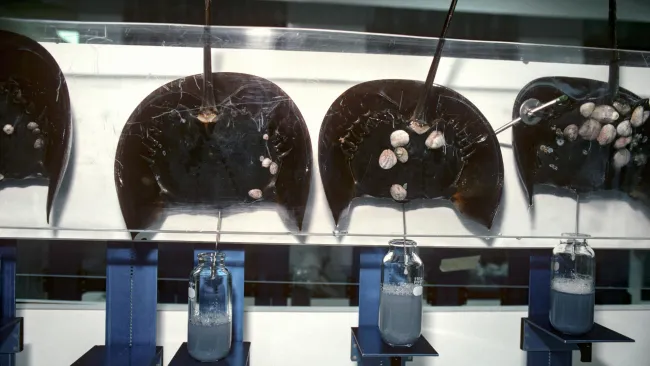
In order for horseshoe crabs to be bled for use in the biomedical industry, fishers must first catch them either by hand or by dragging nets along the bottom of the ocean with a boat, a process called trawling. Horseshoe crabs are then brought to bleeding facilities where they are strapped down and pierced through their hearts. Up to one-third of their blood is drained from their bodies. The crabs are then released back into the wild.
Today, five facilities along the Atlantic coast bleed horseshoe crabs. Two of the largest facilities are in Massachusetts. In 2024, over 1 million were taken for biomedical use, up from 284,000 in 2004.
It’s not clear how many horseshoe crabs die during this process. Studies have found differing rates, generally between 10 to 30% of individuals. Most estimates assume a 15% mortality rate. Governing bodies, including the state of Massachusetts, do not disclose the actual number of horseshoe crabs killed because of confidentiality laws protecting the industry.
“There is also some level of mortality occurring prior to bleeding that is not being captured in our mortality estimates,” director of the Massachusetts Division of Marine Fisheries Daniel McKiernan wrote in a 2023 letter. “Trawling likely produces a higher pre-bleeding mortality rate than hand harvest given the differences in catch and handling practices (e.g., shells being broken from weight of catch in nets, dropped on deck, exposure to conditions at sea).”
Most crabs in Massachusetts are now caught by boat.
Shaw also thinks more horseshoe crabs are dying than the numbers state. “We have no idea how they're handled. Improper handling, especially by the tail, can cause a life-threatening injury,” she says. “They need their tail to actually flip themselves over when they overturn on their backs.”
It’s even less clear what nonlethal impacts the bleeding process has on surviving crabs. The limited research suggests horseshoe crabs who have been bled are less likely to reproduce and less active, which can make it even harder for populations to recover.
Laurel Wilkerson/U.S. Fish and Wildlife Service
Scientific advancements
Thankfully for the crabs, scientific advancements are helping to change the tides. In the early 2000s, a synthetic, animal-free alternative to horseshoe crab blood came onto the market. Subsequent research has found the alternative is just as effective as using horseshoe crab blood and is less likely to produce false positives.
In 2024, the U.S. Pharmacopeia—an organization that establishes quality standards for medicines—officially recognized the synthetic alternatives. Because the Food and Drug Administration heavily relies on the USP for guidance, this approval alleviates many of the regulatory hurdles companies faced.
Some companies are embracing the synthetics. Eli Lilly now uses synthetics for 80% of its endotoxin testing. It’s saved the company money in the long run. “If you invest a little bit upfront, you will achieve those benefits—quality, supply chain, ethics, cost," senior director at the company Jay Bolden told The Boston Globe in February. “We’ve achieved every one of those, and I think everybody else could too.”
The withdrawal of the Massachusetts proposal is a hopeful sign that we’re moving away from the exploitation of horseshoe crabs and toward innovative, non-animal testing methods, Shaw says.
Soon, these ancient animals will begin their annual migration. On many beaches, significantly fewer horseshoe crabs will come ashore than historically did. Still, the migration is a magical sight, says Niles. “It’s something you don’t see anymore…Rarely do we have experiences of abundance [in nature].”
Related Stories
Jo-Anne McArthur/We Animals
The NIH, FDA and EPA say they want to move away from animal experiments in the U.S. and toward modern alternatives.
Aaron Zellhoefer/Humane World for Animals
My rescued beagles reveal the lifelong trauma caused by animal testing. This is why we must end Category E experiments once and for all.
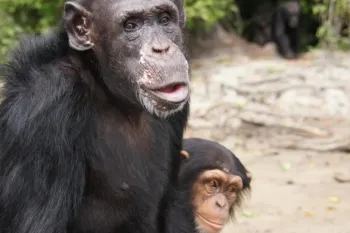
Chikondi Kaona/Humane World for Animals
Every animal has a story. And the dozens of chimps at Second Chance Chimpanzee Refuge, our sanctuary located on a set of estuarine islands near Monrovia, Liberia, have lived stories of epic proportions.