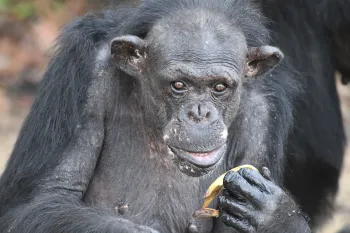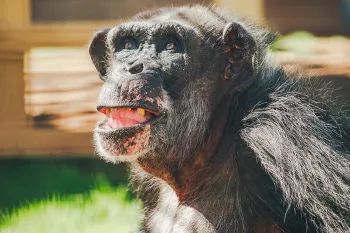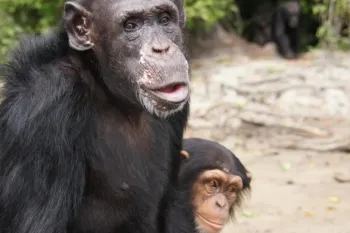
Every animal has a story. And the dozens of chimps at Second Chance Chimpanzee Refuge, our sanctuary located on a set of estuarine islands near Monrovia, Liberia, have lived stories of epic proportions.
Most of the residents at our sanctuary were either stolen from their families in the wild and later sold to the laboratory or born in captivity as part of its breeding colony. Some endured decades of invasive experiments and frightening tranquilizations, infections and illnesses by a U.S.-based research facility that had intentionally infected them with hepatitis as part of an effort to develop a hepatitis B vaccine. Collectively, the chimps were subjected to at least 500 liver biopsies and tranquilized or anaesthetized over 4,000 times.
They were eventually retired to the islands along the Farmington and Little Bassa rivers in 2006 when the blood center ended the tests. Onetime staff members continued to bring the chimps food and water as neither was naturally abundant on the islands.
In 2015, when the research organization ended its program in Liberia, we stepped in and came to an agreement with the organization, pledging lifetime care for the chimps who now live a near-wild forest existence on the islands. Second Chance Chimpanzee Refuge provides a safe haven for them to live out their days—building nests, eating wild berries, interacting with smaller forest animals and living in tightly knit social groups.
The sanctuary is managed by a dedicated team of Humane World for Animals employees in Liberia, some of whom are the original caregivers, who have strong bonds with the animals. Twice a day, they travel by boat to the islands to provide the chimpanzees with nutritious locally sourced fruits and vegetables, along with appropriate medications, and to make assessments about veterinary care or other needs.
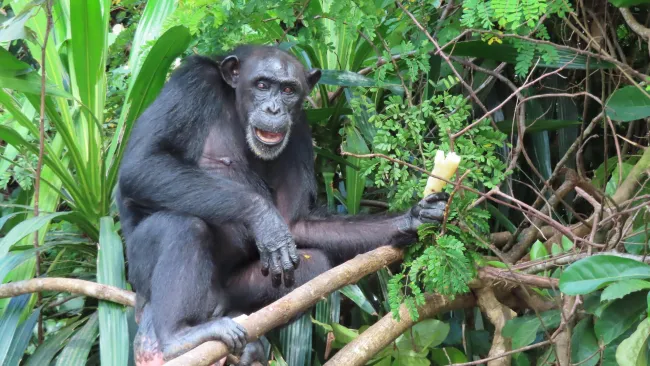
Dr Richard Ssuna/Humane World for Animals
There are some special challenges involved in meeting the needs of this aging population of chimpanzees, particularly as some are still living with health issues from their years in research or testing. In addition to specialized diets and supplements designed to meet the needs of elderly chimps, we are building new structures on each island to make it easier to provide vital and timely veterinary care to them directly on their island homes. This multi-year construction project will mean that the chimps can be left as undisturbed as possible even when receiving hands-on health care for ailments, minor surgeries, routine check-ups and diagnostic procedures.
Now that these chimps get to spend their days relaxing, grooming and playing with one another, there is a beautiful and unexpected pleasure for those who get to care for them. In this peaceful life, their unique personalities have had the opportunity to come out. Springroll, for example, is a 49-year-old chimpanzee who is quiet and easygoing, yet fastidious when it comes to her meals; she washes every piece of food she receives in the nearby river before eating it. Her favorite is pineapple, and she enjoys the occasional apple as a treat too.
It’s animals like Springroll who provide a living reminder about what’s possible when we work to achieve our vision of a better, more compassionate world that benefits everyone. The youngest chimps at our refuge could live for 40 more years. (While the mean life expectancy for captive chimpanzees is mid-30s to 40s, they can live into their 60s.) As these chimps live out their lives in peace, we are working around the world to move humanity away from animal testing and research, which caused so much suffering for these chimpanzees and countless other animals, and to hasten the adoption of more human-relevant non-animal methods that serve us all much better.
Of course, we continue to pursue real relief for animals languishing in laboratories, just as we advocate for proper lifetime care for those animals fortunate enough to retire from the laboratory, and still have their lives to live. But that is not enough to create permanent change. To that end, we advocate for non-animal methods and technologies to replace animal experiments, not only sparing the lives of rats, mice, rabbits, fish, dogs, monkeys and other animals, but modernizing health research to improve and save human lives.
That is how we will achieve the more humane world we imagine. And we invite you to join us.
Jo-Anne McArthur/We Animals
End cruel animal testing
Every day animals endure a life of misery in laboratories around the world. Sign the petition to replace painful animal experiments with sophisticated alternatives.
Kitty Block is president and CEO of Humane World for Animals. Follow Kitty Block.