HARRISBURG, Pa.—Yesterday, Gov. Josh Shapiro signed S.B. 381, known as the Beagle Bill, bipartisan legislation that marks important progress for animals in Pennsylvania. The law creates a pathway to

Jo-Anne McArthur / We Animals Media
Animal testing and research
We're working around the globe to replace cruel, outdated animal experiments with innovative non-animal methods.
Taking suffering out of science
Results from animal experiments translate to people just a small fraction of the time, yet millions of dogs, mice, monkeys and rabbits continue to endure a life of misery in laboratories around the globe. It’s time to prioritize cutting-edge alternative technologies that don’t rely on animals.
90%
of drugs tested on animals
ultimately fail in human trials, according to the National Institutes of Health.
190
million animals
are estimated to be used in harmful experiments each year globally; most are killed after the experiment is over.
45
countries
have enacted full or partial bans on cosmetics animal testing.
The problem with animal testing
Millions of animals, including dogs, monkeys, rabbits, and mice, endure invasive and painful experiments every year. These procedures often occur without adequate pain relief and rarely predict how humans will respond to drugs or chemicals. Existing laws offer minimal protection for animals in laboratories.

N/A/We Animals Media
Lukas Vincour/Zvířata Nejíme/We Animals

N/A/Getty Images
Meredith Lee/Humane World for Animals
End cruel and unnecessary dog testing
Dogs do not deserve this
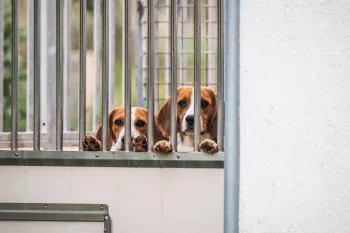
Dogs endure unimaginable suffering in distressing and often painful experiments where they are forced to ingest potentially toxic substances or have them injected into their bodies.
Millions of animals continue to suffer in laboratories where they are subjected to cruel experiments and harsh laboratory conditions. Humane World for Animals is working to eliminate animal experiments and replace them with superior non-animal technologies that are better for both animals and humans.
Vicki Katrinak, Humane World for Animals
Our global efforts to end animal testing
We are leading efforts worldwide to promote non-animal research alternatives, eliminate animal testing and improve the lives of animals in labs.

Worldwide progress across dozen of countries in 2025 brought us closer to a world without animal testing and research.

At our sanctuary in Liberia we care for dozens of chimpanzees, most of whom were used in invasive biomedical experiments.

Our short film combines stop-motion animation and an A-list cast as part of our global campaign to end cosmetic animal testing.

We are helping scientists address major health challenges without harming animals.

We lead an initiative working to make animal-free science the global standard.

Teddy and dozens of other dogs were living a nightmare, force-fed fungicide every day for up to a year. Learn more about Teddy's story.

Al and dozens of other chimpanzees were relocated from a laboratory in New Mexico to the safety of sanctuary at Chimp Haven in Louisiana.
What I saw working in a monkey research facility
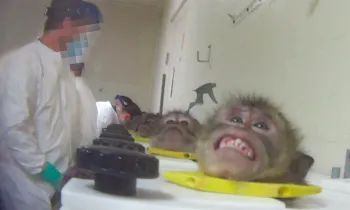
Before she became an animal advocate, Kathleen Conlee worked in a monkey research facility. The experience was only the beginning of her work with animals and compelled her to lead the fight to alleviate and end the suffering of animals in laboratories. Hear her story.
End animal testing
It is time to replace cruel, outdated animal experiments with innovative animal-free methods. Take action today!
FDA: Stop animal testing
Dogs, monkeys, rats and other animals endure unimaginable suffering everyday of their lives in distressing and often painful experiments.

Petition to U.S. EPA
Petition to stop forcing dogs to ingest pesticides and then kill them if they have not already died from the toxic effects of the substances.

Support cruelty-free cosmetics
Thousands of animals are still suffering and dying needlessly to test cosmetics.

Urge Canada to invest in humane science
In Canada, millions of animals are still used in painful experiments.

Stop the import of endangered primates
Canada imports endangered primates to suffer in research and testing laboratories.

Protect horseshoe crabs
More than one million horseshoe crabs are taken from the wild every year and exploited. Horseshoe crabs belong in oceans, not laboratories.

Replace animal tests with alternatives
Support a switch from cruel animal experiments to cutting-edge test methods.
End outdated drug tests on animals
Urge the FDA to make it clear to companies that animal testing is not required.

End dog testing
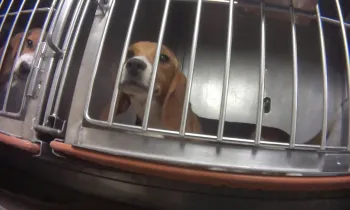
Sadly, dog testing is still legal everywhere in the world. No dog deserves to suffer in a barren laboratory.

Meredith Lee/Humane World for Animals
All Animals Magazine
The future of science without animal testing
Federal action and scientific breakthroughs are accelerating the end of animal testing.
Facts about animal testing
Learn why animal tests and experiments should be phased out in favor of cutting-edge technologies that are better for both humans and animals.

Learn more about how many animals are used in experiments, which ones, in what kinds of experiments, what life is like for them and more.

Tens of thousands of dogs are used in harmful experiments worldwide. Learn more about how dogs are used in animal testing.

Get more information about U.S. universities, hospitals, companies and other facilities that use animals in experiments.
Latest news
Gov. Shapiro signs Beagle Bill to protect animals in Pennsylvania laboratories
United States
Humane World for Animals and Humane World Action Fund endorse bipartisan bill to end federal funding for experiments on dogs and cats
United States
WASHINGTON— Humane World for Animals and Humane World Action Fund, formerly called Humane Society of the United States and Humane Society Legislative Fund, are endorsing a new bill introduced in
Statement: NIH expands investment in human-relevant research and alternatives to animal testing
United States
WASHINGTON— Humane World for Animals and Humane World Action Fund, formerly called the Humane Society of the United States and Humane Society Legislative Fund, applaud the National Institutes of
Your gift can do so much for animals in need
Start saving lives today by making a one-time gift—or protect animals worldwide all year long with a monthly contribution.
Octavian Cantilli/For the HSUS