
Second Chance Chimpanzee Refuge Liberia is a sanctuary run by Humane World for Animals, caring for dozens of chimpanzees in Liberia, West Africa.
Most of the chimpanzees at the sanctuary were once used in invasive research, many of them for decades. Some were stolen from their forest homes and families as babies, most were born in a laboratory to be experimented on, while others were born after the laboratory closed its chimp program.
In the past, chimpanzees were considered suitable biomedical research subjects because they share more than 98% of their DNA with humans. However, ethical concerns mounted as growing evidence of chimpanzee intelligence and complex social skills became known and scientific data proved that chimpanzees are not ideal research subjects; as a result, labs experimenting on them began to close.
All of the chimpanzees at our sanctuary are amazing, resilient primates. Laboratory life took away their first chance of a free and natural existence. We are so proud to be giving them their second chance.
Their heartbreaking history
In 1974, a U.S.-based research organization set up a laboratory in Liberia, Africa and began experimenting on chimpanzees. It bought baby chimpanzees stolen from the wild, and bred chimps in captivity. For the next three decades, more than 400 chimps were held in barren laboratory cages while being used for painful and invasive hepatitis B and blood cleansing experiments.
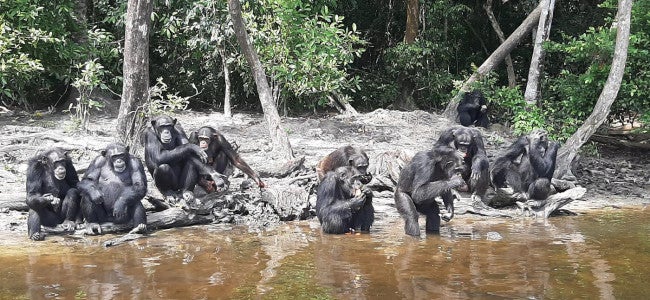
In the early 2000’s, the laboratory began phasing out experiments on chimpanzees and relocated them in groups on nearby islands. These islands comprised mangrove forest which did not provide sufficient food or fresh water to keep the chimps alive, so the chimpanzees were reliant on humans to survive. Second Chance Chimpanzee Refuge is part of a global chimpanzee rescue effort, providing lifelong care to chimpanzees who can no longer survive on their own after years of exploitation or displacement.
Liliana Pacheco Ricote/Humane World for Animals
In 2015, funding from the laboratory was withdrawn and Humane World for Animals stepped in to provide emergency care and support to the workers who had continued to look after the chimps. Since then, we have taken on responsibility for the lifetime care of these animals, some of whom could live for another 50+ years. This is a massive undertaking but after all the chimps have been through, it’s the least they deserve.
Our dedicated team in Liberia ensures the chimps’ wellbeing and smooth sanctuary operations, traveling about 50km by boat to the islands twice a day, every day to provide the chimpanzees with nutritious locally sourced fruits and vegetables, daily observation and medication as needed including routine deworming and oral medications to address skin conditions, infections, or pain.
Under our care, the chimpanzees have thrived and are enjoying life, roaming freely on large, natural islands and living in social groups that are as close to chimpanzees in the wild as possible. It is the only sanctuary in Africa to have former laboratory chimps.
Sanctuary expansion
Now that the chimps have a stable and secure life on the islands, and the Liberian government (which still legally owns the chimps) formally recognizes Humane World for Animals Liberia as their sole and permanent caretaker, we have been able to embark on the next exciting phase - building new sanctuary structures on the islands to make veterinary care and check-ups for this aging population of chimps far easier. We have a veterinary clinic at our mainland facility, but having structures on the islands means treating chimps in place which is less stressful for both them and us!
Building facilities on estuary islands that currently house large numbers of adult free-roaming chimps is a complex operation. The chimps from each island must be relocated to our mainland facility's chimp villa so that the construction team can safely work on site to build the new structures. We moved the first group of chimps in March 2025 to our mainland facility's chimp villa and will return them to their island home in early 2027.
Funding needs
It costs around $1.2 million a year to run the sanctuary, including staffing, veterinary care, transport, equipment maintenance, repairs and obtaining and delivering food to the islands. Just feeding the chimps costs around $10,000 a month. It’s a huge financial undertaking, and that doesn’t include construction costs. Almost ten years ago, the research organization that originally ran the lab, gave us a one-off contribution of $6 million but it was only a fraction of their lifetime care costs. Generally, chimpanzees can live for 35-55 years, so we will need to fundraise for their lifetimes. You can donate here to help us care for the chimps and advocate for all animals.
Get to know some of the chimps
Jamie Linder/Humane World for Animals
Dr Richard Ssuna/Humane World for Animals
Humane World for Animals
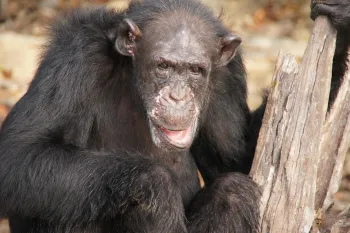
Chikondi Kaona/Humane World for Animals
Meet some of the team
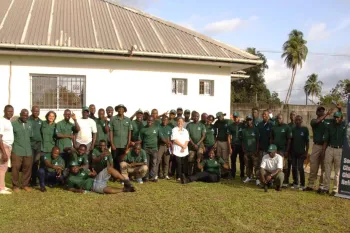
Jallah Fahnbulleh/Humane World for Animals
The Second Chance Chimpanzee Refuge team
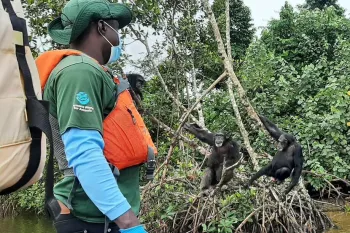
Jallah Fahnbulleh/Humane World for Animals
A caregiver at Second Chance Chimpanzee Refuge
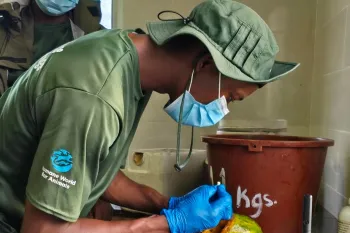
Jallah Fahnbulleh/Humane World for Animals
Caregivers carefully place medication in the morning food
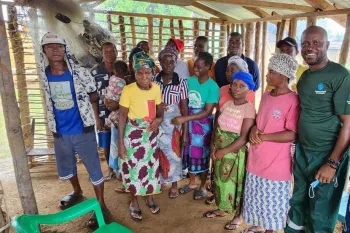
Humane World for Animals
With local community members at Bassa Point
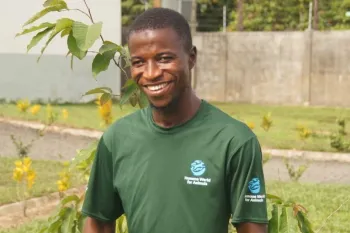
Jallah Fahnbulleh/Humane World for Animals
Morris Suah, Second Chance Chimpanzee Refuge caretaker
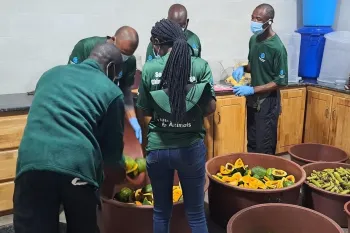
Jallah Fahnbulleh/Humane World for Animals
Caretakers prepare the chimps' daily food
Each day our chimpanzees wake up to the familiar sound of the boat engine delivering their breakfast. That simple sound reminds us each day to thank our supporters who continue to support Second Chance Chimpanzee Refuge, our dedicated staff, and most importantly, the chimpanzees who continue to live with dignity, care, and hope.
Jallah Fahnbulleh, Humane World for Animals
Frequently asked questions
Second Chance Chimpanzee Refuge Liberia is a sanctuary operated by Humane World for Animals that provides lifelong care for chimpanzees rescued in Liberia.
The chimps were rescued after being used in invasive research or orphaned by the illegal wildlife trade, and they cannot be safely released back into the wild.
The sanctuary provides daily care, nutritious food, veterinary support, and natural habitats where the chimps can live safely and comfortably.
The refuge is located in Liberia, West Africa, giving chimpanzees a protected environment near their natural range.
The team provides enrichment, social groupings, and individualized care to support the chimps’ well‑being for the rest of their lives.
Supporters can help by donating, learning about the chimps’ stories, and supporting Humane World for Animals’ rescue and sanctuary efforts.
We currently do not offer any volunteer opportunities at Second Chance Chimpanzee Refuge. However, if you would like to support the sanctuary you can make a donation to help rescue more chimpanzees and provide support for those in our care.
Read further
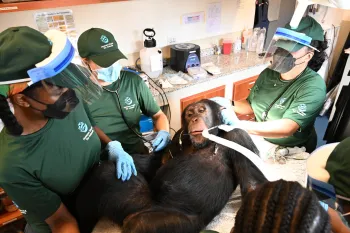
The checks, carried out by the sanctuary’s veterinary team and specialist experts, aimed to assess the animals' long-term health, detect any early signs of disease and tailor care plans for individuals as they age.
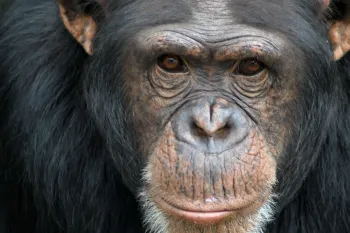
After surviving years of painful experiments, Hannie found safety at our sanctuary in Liberia.
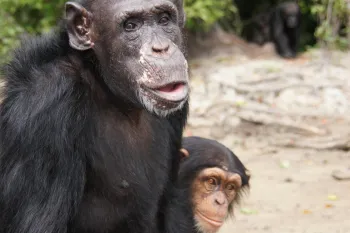
Second Chance Chimpanzee Refuge provides a safe haven for them to live out their days—building nests, eating wild berries, interacting with smaller forest animals and living in tightly knit social groups.
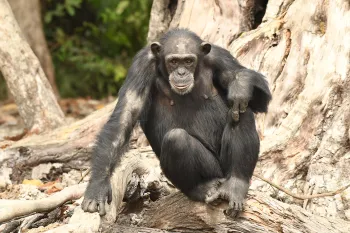
The first successful relocation marks a key milestone in improving care, shelter and veterinary access for retired research chimpanzees.
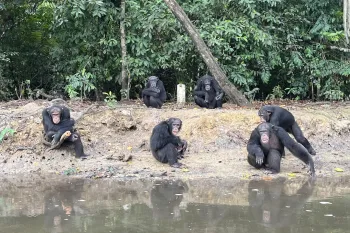
With our improvements to this special refuge for chimps, we are proving that once again eradicating cruelty and deprivation in favor of spreading compassion and care benefits us all.
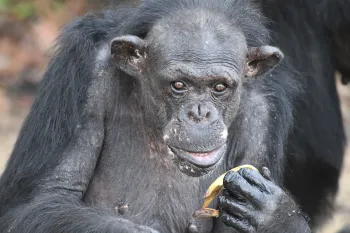
Samantha spent 25 years being subjected to invasive procedures and experiments. Today, she is enjoying life as the eldest resident of our sanctuary and one of the dominant females on Island 5, where she enjoys her favorite foods of pineapple and rice balls.
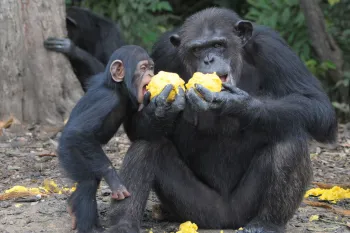
We are committed to ensuring a good outcome for the chimpanzees and the remarkable people who have devoted themselves to the animals’ care.
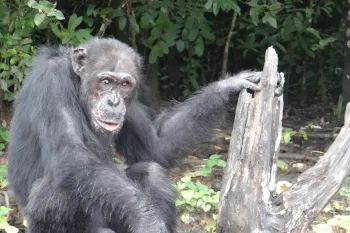
But before David found his friends and made Second Chance his home, he was captured from the wild when he was just an infant, David was torn from his mother, who was likely killed, and kept as a pet. Then, when David wasn’t yet 2 years old, his owners dropped him off at a laboratory.
Your gift can do so much for animals in need
Start saving lives today by making a one-time gift—or protect animals worldwide all year long with a monthly contribution.
Humane World for Animals/