Puppy mills included in this year’s report were found to have dogs kept in dangerous, dirty or cramped conditions; dogs dying from untreated wounds and hypothermia; and a breeder cited for a botched

Chris Keane / AP Images for The HSUS
Puppy mills
It's time to end the horrifically cruel treatment of dogs in mass breeding operations.
What are puppy mills?
Inhumane high-volume dog breeding facilities that churn out puppies for profit, ignoring the needs of the pups and their mothers.
10,000
puppy mills
are estimated to be currently active in the United States
500,000
dogs
are kept solely for breeding purposes in all puppy mills
2.6 Million
puppies
are sold each year after originating from a puppy mill
The problem with puppy mills
In puppy mills, mother dogs spend their entire lives in cramped cages with little to no personal attention. Due to poor sanitation, overbreeding and a lack of preventive veterinary care, the puppies frequently suffer from a variety of health issues, creating heartbreaking challenges for families who should be enjoying the delights of adopting a new family member.
Our work around the world
We're fighting to stop puppy mills on all possible levels, including supporting legislative changes, conducting investigations and litigation and promoting public awareness and education.

Here, our undercover investigator, who will remain unnamed, tells the story of the firsthand experience of going undercover for a month at that Suffolk County puppy mill.
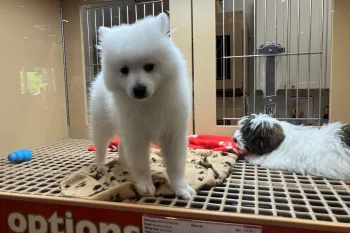
Amanda LoCoco, research program manager for our Stop Puppy Mills campaign, discusses how her work reviewing consumer complaints and breeder inspection reports is all in service of making a more humane world for dogs.

Working with local counsel, our Animal Protection Law team has assisted plaintiffs in lawsuits seeking to hold pet stores accountable for the harm they cause to animals and to their unwitting customers.
Michelle Riley/The HSUS 2010
Petland cruelty exposed
Petland is the largest retailer of puppy mill dogs and last national chain to still sell dogs. Undercover investigations in Petland stores have revealed terrible suffering and even death. Urge Petland to support local shelters and to stop fueling the cruel puppy-mill industry.
Petitions for change
There are an estimated 10,000 puppy mills across the country, where mother dogs spend their entire lives in cramped cages. Take action to help save puppies and their moms from suffering in these cruel mass-breeding operations.

Protect the Animal Welfare Act
Puppies and mother dogs suffer in puppy mills and urgently deserve better conditions.
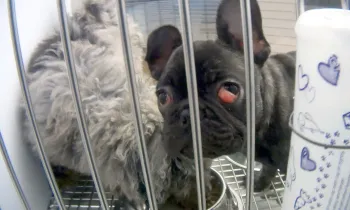
Petland cruelty exposed
Undercover investigations in Petland stores have revealed terrible suffering and even death.
Dogs enrich our lives as loyal companions and members of our families, yet millions of dogs continue to suffer in puppy mills where profit is prioritized over animal welfare. Humane World for Animals works to stop puppy mills, end the sale of puppy mill puppies through pet stores, and promote more humane alternatives for people seeking a companion animal.
John Goodwin, Humane World for Animals
Dig deeper
We're fighting to end the cruelty of high-volume dog breeding facilities that churn out puppies for profit. Learn more about the obstacles facing pups and their mothers and how you can help.
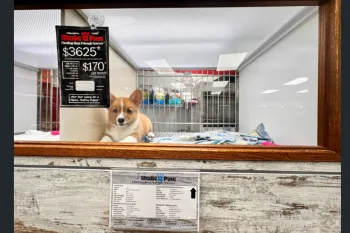
Share these tips with your family and friends to spare them the heartache of ending up with a dog whose puppy mill past can cast a shadow.

A puppy mill is an inhumane, commercial dog breeding facility in which the health of the dogs is disregarded in order to maintain a low overhead and maximize profits.
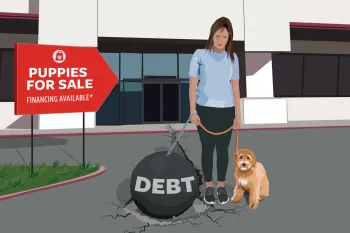
Want to buy a puppy? Protect yourself from greedy banks and pet stores.
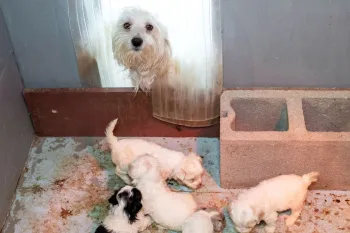
A writer helps our Animal Rescue Team save 250 dogs from cruel conditions at a puppy mill.

Skip pet stores and internet sites and consider adopting from a shelter or rescue first.

Local animal shelters and rescue groups can be great places to search for a new pet.

Humane World for Animals is a hub of expert advice and resources to help you build the best life with your pet.
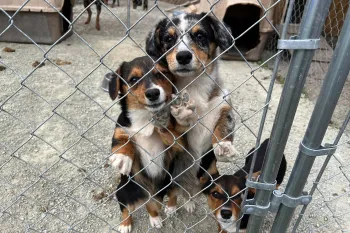
Humane World for Animals reports on puppy mills as a resource to animal advocates, members of the media and researchers.
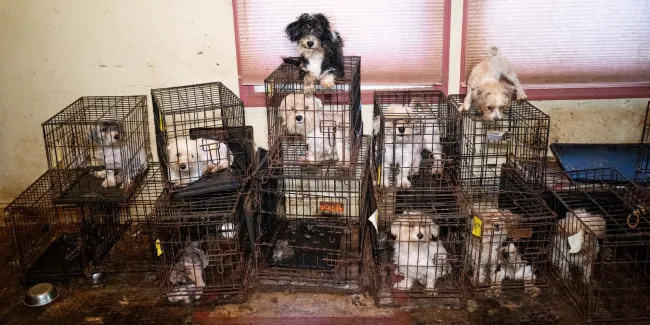
Meredith Lee/Humane World for Animals
Dogs stacked in cages found inside a home used as a puppy mill
Rescue reveals hidden horrors inside home
Our team removed more than 100 dogs from a Maryland home, rescuing them from filth and neglect.
Frequently asked questions
A puppy mill is an inhumane, high‑volume, dog‑breeding facility that produces puppies for profit while disregarding the health and well‑being of both the puppies and their parents. In these operations, dogs are often kept in crowded conditions with little personal attention, inadequate veterinary care and repeated breeding throughout their lives.
Puppy mills commonly share several warning signs. Sellers may refuse to allow buyers to see where the puppies were raised or to meet the mother dog. Puppies are often sold through online marketplaces, classified ads, flea markets or pet stores, rather than directly from the breeder. Poor living conditions, lack of transparency and health issues in puppies may also be indicators.
Puppy mills focus on producing large numbers of puppies for sale, often at the expense of the dogs’ health and welfare. Parent dogs may spend their entire lives in cages and receive minimal care. Responsible breeders, by contrast, raise puppies in clean, humane environments and are willing to meet buyers, show where puppies are raised and provide information about the puppy’s parents and care.
Puppy mills remain a large‑scale problem in the United States. It is estimated that approximately 2 million puppies from puppy mills are sold each year, with many sold through pet stores and online platforms.
When dogs are removed from puppy mills due to cruelty investigations, disasters or lawenforcement actions, we assist with providing urgent care, transportation and placement into shelters and rescue partners. These efforts help dogs recover and eventually find safe, loving homes. Additionally, our Animal Rescue Team helps law enforcement gather and process evidence to assist with animal cruelty cases.
Efforts to end puppy mill cruelty include supporting legislative reforms, conducting investigations, pursuing litigation and raising public awareness. We work to improve breeding standards, strengthen enforcement and hold irresponsible breeders and sellers accountable.
Consider adoption first! Visit an animal shelter or a reputable rescue group. If you choose to buy from a breeder instead, visit the property in person and see where the puppy was raised. Never meet at a third-party location. Puppy mills commonly sell through internet sales, online classified ads, flea markets and pet stores. Responsible breeders will be happy to meet you in person and show you veterinary records, where the puppy was born and raised—and where their mom lives too.
Educate friends and family about humane sources of pets, and let your elected officials know that you want to see stronger laws and better enforcement in place to end cruelty at puppy mills. Download our free advocacy kit for more tips!
Report cruel conditions, such as dogs without food, water or adequate shelter and care, to the dealer’s local humane law enforcement agency, or local police or sheriff’s department if no humane law enforcement agency exists. Report unlicensed breeders to the relevant agency. You can also let us know!
Let us know! You can also look into puppy lemon laws or report problem sellers to the local consumer affairs office and state agencies.
Latest news
'Horrible Hundred' report reveals dogs languishing in filthy conditions; DIY-veterinary procedures and preventable deaths at puppy breeding facilities
United States
As USDA moves to address puppy mill cruelties, humane advocates push for stronger standards of care at commercial dog breeding facilities
United States
WASHINGTON—Humane World for Animals and Humane World Action Fund, formerly called Humane Society of the United States and Humane Society Legislative Fund, are encouraged to see the U.S. Department of
Authorities in Costa Rica establish stronger controls on breeding and sale of dogs and cats
Costa Rica
SAN JOSE—Costa Rican authorities have approved a vital new regulation that establishes stronger controls over establishments dedicated to the breeding and sale of dogs and cats. This regulation was
Stop puppy mills!
Stop puppy mills!
You can stop this cycle of cruelty by adopting your next pet. You can also donate to help shut down puppy mills and continue our lifesaving work for all animals.
Chuck Cook/For the HSUS