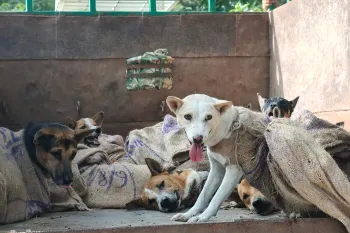
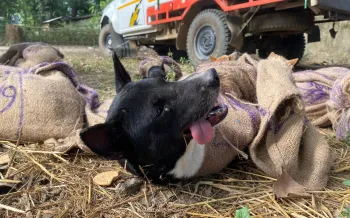
After a harrowing experience, 26 dogs are now safe and recovering after being stuffed into sacks—their mouths tied shut—and loaded onto a truck.
Last week, police in Assam, India, intercepted the truck, which they believed was transporting the dogs for the dog meat trade.
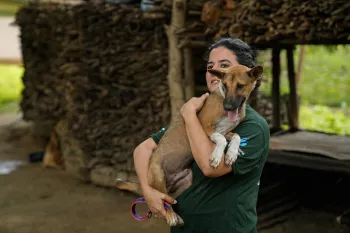
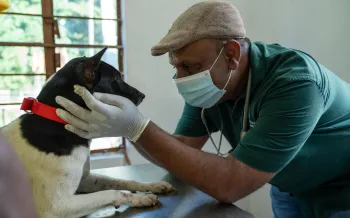
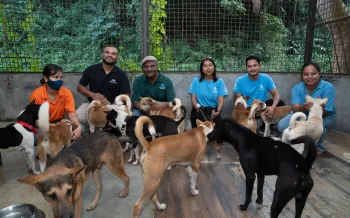
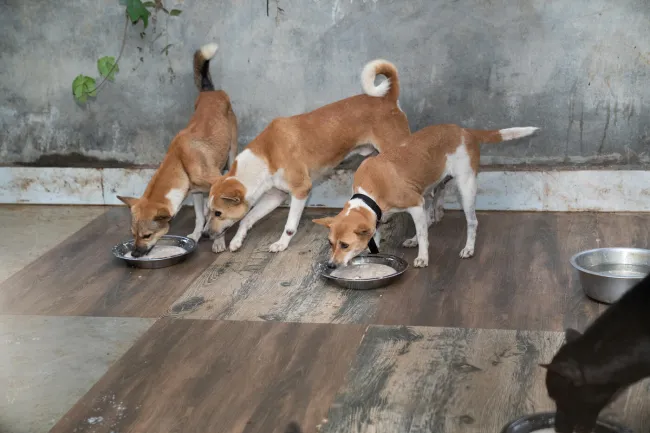
A team of local animal welfare organizations along with a team from Humane World for Animals India coordinated the transfer of the dogs to safety, where they are now receiving veterinary treatment and care. Veterinary exams revealed that many of the dogs suffered from tick infestations and dehydration. And two of the dogs were discovered to be pregnant.
This rescue was made possible because of the Assam Police’s interception and the collaboration of the Humane World for Animals India team with three Assam based animal protection organizations, Just Be Friendly, UCI Foundation and Anaajoree.
Ram Das/SB Shivaji Studio
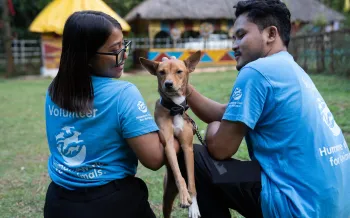
Once the dogs have recovered, local organizations will work to place them in adoptive homes.
And there’s something else hopeful about this rescue, too: This was a unique show of strength in the region that multiple organizations coordinated directly with police to rescue dogs from the trade, showing how things have progressed and a model of how future interventions could look.
Surajit Sharma/AP Images for Humane World for Animals
Ending dog meat in India depends on enforcement and prevention
Despite being illegal, the dog meat trade continues to operate in parts of India. We estimate that tens of thousands of dogs are stolen or snatched from the streets in Assam each year and transported across borders to neighboring states, including Mizoram and Nagaland.
This story in particular has garnered a lot of media attention, and several community members have been reaching out to check if their missing dogs are in the group. It is heartbreaking that so many families in the region have had their beloved dogs stolen.
Not only do dogs suffer immensely from the capture and transport—they can be deprived of food and water for many hours, even days, as they’re driven to slaughter. The dog meat trade also undermines efforts to eliminate rabies in the region.
The global dog and cat meat trade is yet another example of a practice that is cruel at its core, propagating harms to both animals and people. Wherever the dog and cat meat trades still exists, it underscores the need for stronger measures to end the capture, transportation and slaughter of dogs and cats.
Surajit Sharma/AP Images for Humane World for Animals
Even after monumental wins, the work continues
When we talk about tackling the root causes of animal cruelty and suffering to create permanent change, we mean pursuing animal cruelty wherever it exists. And this holds true even after monumental wins.
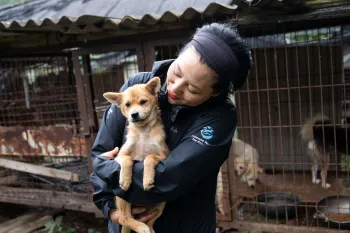
Just weeks before this rescue in Assam, we conducted our last large-scale rescue from a South Korean dog meat farm, ahead of the ban which will come into effect in February next year. We advocated for that ban on the dog meat industry in South Korea for years—even back when most people said such an achievement would be impossible. And that’s part of what gives us the hope and determination to eradicate the dog and cat meat trade wherever it exists.
Now, the challenge will be to eradicate the trade in many regions, like in India, where dog meat is technically illegal but continues.
Research by Humane World for Animals India indicates that tens of thousands of dogs are stolen from homes or taken from the streets in Assam each year and transported across state borders to neighboring states, including Mizoram and Nagaland.
Rescuing animals already caught in the system is critical, but long-term progress also depends on disrupting trafficking networks, supporting enforcement agencies and helping communities' transition away from the trade. That broader strategy is already working.
Surajit Sharma/AP Images for Humane World for Animals
Eradicating the dog meat trade and creating permanent change
Over two years, 60 dog meat vendors in Nagaland voluntarily left the trade through the alternative livelihood program supported by Humane World for Animals India and our local partner, Pro Rural.
Earlier this year, three dog meat wholesalers also exited the trade, allowing the rescue of 18 dogs. We are also working with police departments to strengthen the capacity to identify and stop dog trafficking.
Stories like this illustrate an important truth about animal protection: progress is rarely the result of a single victory. Even as we celebrate major milestones, lasting change requires continued partnerships and collective action, along with a shared sense of commitment to ending animal cruelty. The Assam rescue is a powerful example of what that approach looks like in practice, demonstrating how law enforcement, animal protection groups and local communities can work together toward a common goal.
Humane World for Animals/
End the dog and cat meat trade
Dogs and cats who are victims of the meat trade are mostly stolen pets or street animals that endure immense suffering before being slaughtered. Take action to speak out about this cruel and dangerous practice.
We work across Asia to end the dog and cat meat trade, pursuing legislation, community engagement, animal rescue, rabies vaccination and livelihood transition programs, working both directly and with local partners.
In India, we have also been pioneering animal birth control and humane street dog management across the country, helping to systemically reform the treatment of street dogs, many of whom can end up funneled into the illegal dog meat trade.
The dogs rescued in Assam show that there is still work to do, but also that we can make real progress happen when we collectively imagine how a better world for animals can look—and then work together to create it.
Surajit Sharma/AP Images for Humane World for Animals
Kitty Block is president and CEO of Humane World for Animals. Follow Kitty Block.