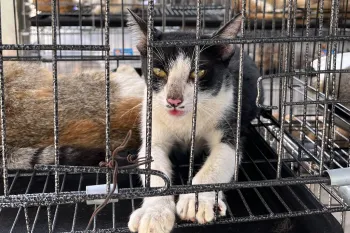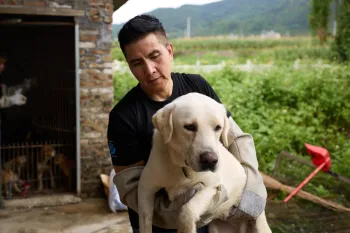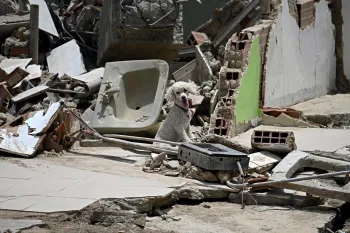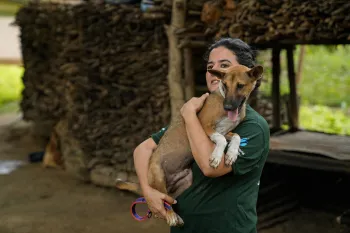
On July 7, 2026, 18 dogs were safely removed from a holding site in Nagaland, a state in northeast India, through a coordinated effort by our Humane World for Animals India team, local partners Pro Rural and Dimapur SPCA and the support of former dog meat vendors and the Chumoukedima veterinary department. This was a historic rescue because it was initiated by dog meat wholesalers themselves. For the first time in the history of the dog meat trade in India, those who controlled the distribution of dogs have chosen to walk away from it all. Keren Nazareth, senior director of the companion animals program for Humane World for Animals India, was on the ground for the rescue. Here is what she saw and experienced during this week’s inspiring and life-saving rescue.
When three dog meat wholesalers who had been supplying dogs in the trade for over 20 years heard about our program that helps people transition to other, humane ways of making a living, they decided to join it. After these three women learned about pickle-making and mushroom farming, they left the dog meat trade forever.
Surajit Sharma/AP Images for Humane World for Animals
They still had 18 dogs among the three of them in different villages when they decided they were never going to sell another one into the meat trade. They informed the Pro Rural team of their decision, and we were alerted to the situation. We began working urgently to transport the dogs from Nagaland to the state of Assam.
The women had untied the dogs but kept them inside their homes to prevent theft. Their barking one night led to threats from locals that the dogs would be killed if they were not moved.
That very night, one of the former dog meat vendors and her family moved 15 dogs to her village to protect them until we could arrive to rescue them, while three other pups remained with another former vendor inside her home.
These women and local partners, who assisted them, had never done anything like this before. They showed bravery, compassion, determination and great presence of mind to ensure the dogs could be saved.
“I want more women vendors to know that we can have humane livelihoods, too,” one of the women said.
Surajit Sharma/AP Images for Humane World for Animals
No animal shelter in Nagaland
Because there is no animal shelter in Nagaland, the former dog meat vendor’s home had to undergo some adjustments. It was not equipped to house so many dogs.
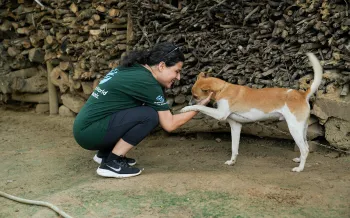
She had open space in her front yard but had no fence. She had to tether them around the front yard— to trees, posts, logs and the legs of a shed—wherever she could find space.
While it was not ideal, they were safe and it was temporary. She fed them warm home-cooked meals and clean drinking water. Her family took turns taking them on walks.
The rescue: Day one
As we parked, the sight that we beheld filled us with both relief and sadness. Relief that they were all safe, and sadness to know they had been through so much trauma and cruelty. And yet, a chorus of yaps, wagging tails and jumps welcomed us.
We first checked on the three puppies. One was so small that he fit in the palm of our hands. Given concerns about parvo and the pups’ compromised immunity, director of our street dog programs, Dr. Piyush Patel, himself a veterinarian, conducted a complete veterinary checkup for all of them. Some had gastrointestinal issues but overall they looked okay, all things considered.
As for the older dogs, there were five tied to separate poles of a shed; four had been put inside crates; and the remaining dogs were tied near a pile of logs.
Dr. Piyush and our skilled animal handlers, Parvinder and Rajeev, began inspecting each dog, vaccinating them against rabies, and doing extensive checks for injuries and trauma. They prepared a file for each dog so it could be cleared by the veterinary department for transport.
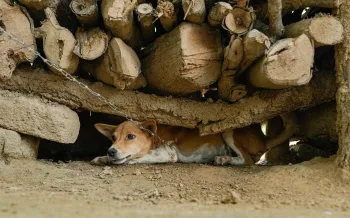
Some of the animals bear the marks of their hard pasts. Under the log pile was Tripod, named because he can stand only on three legs. He had experienced a fracture, most likely when he was tied in a sack and thrown into a vehicle. It had begun healing but had caused a misalignment in one leg.
I want more women vendors to know that we can have humane livelihoods, too.
–Former dog meat wholesaler in Nagaland, India
We found three pregnant females: Whitey, Daisy and Laila.
When dogs are picked up off the street and shoved into sacks, their bodies are concealed inside the sacks, hiding their pregnancies.
Whitey appeared to be deeply traumatized. She would not let anyone touch her and would turn away if we went near her. Bahadur (meaning Courageous), Tripod and Viru (Brave), three male pups, and Ziggy, a young female, were the most anxious. We took turns sitting with them to calm them.
The Chumoukedima veterinary department supported the effort with clearances for transport. All the dogs were given food and water, walked and settled in for their last night at the holding site.
The rescue: Day two
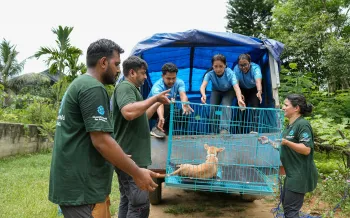
We started early the next day to ensure there was no delay in getting the dogs to the safe shelters. By 10:30 a.m., we were ready to load them onto the trucks to take them out of the dog meat trade.
Surajit Sharma/AP Images for Humane World for Animals
First was 6-month-old Viru, “the brave.” The moment we put him in the crate, all of the dogs seemed to sense something. As they started to jump with excitement, we felt emotional. All the necessary steps had led to this moment.
As relief washed over us, some of us broke down into tears. Our communications manager, Shaili, said it well: “I am so happy because I know they will be safe now. Every time I looked into their eyes, I thought about how they could have been killed and then thought of every dog who had had to experience that.”
A new life for dogs and former traders
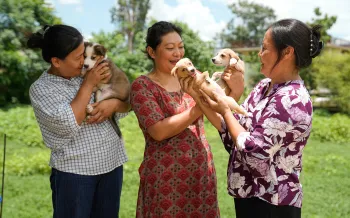
Already, eight of the dogs have been adopted locally by families in Nagaland, including Daisy and Whitey, two of the pregnant dogs. An elderly local couple were distressed by their stories and wanted to help them bring their pups into the world safely, with our assurance that the mother dogs would be sterilized soon after weaning.
Surajit Sharma/AP Images for Humane World for Animals
This is significant; it shows the shifting perceptions of dogs in the region.
This rescue has not only changed the fate of the dogs but has also shown the power of offering people compassionate alternatives to the dog meat trade. When given the opportunity to practice kindness and mercy toward animals, they often take it. Often inequity and circumstances force animals and people into such misery. And it is exactly through finding these root causes and creating trust in communities that we can change the world for dogs, helping the very people who once ran the dog meat trade to become the ones who end it.
You can help save animals in need and stop all forms of animal cruelty.
Chau Doan/AP Images for HSI
End the dog and cat meat trade
Help ban the inherently cruel and dangerous dog and cat meat trade in Viet Nam.
Keren Nazareth is senior director of the street dog program for Humane World for Animals India.