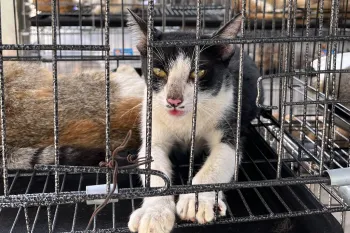
In Viet Nam’s cruel and illegal meat trade, it’s often the suffering dogs who are in the spotlight. But cats too are caught up in this cruel and illegal trade—stolen from homes and streets, trafficked across provinces and slaughtered by the thousands every month. Cats are, in many ways, the forgotten victims of Viet Nam’s illegal meat trade.
That changed this week in Ho Chi Minh City.
More than 400 cats were seized by police in what appears to be one of the largest single cat meat trade interceptions in Viet Nam's history. Several cats have already been reclaimed by their families who had been desperately searching for their stolen pets.
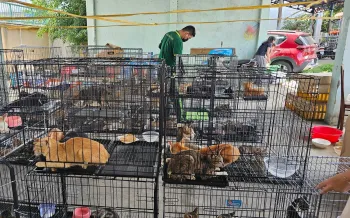
Phuong Tham/Humane World for Animals Viet Nam
Inside Viet Nam’s cat meat trade
Viet Nam's cat meat trade is a profit-driven network that stretches across the country. Cats are stolen from homes and streets, transported in overcrowded cages with no food or water, and sold through a chain of traders before reaching slaughterhouses and restaurants. Many die during transport; those who survive will face brutal slaughter.
Investigations have documented cats arriving at slaughterhouses still wearing collars—a stark reminder that many are beloved pets.
It’s estimated that more than two million cats in Viet Nam are taken or stolen for the trade each year, yet the issue receives far less attention than the dog meat trade.
Why this seizure matters
Historically concentrated in northern provinces such as Thai Binh and Hanoi, the cat meat trade has increasingly expanded south. Investigations have exposed restaurants in Ho Chi Minh City openly selling and slaughtering cats, making this seizure of cats by local authorities especially significant.
The cat meat trade poses significant public health threats. The movement of unvaccinated animals of unknown health status across provinces and borders undermines efforts to thwart the spread of rabies. Cats who carry rabies and end up in the stressful, overcrowded conditions of the meat trade pose dangers to everyone: other cats, handlers, transporters and butchers.
On the ground in Ho Chi Minh City
Two local organizations, HavePaws and Vietnam Cat Welfare, have been at the forefront of the massive effort to meet the urgent needs of the rescued cats on site, along with volunteer veterinarians. They have been providing around-the-clock care, helping to meet the animals daily welfare needs.
Humane World for Animals Viet Nam has provided initial emergency assistance and is working with local groups on the ground to assess longer-term support needs for the cats as the case progresses.
The response from volunteers, local organizations, businesses and authorities reflects a growing concern for animal welfare in Viet Nam and increasing recognition that the cat meat trade has no place in modern society. The number of cats reunited with their owners, along with the sheer volume of people descending on the holding station searching for their lost pets, is a testament to the great affection of millions of people within Viet Nam, as well as their concern about the dreadful toll exacted by pet theft for the meat trade.
What comes next
The immediate priority is securing a longer-term solution for the cats still being held as evidence while legal proceedings continue. We are thankful to the groups on the ground handling this intensely difficult work and hopeful that the cats can soon be transferred to veterinary clinics for their ongoing care and recovery.
This rescue demonstrates what is possible when authorities act. It also highlights the need for stronger legal protections. Viet Nam previously prohibited the capture, slaughter and consumption of cats for more than two decades before the ban was revoked in 2020. Reinstating and enforcing clear legal protections would be one of the most effective steps toward ending this trade and preventing future suffering.
Chau Doan/AP Images for HSI
End the dog and cat meat trade
Help ban the inherently cruel and dangerous dog and cat meat trade in Viet Nam.
Kitty Block is president and CEO of Humane World for Animals. Follow Kitty Block on X.