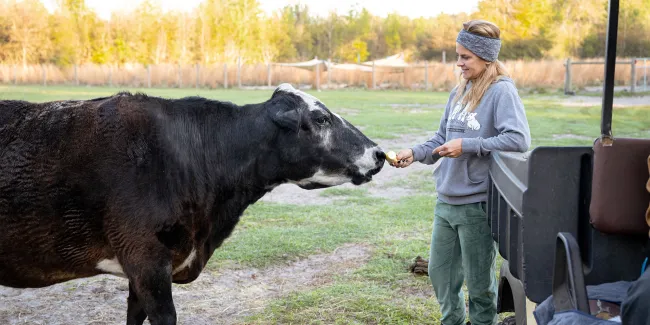
Karla Dumas is up before the sun comes out, climbing into an old golf cart in her driveway. Her home looks like a standard ranch house from the front, but when she drives into the backyard, it’s a completely different scene.
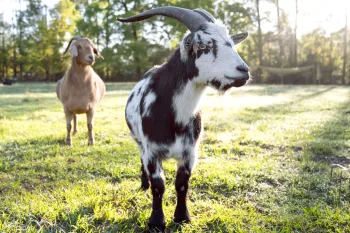
There, goats live in an expansive grassy field with a large barn for shelter; pigs live in a sandy, desert-like enclosure with clusters of yellow, spiky grass; chickens explore thick vegetation surrounding a small pond that mimics the jungles their ancestors lived in; cows have a mixture of grassland and forest to roam.
This is Yesahcan Sanctuary in northern Florida, founded in 2016 and home to nearly 100 farm animals, many of whom were rescued from factory farming.
Dumas starts her mornings visiting each animal and feeding them breakfast. Then she begins her full-time work with Humane World for Animals as vice president of farm animal protection in the United States. In her role, Dumas works to change the system that brought many of the farm animals to her sanctuary. A large part of this work involves advocating for stronger laws and pushing corporations, institutions and food service operations to embrace more plant-based foods.
She’s been working at the organization for over a decade and says learning about the cruelties farm animals endure inspired her to start directly helping animals too. Running a sanctuary, in turn, gives her a broader perspective on farm animal welfare issues. “The sanctuary work offers a unique window into the lives of animals and their personalities that most people don’t generally see,” Dumas says.
History of the farm sanctuary movement
Rescuing farm animals and providing them with lifelong care is a relatively new idea, inspired by the opening of Farm Sanctuary 40 years ago.
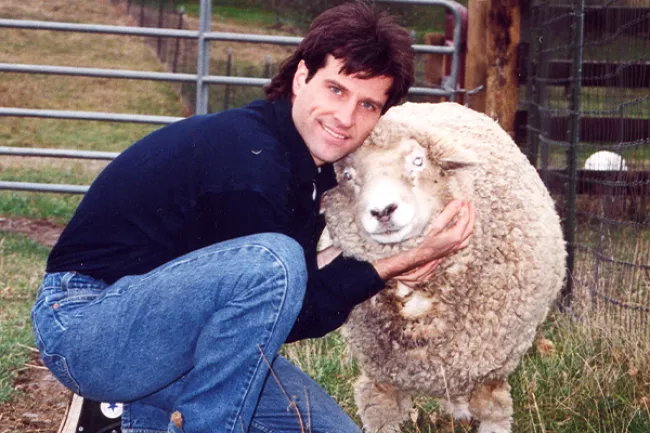
When Gene Baur co-founded the organization with Lorri Houston in 1986, he didn’t intend to start what is believed to be the first-ever farm sanctuary. At the time, its name represented its efforts to provide symbolic sanctuary to farm animals by exposing the cruel conditions they suffered in factory farms, stockyards and slaughterhouses.
That August, the co-founders visited a Pennsylvania stockyard, a place where animals are temporarily kept before slaughter. There, they discovered a live sheep in a pile of animal carcasses behind the facility. The sheep was too sick to walk and had maggots and flies crawling on her, but she lifted her head to look at the two, who immediately picked her up and took her to a veterinarian. Later, she’d be named Hilda and become the first resident of Farm Sanctuary. Soon, other animals would join Hilda in the backyard of Baur’s small rowhouse in Delaware.
Farm Sanctuary
“The rescue work grew out of our investigative work,” Baur says. “During our investigations, we would literally find living animals in trash cans or on piles of dead animals. So we started rescuing them.”
As the organization grew, Baur found more land—first on the site of a former dairy, then on an expansive lot in upstate New York. He also traveled the U.S. by van raising money for the organization by selling veggie hot dogs at Grateful Dead concerts. Many people he talked to then thought rescuing farm animals made little sense. “It was a different approach that nobody had ever done,” he says.
Farm sanctuaries today
Now, 40 years later, the idea of providing lifelong sanctuary for rescued farm animals is much more mainstream. These sanctuaries have grown in number across the U.S. and around the world. Currently, around 36 organizations accredited by the Global Federation of Animal Sanctuaries have farm animals in their care, including Humane World’s Black Beauty Ranch sanctuary in Texas, home to over 600 animals, approximately 120 of whom came from farms.
These organizations all face a massive task. Staff and volunteers treat farm animals as sentient beings worthy of living out their natural lives, but the world around them still views farm animals as products.
Worldwide, an estimated 97.6 billion land animals are kept and slaughtered for food each year. Most are kept in cruel conditions on factory farms followed by an early and grisly death. Only a tiny percentage ever make it to sanctuary.
Meredith Lee/Humane World for Animals
Once an animal is born into the industry, it usually takes extraordinary circumstances to get them out. Some sanctuary residents escape farms, slaughterhouses or transport vehicles and are brought to sanctuaries after animal care and control agencies capture them. Occasionally, farmers relinquish animals who are too sick or injured to be used for food. In comparison to the cruelty laws that protect pets, farm animals are afforded only weak legal protections. Therefore, few sanctuary residents come from criminal cruelty cases.
For people who get into this work to help some of the world’s most vulnerable animals, being unable to save everyone is a heartbreaking reality. “We’ve always known that it’s impossible to rescue the [billions of animals on farms],” Baur says. “So you do what you can. You help who you can.”
Konrad Lozinski/We Animals Media
Speak up for farm animals
More than 97.6 billion farmed animals are kept and killed for food each year, causing immense animal suffering and releasing greenhouse gas emissions at levels on par with all cars, planes, trains and boats around the world combined. We need to prevent the suffering of animals on factory farms and protect the world around us.
Animal welfare ambassadors for change
Organizations like Humane World focus on systemic changes to the industry, which can then prevent countless animals from ever being born into factory farms and improve the lives of those who remain in the system.
At the same time, Dumas says, “sanctuary work is a vital piece of the puzzle, opening hearts and creating connection to each individual rescued.”
Through their animal residents’ stories, sanctuaries can illustrate the harms of factory farming through a new lens. The number of animals used in agriculture is so astronomical, it’s difficult to grasp. Rescued animals put a face to the issue.
Staff from Greyton Farm Animal Sanctuary in Western Cape, South Africa, visit schools to teach children about farm animals. Sanctuaries like Black Beauty Ranch, Farm Sanctuary and Kindred Spirits Sanctuary hold public tours where people can learn about the animal residents and the challenges they’ve overcome.
“That’s what it’s all about,” says Tony Vindett, operations manager at Kindred Spirits Sanctuary in Citra, Florida. Visitors leave “not just with this nebulous idea. Like, they’ve met a chicken. We’ve shown them a survivor of this.”
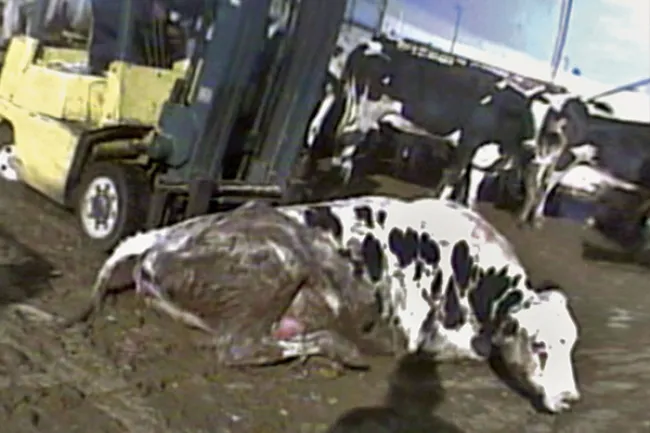
After Baur rescued Hilda in the 1980s, Farm Sanctuary launched a campaign to end the slaughter of animals too sick or injured to stand, often called “downed” animals. Hilda’s story illustrated the very real stakes farm animals face. Our 2008 undercover investigation of a California meatpacking company where workers kicked and repeatedly shocked downed cows with electric prods heightened the push for legislative action. Today, 16 U.S. states have laws governing the treatment of downed animals and the federal government bans the slaughter of downed cows for human consumption.
humane world for animals
Over the past few decades there’s been a groundswell of legislative and corporate changes—many of which Humane World led—aimed at improving the lives of farm animals. In the U.S., multiple state ballot initiatives—including those mandating larger space requirements for hens used in egg production, pigs kept for breeding and calves kept for veal—passed with overwhelming voter support. In the European Union, battery cages that confine hens have been banned since 2012. Plant-based meat and milk alternatives are now readily available at many major fast food and grocery chains.
The suffering that animals endure in factory farms was once largely hidden from the public. Today, poll after poll suggests public concern about the welfare of farm animals is high. Sanctuaries have played a key role in bringing the plight of farm animals into the public view.
Sanctuary work is a vital piece of the puzzle, opening hearts and creating connection to each individual rescued.”
Karla Dumas, Yesahcan Sanctuary founder and vice president of farm animal protection in the United States at Humane World for Animals
Lifelong impacts of factory farming
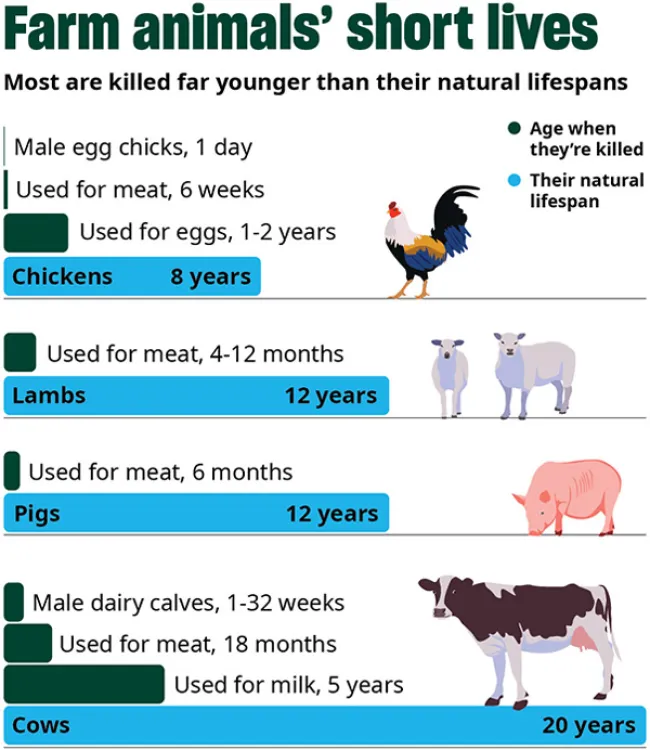
Sanctuaries give us a rare glimpse into how selective breeding harms farm animals over time. Since farm animals are bred to die young, there’s little consideration of their long-term health.
The long-term impact of selective breeding is rarely considered once farm animals are no longer seen as economically useful, says Nicola Vernon, founder and director of Greyton Farm Animal Sanctuary.
Farm animals often suffer health issues such as leg disorders, mental distress and infectious diseases linked to their living conditions. Selective breeding practices that prioritize profitability over animal welfare cause even more problems. Cows, pigs, chickens and turkeys become unnaturally large incredibly fast. Joint issues are common, and some animals struggle to even stand.
“There’s no farm animal that’s a wild, natural animal,” remarks Tony Vindett. “They’re all bred to do things that have nothing to do with their long-term health and happiness. They’re [bred] to produce more meat or wool or eggs or milk.”
Illustrations by Rachel Stern/Humane World for Animals
Care challenges for farmed animals in sanctuary
At our Black Beauty Ranch, many of the farm animals arrive with major health problems. Veterinary care, medication and strict diets help the animals live more comfortably, but staff can’t fully undo the harm.
Sanctuary operators must also contend with a lack of resources centered around farm animal welfare. Animal handling equipment is usually made to maximize efficiency rather than be gentle on animals. Farm animal veterinary medicine tends to focus on treating animals to improve their productive capacities, which can make it difficult for sanctuaries to find comprehensive care for their residents.
Kindred Spirits Sanctuary has a veterinarian on staff but sometimes goes to other vets for specialized care. They’re often informed that certain procedures aren’t available for farm animals. “We’re told, ‘Well, there’s nothing we could do. We could if this was a dog, but we can’t because it’s a cow,’” executive director and Tony’s wife Logan Vindett says.
Even after finding veterinarians on board with the mission, there’s still a scarcity of information about how diseases progress in farm animals. Animals simply aren’t kept alive long enough for researchers to see the natural aging process.
After a sheep developed skin cancer on her ear, the Greyton sanctuary arranged for a vet to amputate the ear. “He’d never seen that before because no sheep is out in the sun long enough to ever get skin cancer,” Vernon says. “The vets and I have really learned together.”
Meredith Lee/Humane World for Animals
A gentle life for farm animals
Seeing these medical issues play out firsthand can be emotionally draining for sanctuary operators. Dumas focuses on all the good she has been able to do for her farm animal residents.
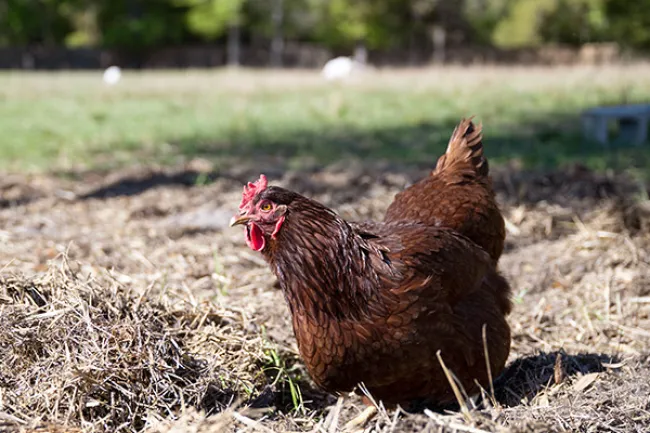
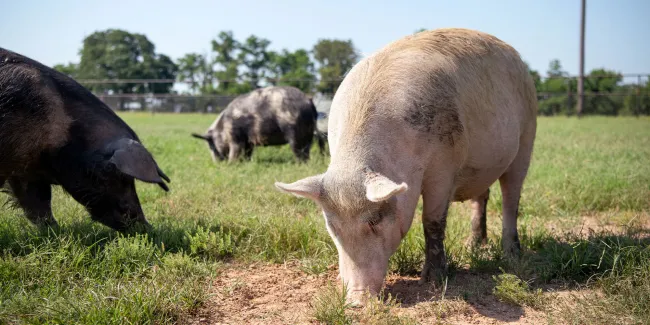
At Yesahcan Sanctuary, every day is predictable for the animals in the best way. The morning starts with Dumas, a hen named Red usually in tow, greeting them for breakfast. The animals spend their afternoons lazing around and expressing natural behaviors they never could on a factory farm. Later, they’ll receive dinner before settling in for the night.
Meredith Lee/Humane World for Animals
They’ll never again live in a crammed cage or be transported in overheated trucks for endless hours. They’ll never die a cruel death in a slaughterhouse. Their final moments will be filled with comfort and compassion.
In a western New York garden nestled by rolling hills, one lucky survivor was laid to rest. After living at Farm Sanctuary for 11 years, Hilda passed away in her sleep. A gravesite and plaque at the sanctuary memorialize her legacy. She helped set off a new approach to farm animal welfare, one centered on the individuals caught inside a massive industry.
Today, thousands of rescued farm animals at sanctuaries around the world continue that legacy, leaving a lasting impact on the people dedicated to their care and those who learn their stories.
Related stories

Do you know what happens on a factory farm? Learn about the harmful reality of factory farms and explore alternatives to animal agriculture.
Gabriela Penela/We Animals Media
Our teams all over the world are driving a global shift toward a plant-forward food system.
MEDITERRANEAN/Getty Images
We don't need factory farming to feed the world. To ensure everyone has access to healthy and affordable food, we need to change how we think about our food and how we produce it.