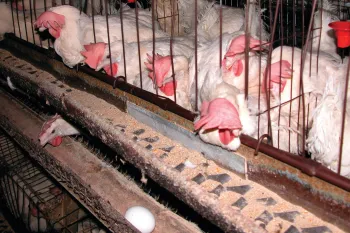
More than 94.9 billion land animals are kept and killed for food worldwide. As we recently detailed, one of the most powerful ways to reduce animal suffering, cut greenhouse gas emissions and improve public health is to replace meat, eggs and dairy with plant-based foods. Our teams all over the world are driving a global shift toward a plant-forward food system. The scale of this work is enormous; there are too many inspiring stories to mention here about the creative approaches being used to promote kindness to animals and sustainability for the future. What’s happening in Brazil exemplifies this incredible transformation. Here, Thayana Oliveira, Brazil country director for Humane World for Animals, tells the story.
To create a more humane and sustainable future, perhaps there’s no better place to start than in schools. And that’s exactly what we’re doing in Brazil.
The city of Fortaleza is home to Brazil’s fourth largest school network. Here, along with Mercy For Animals, we hosted a Sustainable Food System workshop for nutritionists at the city’s municipal schools. Our chef unveiled a plant-based version of a traditional dish, “escondidinho de soja” (a soy filling topped with a layer of cassava puree), as well as an orange cake with passion fruit, which was met with enthusiasm by school nutritionists. We are currently planning a pilot project for a plant-based initiative in a select number of Fortaleza’s municipal schools where these recipes will be incorporated into school menus. Following the pilot project’s successful completion, we plan to expand the plant-based initiative to all schools in the network.
This is how change happens. We quite literally give people a taste of what is possible—humane and sustainable recipes—and then we work within systems to bring these dishes to scale. Our Fortaleza initiative has the potential to transition an estimated 9 million meals per year to plant-based options.
We are putting plant-based ideas into practice across the country. A few more highlights worth mentioning:
- Together with Mercy For Animals and Brazilian Vegetarian Society, we secured a new commitment from the city of Passo Fundo, for a 20% reduction in animal products. Once fully implemented, this will transition an estimated 732,000 meals to plant based each year for more than 18,300 students in 75 schools.
- With the same partners, we launched a pilot project in Rio de Janeiro, working with 15 schools to reduce procurement of animal products by 20%. As part of this initiative, we educated 58 school directors on the benefits of plant-based eating and trained 46 school cooks on creating delicious plant-based versions of regional dishes.
- In Recife, we helped offer the Sustainable Food System workshop for the school system’s nutrition team and worked with the companies in charge of cooking and delivering school meals to test plant-based options that will be offered in select school menus for a pilot project.
- In Sobral, we partnered to launch a pilot project on the menus of 10 schools. To help implement this, we trained 19 school cooks on the new recipes and educated 23 nutritionists and school directors on the benefits of the program. Following the successful completion of the pilot project, we‘ll expand our work to all 132 schools in the network.
- “Refresher trainings” are essential for sustaining the success of plant-based programs; they introduce new recipes for inclusion in school menus, reinforce core practices, and help ensure continuity in the face of challenges like staff turnover. In Carauru, we worked with our partner to deliver refresher lectures and trainings for 155 school cooks, 120 school directors and 20 nutritionists, introducing new recipes for inclusion in school menus in 149 schools.
- Salvador remains one of the most impactful plant-based school meal programs in Brazil, delivering an estimated 10 million plant-based meals annually. We delivered refresher trainings to 69 school cooks and refresher educational lectures to 36 nutritionists and 134 school directors on the benefits of plant-based eating.
Ending cruelty for farmed animals requires this continued commitment and innovation, and we are so proud to lead this visionary work in Brazil, and around the world.
Thayana Oliveira is Brazil country director for Humane World for Animals.