Editor's note: Since this article was published, the Humane Society of the United States and Humane Society International have united all efforts under one name, Humane World for Animals—one global mission to protect every animal, everywhere.
Imagine a chicken. Picture her downy white feathers and small, intense eyes. Maybe she’s sitting on a nest, softly clucking. Perhaps she’s scratching in the dirt, a quaint red barn in silhouette behind her. Cows graze contentedly nearby; a pig snuffles in the mud.
It’s an idyllic vision, familiar from children’s books and songs. It’s also, for the majority of animals raised in the meat, egg and dairy industries, a complete fiction.
In the United States, almost all farm animals spend their lives inside factory farms, large-scale operations that turn lives into commodities by “processing” huge numbers of animals as quickly as possible. They’re bad for animals, bad for us and bad for the planet we share. Here’s why.
in the U.S. are raised on factory farms.
are the demand for animal products and the intensification of farming animals.
caused by humans comes from animal agriculture.
Factory farms are bad for animals
Inside a factory farm, the chicken you just imagined spends her entire life in a space smaller than a standard sheet of paper. She can never spread her wings, scratch in the dirt or perch on a branch, which are natural behaviors crucial to her mental well-being. If she’s an egg-laying hen, she’ll spend the short year and a half of her life crammed in a cage with other chickens, until her egg production diminishes and she’s slaughtered.
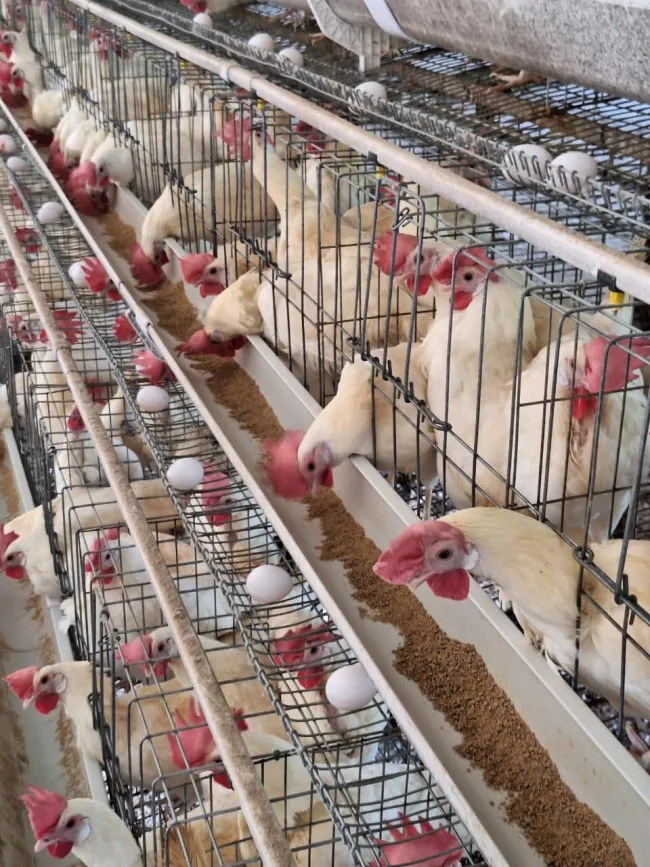
Ashin/Humane World for Animals
If she’s raised for meat, she’s similarly doomed. She was selectively bred to grow rapidly, so virtually her entire life will be filled with suffering, says Josh Balk, HSUS vice president of Farm Animal Protection. Unlike normally active, inquisitive, social chickens, by the end of her life she has difficulty walking and spends most of her time lying down. Her heart grows too large and her lungs too small. She has muscle damage from growing so quickly and sores from standing and sleeping in a manure-filled shed. At just 45 days—when she’s still a baby—she reaches her full size and goes to the slaughterhouse.
The story is just as grim for pigs and cows confined on commercial farms. Taken from their mothers within a few weeks after birth, pigs live just six months before slaughter. Mother pigs spend much of their lives in gestation crates, confined so tightly they can’t turn around. These sensitive animals—who are smarter than our dogs—can’t socialize, root in the mud or engage in almost any natural behavior. At dairy operations, calves are taken from their mothers the day they are born, while mother cows are forcibly impregnated over and over to produce milk for calves they’ll never see again.
Although small family farms do still exist, factory farms (sometimes called concentrated animal feeding operations) far outnumber them. And almost all of the meat, dairy and eggs Americans consume come from factory farms.
Factory farms are bad for people
When we talk about the impact of animal products on our health, we often focus on markers like high cholesterol and high blood pressure, along with the diseases they can cause. “Eating meat has been found to increase your odds of dying from heart disease and certain types of cancer, the two leading causes of death in the country,” says Balk, adding that Type 2 diabetes is also linked to meat consumption. “Human health experts around the world agree that we should be eating more plant-based foods and reducing the amount of meat.”
Factory farms themselves also harm human health. The huge amount of antibiotics that keep animals on these farms from getting sick is leading to an abundance of drug-resistant bacteria. And factory farms’ very nature—full of stressed animals, with poor sanitation—creates ideal conditions for diseases to thrive, including viruses that can infect humans. Just as SARS-CoV-2, the coronavirus that causes COVID-19, most likely jumped to humans at a meat and wildlife market in Wuhan, China, other viruses (including avian and swine flus) have infected people from farms.
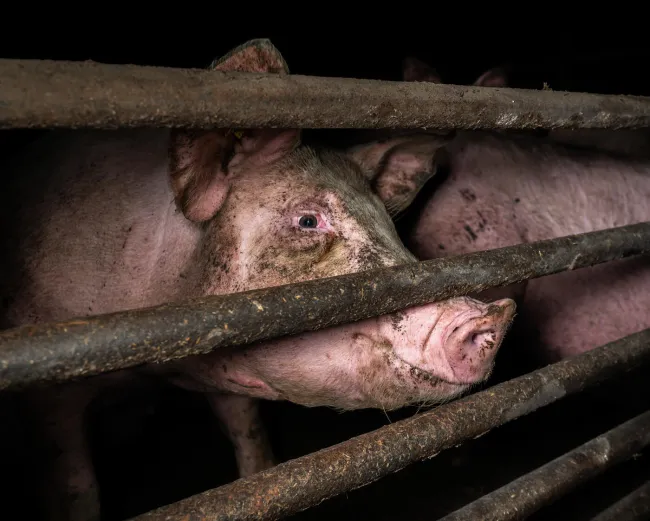
Lukas Vincour/We Animals Media
Workers in slaughterhouses—the grim and unavoidable counterparts to factory farms—are particularly vulnerable. During the COVID-19 pandemic, whistleblowers reported insufficient hygiene practices, sick leave and distancing measures, which when combined with the nature of the work—people standing close together, rapidly wielding knives to keep up with the line—led to slaughterhouses becoming hot spots for the virus’s spread in the U.S.
Pandemics aside, factory farms and slaughterhouses are always hazardous places of work. Exposure to toxic chemicals, biological hazards and dangerous equipment are just a few of the risks listed by the Occupational Safety and Health Administration.
Here’s the good news: Plant-based meats require no factory farms or slaughterhouses, and they contain no cholesterol. A recent study even showed that replacing animal protein with plant-based meat for two meals a day improved certain cardiovascular risk factors among participants.
Factory farms are bad for the environment
Most animal meat is cheap. Chicken meat averages just $2.33 a pound, thanks in part to government subsidies and the economies of scale: With vast sheds that house tens of thousands of birds slaughtered at less than 2 months old, factory farms churn out chicken meat at a rapid pace. But there is a hidden cost, though it’s not paid by the titans of the meat industry. Instead, it’s borne by all of us as our planet suffers for our chicken nuggets.
A research article in Science magazine summarizes the issue: “With current diets and production practices, feeding 7.6 billion people is degrading terrestrial and aquatic ecosystems, depleting water resources, and driving climate change.” Another paper says that our reliance on animal products is “one of the most powerful negative forces” affecting ecosystem conservation and biological diversity.
Producing animal meat, eggs and dairy is woefully inefficient, requiring vast amounts of water and land just to grow the crops that feed the animals reared for food production. It doesn’t have to be this way: Recent research shows that plant-based replacements for animal meat, dairy and eggs can be between two to 20 times more efficient.
If these large-scale problems are difficult to grasp, consider the individuals whose lives are at stake: the vibrant poison dart frogs and sleek jaguars of the Amazon rainforest, at risk partly because the demand for Brazilian beef and soybeans for farm animal feed has led to widespread deforestation. The human communities unlucky enough to live near factory farms, which may fail to meet environmental regulations. Manure and pollutants spread into rivers and seep into the ground, poisoning waterways and sickening people. Nobody benefits from factory farms—except the corporations that own them.
Speak up for farm animals
More than 97.6 billion farmed animals are kept and killed for food each year, causing immense animal suffering and releasing greenhouse gas emissions at levels on par with all cars, planes, trains and boats around the world combined. We need to prevent the suffering of animals on factory farms and protect the world around us.
What you can do to help farm animals
When it comes to factory farms, we all suffer. But there’s another way, and there are alternatives to factory farming. You can make more humane choices every time you sit down to eat. Incorporate more plant-based foods, whether by committing to Meatless Monday, eating vegan before 6 p.m. or eliminating animal products entirely. If you do eat animal products, choose ones that come from producers who follow higher animal welfare standards. And if your local lawmakers consider legislation to eliminate extreme confinement in your state, be sure to support it.
Related stories

Tom Woollard/For Humane World for Animals
Two mother pigs rescued from farrowing crates in the UK now live free in sanctuary, as advocates push to ban this cruel farming practice.
Gabriela Penela/We Animals Media
Billions of chickens suffer on factory farms each year. They deserve so much more.

Sharon Palmer
Discover how to meet your protein needs with plant-based foods. Experts and athletes share tips on fueling performance and improving health.