Wildfires had burned before in the forested hills above Penco, Chile, but this was different. Usually, during the annual dry season, the wind blew in from the ocean, keeping fires away from the city. But in January, it reversed, blowing toward Penco. Carried by the wind, flames raced down the hills through plantations of dry pine and eucalyptus trees and tore into the outskirts of the city. Homes, cars and entire apartment buildings burned.
People fled as quickly as they could with their animals. Coni, a vet tech student, and her mother gathered their nine cats and three of their four dogs (the other ran off), putting the cats into several carriers as they escaped the flames. When Coni saw a cat who seemed sick and in shock, she turned back to rescue that animal too.
Claudio Ramírez/For Humane World for Animals
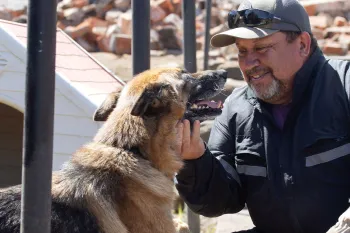
Ten days later, as Humane World for Animals responders distributed veterinary care and supplies, they happened upon Coni’s family in a city shelter. The family’s home had been destroyed, but all 14 were safe together at a shelter, which gave them a room to stay in. They were afraid, though, that they might be expelled because of all their animals. Our responders reassured them and enlisted them to help—the family became unofficial Humane World ambassadors, assisting in the delivery of essential items, including pet ID tags, cat litter and litter boxes, leashes and collars, toys and food.
“They were so connected to their animals,” says Daniela Sanchez, director of our team in Chile. “Their calm came from their animals.”
Sanchez arrived in south-central Chile after the fires, along with Felipe Márquez, Humane World for Animals program manager for disaster response in Latin America, and staff from Costa Rica and Guatemala. Together, they collaborated with municipalities and local groups. They hired a veterinarian to provide medical care to pets in shelters and to free-roaming animals, many injured by vehicles or attacks from other animals.
They were so connected to their animals.”
Daniela Sanchez, Humane World for Animals
How rescuers helped after the fires
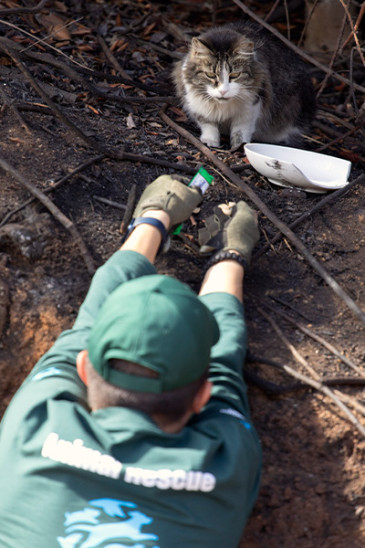
The team treated burned paws, legs and faces; set broken bones and bandaged wounds; and covered longer-term veterinary care for dogs, cats and rabbits. They distributed pet food and transported people and their pets to clinics; drove municipal veterinarians to where they were needed; and helped reunite hundreds of families with their pets. Working with local groups, they conducted search and rescue, set traps for cats and located recovered animals trapped beneath the rubble—including those who had died.
“It was heartbreaking,” says Márquez.
The Humane World for Animals team responded with cultural humility, says Sanchez, putting themselves at the service of municipal authorities. “It starts with valuing who the other is and what they do, allowing us to identify needs and design how we support them.”
Two weeks after they fled their home, Coni’s family found the dog who had run off. He was injured but alive. Humane World for Animals paid for his treatment and he has recovered. The family is reunited.
Humane World for Animals/
Are you disaster-ready?
Disasters can strike without warning and are stressful and chaotic. This free, expert-approved guide gives you the tools to plan ahead so your pets stay safe and by your side through any emergency.
Related Stories
Meredith Lee/Humane World for Animals
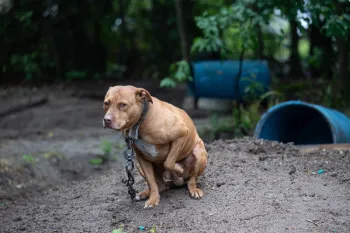
See one dog's story as he is rescued from dogfighting. Humane World for Animals assisted local law enforcement in removing him and 33 other dogs from alleged animal fighting in South Carolina.
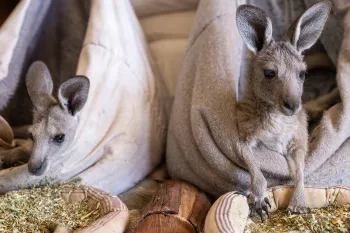
Paul Jeffers/AP Images for Humane World for Animals
Humane World for Animals teams up with partners in Australia to provide emergency care to kangaroos, wombats and flying foxes injured in the January 2026 wildfires.
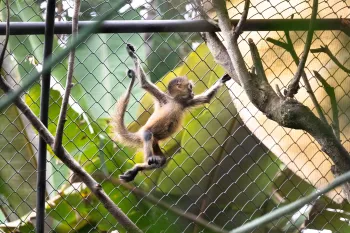
Meredith Lee/Humane World for Animals
At Rescate Wildlife Rescue Center, macaws, monkeys, sloths and jaguars are living proof of the cost of keeping wild animals captive.