When bushfires tore across grasslands in southeast Australia this past January, kangaroos jumped from the smoke and flames. To escape, they hopped across a charred landscape covered in embers and hot coals. Their big back feet were scalded as they pressed hard into the coals, burning the thick pads. Within days, the wounds were so bad the kangaroos could no longer move—they sat or lay helpless under trees.
Rescuing Australian wildlife
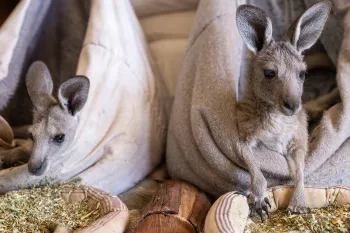
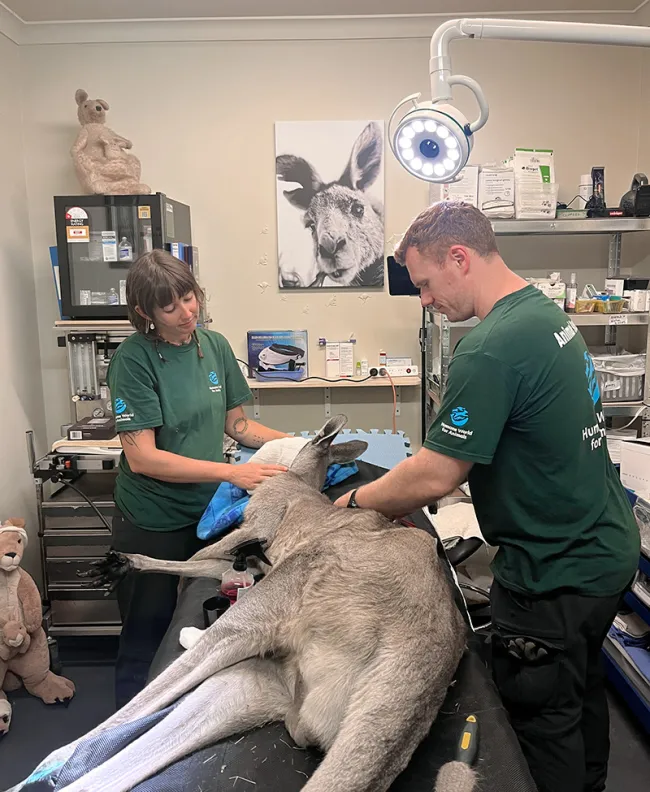
On their first day, Humane World rescuers found dozens of kangaroos at the Ravenswood fire in Victoria—some dead or dying, and others dehydrated with charred feet, tails and front paws. The long work of saving kangaroos who survived began with darting and sedating them and carrying them out of the bush. Rescuers transported a large, senior male they named “Valor” and a female with her two joeys to one of our partners, the Red Box Wildlife Shelter.
Nikki Hansen-Medwell/Redbox Wildlife Shelter
“We could see that their pads were peeling off—the wounds looked terrible. In a few cases, there were a few hundred small maggot larvae, leading to fears infection had started,” says Evan Quartermain, our program director in Australia. Valor’s wounds looked particularly bad. “Your heart drops because you think not only is this animal in such pain, but you wonder if there’s going to be a call to euthanize them on the veterinary table rather than allow them to suffer more.”
Paul Jeffers/AP Images for Humane World for Animals
Supporting animals through recovery
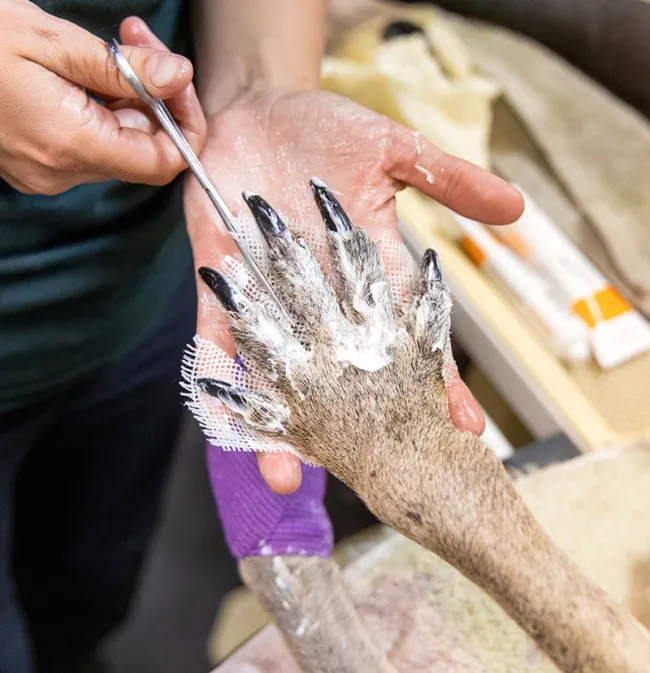
Rescuers cleaned the wounds, flushing them with a solution of water and colloidal silver, which has antibacterial properties. The kangaroos’ dried skin soaked up the liquid.
Then, rescuers plucked maggots from their paws with tweezers and carefully coated the wounds with burn creams. They covered each wound in a nonstick net and wrapped them in bandages. It took hours. Afterward, they injected electrolyte fluids into the kangaroos to rehydrate them. When Valor woke up the next morning, says Quartermain, he was drinking and felt well enough to eat apples. The mother kangaroo was discovered to have another joey, a pinky (hairless newborn) in her pouch.
Paul Jeffers/AP Images for Humane World for Animals
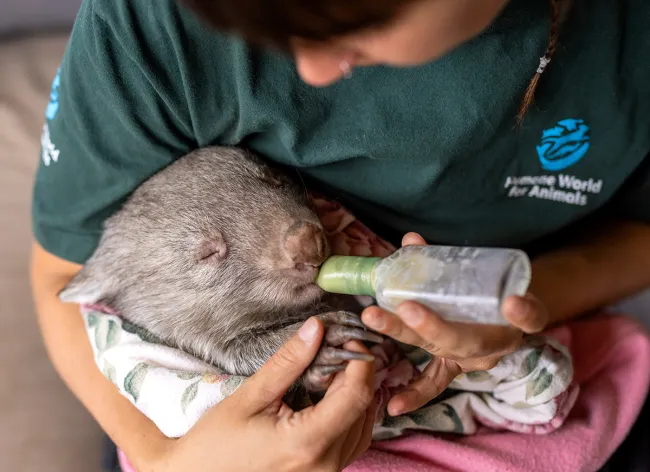
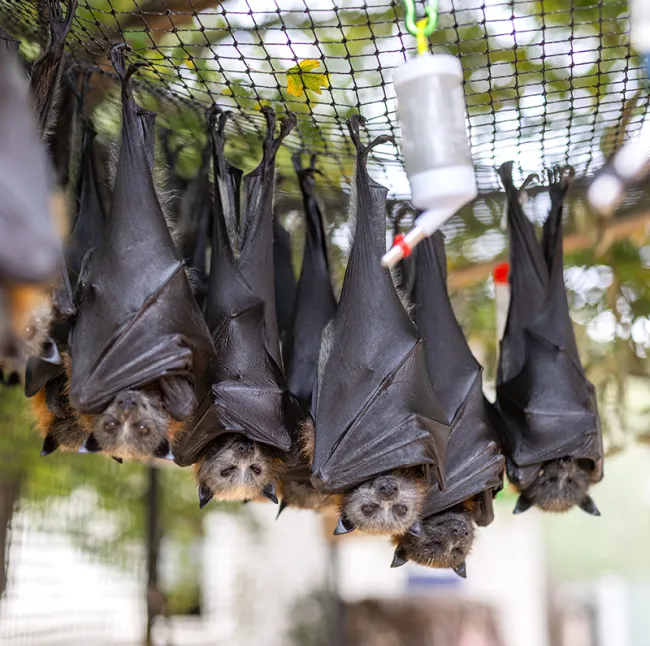
Humane World rescuers also fed fruit to flying foxes (bats) who had dropped from trees in the extreme heat that preceded the fires. The bats’ bodies had shut down as temperatures approached 108 degrees F (42 C). Our team also bottle-fed orphaned wombats already being cared for at Animal Abbey, another partner, so those rescuers could better handle all animals affected by the fires—the worst since the “Black Summer” of 2019-2020.
The last, saddest task for our team and partners was searching for kangaroos who were too badly burned to be saved. They found dozens each day. Without intervention, the kangaroos might have lived in pain for several more weeks. Quartermain says although heartbreaking, euthanizing them to stop their suffering was as important as treating the survivors’ burns.
Paul Jeffers/AP Images for Humane World for Animals
Related stories
Evan Quartermain/Humane World for Animals
Several bushfires in the state of Victoria were burning out of control, when we deployed a team from Humane World for Animals Australia to help to assist local wildlife rehabilitators.
Meredith Lee/Humane World for Animals
Five years ago, Humane World deployed to Kangaroo Island to help animals during the bushfires. Now, our team returns to the site of that heartbreaking rescue.
Hemanth Byatroy/HSI
Humane World for Animals is ramping up emergency preparedness efforts to prepare communities before extreme weather or disasters strike.