Denmark’s decision to end mink fur farming reflects a profound shift in how our global society views animals.
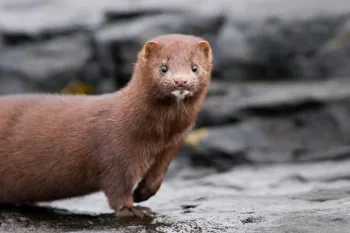
Ever since the European Union listed American mink as an invasive species, countries have the option to seek the special permit from the European Commission to allow mink farming to continue. Denmark has decided not to pursue this exemption.
The decision carries particular weight because Denmark was once the world's leading mink fur producer. When a country so closely associated with fur production decides to end mink farming, it shows just how far we’ve come.
For decades, fur farming was treated as a legitimate industry. Today, growing numbers of people see the inherent wrongs of this business model: They see that it involves raising wild animals in tiny cages where they go insane from stress. They see that these cages are crammed together in fur factory farms, hell-on-earth hotbeds for zoonotic disease to spread. And they see what it’s all in the service of: A fur trim on a coat or pom-pom on a hat. They see that this system is fundamentally cruel and out of step with modern values.
As public attitudes have evolved, institutions have followed. People are choosing fur-free alternatives and bio-based textiles and innovative companies are reinventing the very fabric of fashion. Major brands are dropping fur. Famous fashion weeks and media outlets have distanced themselves from the fur industry. Governments are increasingly concluding that the wrongs to animals and the inevitable risks to public health leave no doubt that it’s simply not worth propping up a dying industry.
Systemic change happens when there is an alignment in the facts, public values and collective will.
The European Food Safety Authority’s findings that meaningful welfare improvements are impossible within current cage-based fur production systems helped shape Denmark’s decision and reinforced concerns that many citizens already held. Increasingly, policymakers are recognizing that some forms of animal exploitation cannot be reconciled with modern animal welfare standards and ethics.
The result is a rapidly changing landscape across Europe. Fur farming is already banned in most European countries, and the industry continues to flounder. However, more than 6 million mink, fox, raccoon dogs and other animals are still confined in small wire cages on nearly 1,200 fur farms in the EU. That’s more than 6 million too many.
The European Commission now has an opportunity to respond to that momentum and deliver the EU-wide fur farming ban demanded by more than 1.5 million citizens.
This momentum reflects an expanding public moral concern for animals and a growing determination to translate that concern into lasting change. Denmark’s decision demonstrates that progress for animals is increasingly being driven by society-wide expectations about how animals should be treated.
This is how monumental change happens. And it’s these calls for a kinder more compassionate orientation toward the marketplace that are shaping the future for animals and our shared world with them.
Kitty Block is president and CEO of Humane World for Animals. Follow Kitty Block on X.