
MEXICO — Humane World for Animals Mexico hosted the country’s first specialized course for egg producers and companies focused on cage-free hen systems, a three-day event designed to connect business strategy, technical training and practical implementation.
The course moved from business strategy to technical training and practical implementation. The first day was an online course dedicated to the market growth of cage-free egg consumption with a presentation by Humane World to raise awareness about the opportunities for producers, companies and financial institutions to advance growth of a cage-free market. Hoteles Estelar presented its path toward 100% cage-free sourcing; Fideicomisos Instituidos en Relación con la Agricultura (FIRA) shared financing options for small and medium-sized producers. Certified Humane International explained how cage-free production is certified and verified.
"What we saw in Puebla is that cage-free eggs are already being produced in Mexico, and it works. Producers are seeing results on the farm and have customers who are looking for those eggs," said Dr. Marcela Valadez Noriega, lead animal scientist for Humane World for Animals Mexico. "When the farm speaks, the supply chain listens. Every cage-free hen has the freedom to walk, scratch and nest, and today Mexican producers themselves are making that possible."
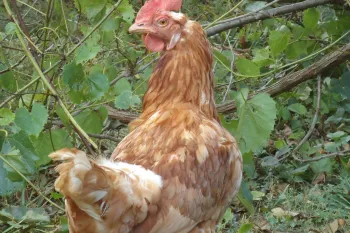
In cage-free systems, hens are able to walk, spread their wings, perch, scratch and nest, allowing them to express behaviors that are largely restricted in battery cages.
To help producers successfully transition to these systems, experts from Humane World for Animals, the University of São Paulo, Hy-Line Mexico, the University of Guadalajara, Salmet-Fienhage and Merck Sharp & Dohme (MSD) Animal Health led sessions on welfare science, pullet development, facility design and automation, disease prevention and how hen behavior can serve as an important indicator of welfare.
Participants also explored how cage-free environments allow hens to better express their natural behaviors and genetic potential.
Brazilian researcher Rosangela Poletto, a member of the Scientific Committee of Certified Humane Brazil, delivered a specialized training on the core components of animal welfare standards, including nutrition, environment, health, handling and management.
The session represented a level of technical welfare training not previously offered in Latin America. Representatives from SENASICA also provided an overview of the current regulatory requirements governing poultry production units in Mexico.
At the two experience forums, producers from Álvarez Grupo Avícola (Puebla), Rancho Chiteje (State of Mexico), Avícola Tres 60 and Gallina Real (Jalisco), Chak He (Yucatán), and Ovolab (State of Mexico), along with La Peña Grupo Agropecuario and its cooperative model, shared how they have been unlearning cage production, what has worked on their farms, and how their market is responding. They are setting the pace for the transition to cage-free systems in Mexico.
The event concluded with the First Latin American Meeting of Cage-Free Egg Producers, a hybrid session moderated and established a regional network for those already producing cage-free eggs to share their knowledge.
Expanding cage-freeegg production requires collaboration across the entire supply chain, including companies that purchase eggs, financial institutions that support producers, government agencies that establish and enforce regulations, farmers who invest in new production systems, and consumers who increasingly want to know how their food is produced.
To help companies and producers navigate this transition, Humane World for Animals developed its Implementation Guide for a Cage-Free Supply Chain. The guide outlines each step of the process, from setting a cage-free commitment and establishing timelines to reporting progress publicly. It also highlights the key investments needed to support producers, including long-term purchasing commitments, pricing that reflects the costs of transition, and access to financing.
Humane World for Animals will continue working alongside producers, companies and other stakeholders across Mexico, providing technical expertise, scientific evidence and international best practices to help advance the transition to cage-free egg production.
Spokespersons available: Marcela Valadez and Arianna Torres
#