After two devastating earthquakes struck Venezuela in June, we assembled a disaster relief team of Humane World for Animals colleagues from Mexico and Latin America to provide emergency relief to animals and support their human families and caregivers. Together, Humane World for Animals and our local partner provided care and support to 1,710 animals affected by the earthquakes. Felipe Márquez Muñoz, disaster response program manager for Latin America at Humane World for Animals, was on the ground with other team members. This is his story.
Disaster response is never simple. Every emergency brings its own challenges, uncertainties and lessons. But after two devastating earthquakes measuring 7.2 and 7.5 struck Venezuela on June 24, 2026, I knew from the very first day that this deployment would be different.
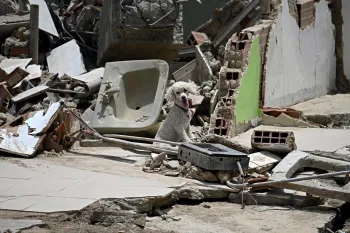
The earthquakes heavily impacted La Guaira and surrounding regions, leaving thousands of families facing unimaginable loss. According to official reports, more than 5,300 people died, over 16,700 were injured, and nearly 18,000 people were left homeless.
Almost immediately, memories from my 2023 deployment to Türkiye came rushing back. Images of collapsed buildings, endless debris and communities facing the unthinkable filled my mind. I learned then that when disaster strikes, literally every minute matters.
Being exactly where you need to be after disaster
I often joke that disaster responders must be a little crazy. We willingly travel to places that many people are desperately trying to leave. Yet every deployment brings the same feeling: the certainty that you are exactly where you need to be, surrounded by the right people, all ready to make a difference.
Sofia Herra/Humane World for Animals
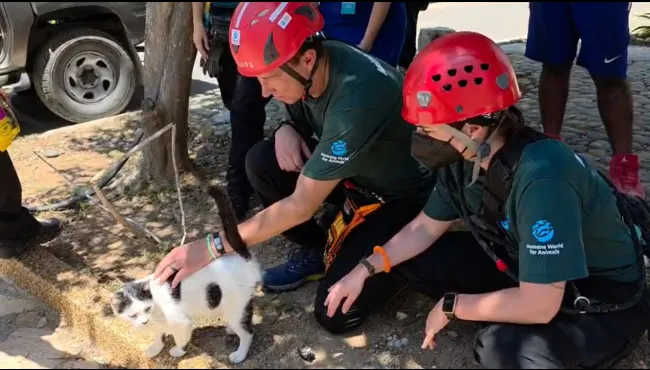
After the Venezuela earthquakes, a team of 12 dedicated Humane World for Animals staff members and volunteers from Mexico, Costa Rica and Italy quickly came together with a shared purpose: To support affected families and help keep their animals safe during one of most difficult moments in their lives.
As always, we anticipated challenges. Disaster response requires working under pressure, making rapid decisions, and prioritizing safety above all else. The situation in Venezuela, however, brought additional complexities. Administrative processes, visa requirements, logistical barriers and the broader political, economic and social environment there required us to constantly adapt and find creative solutions.
Claudia Edwards/Humane World for Animals
Yet, when the call came, our staff and volunteers did not hesitate. They accepted the mission immediately. Of course, their minds were filled with questions: What would we find? How severe would the damage be? What challenges awaited us on the ground?
Disaster response necessarily involves coordination with local partners. In this case, our local partner, Red de Apoyo Canino (RAC), immediately began coordinating logistics, securing permissions and conducting initial assessments. Their team of 14 dedicated professionals and volunteers had responded to emergencies before, but this situation presented an entirely different level of complexity. Despite the obstacles, they worked tirelessly to prepare for our arrival in order to ensure that assistance could begin as quickly as possible.
Time seemed to accelerate. Before I knew it, I was on a plane to Panama, preparing to meet colleagues and wondering what we would soon face in Venezuela.
Small, hopeful moments in disaster response
It was the first time any of us had been to the country. We arrived with nervousness and curiosity, unsure of what we would encounter. What we found was a community facing immense loss but also showing remarkable resilience. There are too many stories to tell about the people we encountered. But one story remains especially close to my heart.
One day, a man approached us asking for help. His apartment building had collapsed during the earthquake. His wife had died, and her remains had yet to be recovered from the rubble.
Amid all that pain, he had one more concern: his cats. Rescuers and construction workers had occasionally seen the cats moving among the debris, but no one had been able to catch them. Before leaving, we provided him with two humane cat traps and explained how to use them.
That same night, I received a message from him. One of the cats had been safely trapped and was back with him.
Today, the search continues for the second cat while he continues to mourn and wait for the recovery of his wife's remains. Bringing one family member home may seem like a small victory, but in disaster response, I’ve learned that hope often arrives in small moments and sometimes from unexpected sources. For him, that cat represented comfort, companionship and a connection to his life before the tragedy.
What we achieved together in Venezuela
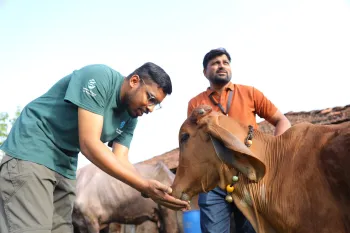
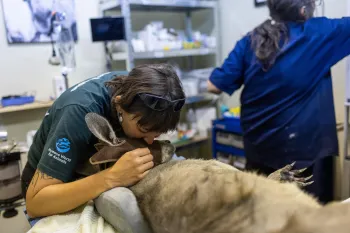
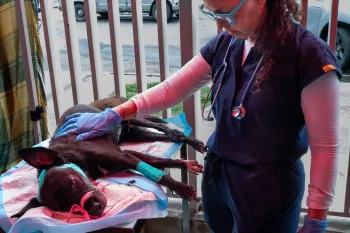
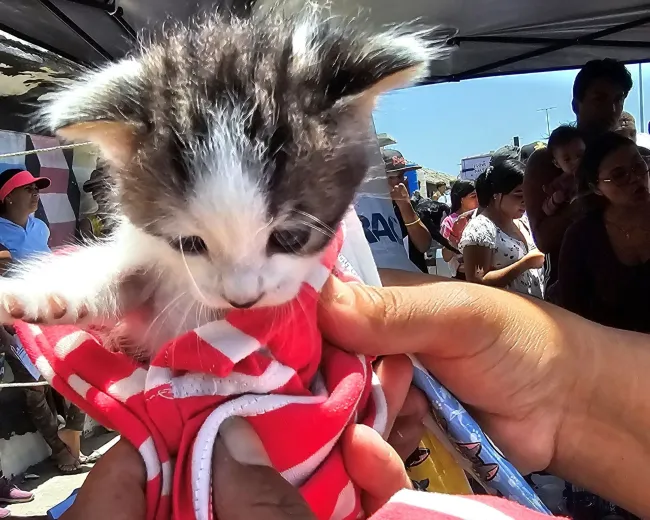
Together, Humane World for Animals and RAC provided care and support to 1,710 animals affected by the earthquakes.
For 18 days, our teams worked across five camps managed by the United Nation’s International Organization for Migration (IOM), and a McDonald’s transformed by responders into a makeshift emergency clinic.
Those 18 days felt incredibly short. Still, we achieved so much.
Claudia Edwards/Humane World for Animals
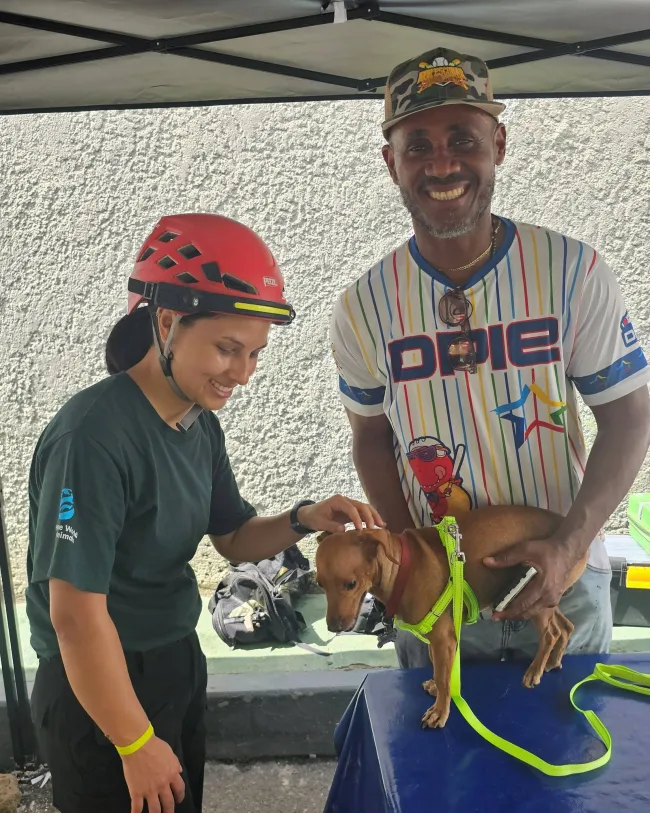
Every interaction reinforced an important reality: helping animals also helps their families. For many people, their animals were one of the few sources of comfort left after losing their homes, possessions and loved ones.
One of this response’s most meaningful aspects was the connection we made with the IOM. Throughout the deployment, we worked in IOM-managed displacement camps assisting families who had brought their animals with them. Keeping people and animals together can provide vital comfort and stability after a disaster. However, crowded camp conditions, limited sanitation and disruptions to routine veterinary services can create serious health risks when animals’ needs are not addressed.
Rabies is a particular public health concern when vaccination and other veterinary systems are disrupted, as we have seen in emergencies including the earthquakes in Türkiye and Syria and the ongoing crisis in Palestine. Fleas and ticks can also transmit disease, while highly contagious illnesses such as parvovirus and distemper can spread quickly among animals living in close quarters. By providing veterinary treatment, vaccinations and preventive care, our teams helped mitigate these risks, support safer and more sanitary camp conditions, and protect the health and well-being of both animals and the people living alongside them.
As humanitarian organizations increasingly recognize the vital role animals play in family well-being and recovery, alignment between animal and humanitarian groups like this becomes essential. This response demonstrated that including animals in humanitarian planning not only protects them but also supports public health, helps families remain together and strengthens communities as they respond to and work to recover from disasters.
Sofia Herra/Humane World for Animals
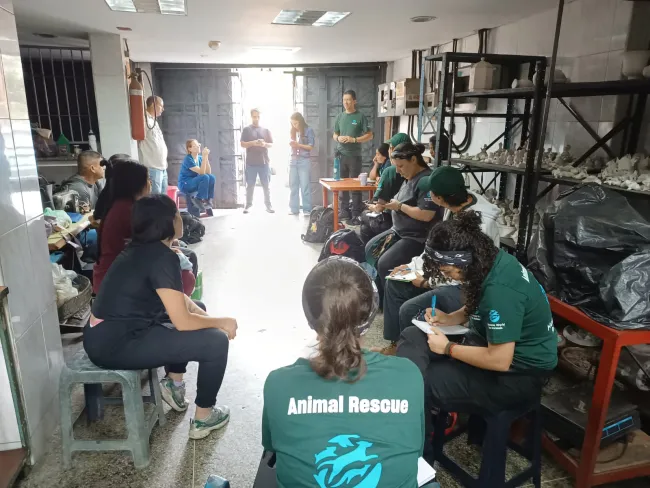
Working side by side with RAC’s incredible team, we quickly felt that cooperation was turning into something much stronger. Even though the landscape was littered with wreckage, heavy machinery, and we witnessed again and again families desperately searching for loved ones, the solidarity that came from this collaboration became a source of strength.
Some members of the RAC team were mourning the loss of friends and loved ones affected by the earthquake. Yet, despite their own grief, they continued showing up every day, smiling, helping others, and dedicating every ounce of their energy to supporting people and animals. Their resilience was inspiring and humbling.
Perhaps one of the most meaningful outcomes of the deployment was strengthening RAC’s capacity and confidence to continue the work long after our team departed. They possess the knowledge, dedication and local leadership needed to expand this response and continue supporting communities in recovery. Humane World for Animals will continue supporting RAC even after our departure, providing vaccines and funding for local veterinary support, so help can reach even more animals and families in need.
Felipe Marquez/Humane World for Animals
Help animals in emergency situations
We never know where disasters will strike or when animals may be in need of urgent rescue, but we know we must be ready. Your support makes our preparedness, rescue, care and relief work possible. Please consider a donation to our Emergency Animal Relief Fund today.
Every deployment leaves a mark. I leave disaster zones carrying a mixture of pride, sorrow and hope. To the Humane World for Animals staff and volunteers who joined this mission, I can only say thank you. Thank you for standing with the community during its hardest moments. Thank you for proving once again that compassion has no borders.
Gracias, Venezuela. Fuerza, Venezuela.
Felipe Márquez Muñoz is disaster response program manager for Latin America at Humane World for Animals.