It’s official: Major grocery chain Kroger has failed to meet its public commitment to consumers to sell eggs sourced only from cage-free hens by 2025. The company refuses to enact a new policy on moving toward a 100% cage-free egg pledge.
Kroger's inaction is unacceptable. The company owns more than 2,700 stores in the U.S. including locations branded under the Harris Teeter, Mariano’s, Ralphs, Fry's, Smith's and Dillons names, and just announced plans to buy Giant Eagle.
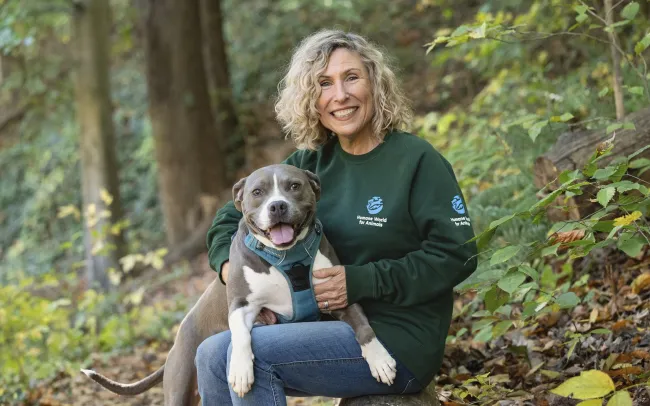
Frank Loftus/Humane World for Animals
Animals deserve better
Sign this petition to Greg Foran, the CEO of Kroger, urging the company to keep its animal welfare promises and stop profiting from animal cruelty.
Kroger initially promised to go cage free in 2016. Having a full decade to reach its goal was certainly doable; at this time, six of the 10 largest U.S. grocery retailers—Amazon, Costco, CVS, Walgreens, Target and Ahold Delhaize (the parent company of Food Lion, Giant, Stop & Shop and Hannaford)—sell only eggs from cage-free hens or have concrete plans to soon reach full compliance.
These companies successfully managed to meet consumer demand for higher animal welfare while remaining cost-conscious. The market has shifted dramatically, moreover. Today, nearly 50% of the U.S. egg industry is cage free. Far from being a costly rarity, eggs from cage-free hens are ubiquitous as eggs from caged hens, and many analysts believe that cage-free will increase its market share in the coming years.
Hell on earth for hens
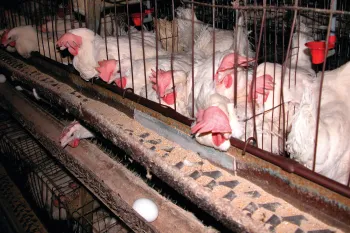
On a typical egg factory farm, hens are crammed into barren wire cages where they endure a lifetime of confinement in which each bird has a space smaller than a single letter-sized sheet of paper and cannot even fully spread her wings.
In dismissing this basic welfare concern, Kroger says its egg suppliers are providing "food, water and air"—as if that could come close to excusing the industry-standard practice of wedging as many as 10 hens into a feces-encrusted cage the size of a microwave. It’s an absurd defense.
Betraying consumer trust
There’s more to Kroger’s broken promise than the cruelty involved with eggs coming from hens confined in battery cage systems. Its shoppers report feeling betrayed by Kroger’s failure to meet its commitment. In June, our team at Humane World for Animals released the results of a national poll conducted by Bedrock Polling.
Among respondents who stated a clear opinion in the poll, 83% of Kroger shoppers reacted negatively when asked how they would feel about a store that failed to keep a promise to stop selling eggs from caged hens, citing anger, disappointment, distrust and ethical concerns.
You can take action for hens in Kroger’s supply chain
Across the country, people agree that animals raised for food deserve humane treatment and that companies should be transparent about how those standards are met. Delivering cage-free commitments is essential to improving animal welfare and maintaining public trust. We urge Kroger to share a clear, public plan for reaching 100% cage-free eggs, with meaningful public benchmarks along the way.
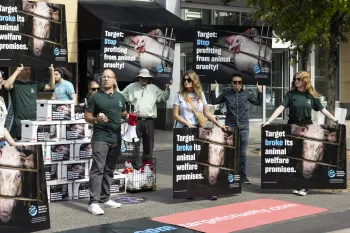
You can help by signing our petition to Kroger’s CEO urging the company to keep its animal welfare promises. We will push Kroger’s leadership and continue to alert its customers about its broken promise until the company keeps its word.
Kitty Block is president and CEO of Humane World for Animals. Follow Kitty Block.