“But what can I do about animal suffering?” It’s a question I get everywhere I go, and it’s a good one, especially as we see how our world has been, in so many ways, already built on animal suffering. The medicines we use took the lives of so many animals for research and testing approvals. The meat, eggs and dairy being served in almost every restaurant, cafeteria, hospital, airport, stadium comes from a food system that depends on factory farming—which causes immense animal suffering and puts a great strain on our environment and climate.
When animal suffering has been so foundational, so entrenched, to how our industrialized world has been built, it’s no wonder that people feel overwhelmed by the question of how we can finally end this cruelty.
But this is what I love about our approach to animal advocacy here at Humane World for Animals: Our unique mix of idealism (what some might consider starry-eyed idealism, even) with real, practical and meticulously honed strategies toward change.
N/A
That mix of idealism and pragmatism is an approach my colleagues and I have shaped over decades, even from the time I worked on private investigations of horse slaughter plants in the U.S. to the time I was president of what was then called Humane Society International, and now as president and CEO of Humane World for Animals. We bring together these two seemingly contradictory characteristics and we (sometimes stubbornly!) believe that they not only can coexist in an approach to animal advocacy, but that when it comes to really creating permanent change for animals, idealism and pragmatism go hand in hand.
Making the impossible possible
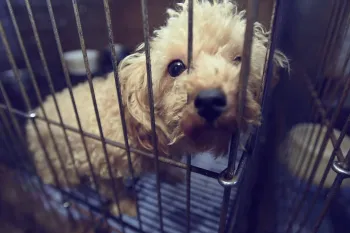
Earlier this fall, we conducted our last large-scale rescue from a dog meat farm in South Korea. When we first began our Models for Change program in South Korea, which provides alternative livelihoods to dog meat farmers who wanted to leave the industry, people said that eradicating dog meat would be impossible.
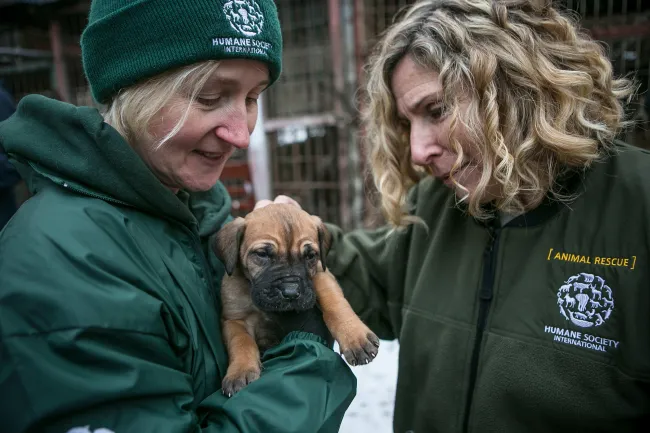
Jean Chung/For Humane World for Animals International
We showed that continuing the cruel status quo was a choice. It was not an inevitability. And about a decade later, the impossible became possible: South Korea banned dog meat farming—the ban will come into full effect in 2027.
There are other ways to shape the world—there are more humane, kinder ways. Cruelty is a choice.
Meeting people where they are to change the world for animals
That cruelty is a choice is an idea that applies everywhere—from the halls of power in South Korea to the corporate boardrooms of international fashion brands and food manufacturers to people’s home cabinets.
It’s the message that Kevin Bacon/Bean and Travis Barker helped us spread this year, and it’s the message that helps to answer that ubiquitous question: What can I do about animal cruelty and suffering?
What I love about our approach to animal advocacy is that it is inclusive of anyone and everyone who cares about any animal at all. People do not have to be perfect in their love for animals—they just need to have the love and care to acknowledge that animals suffer and that there is another way.
And we meet people where they’re at: That’s one of the ways we achieve systemic change for animals.
Sparking passion in people about animal issues means widening the moral perceptions they already have. When someone loves their dog and they find out about the cruelties endured by mother dogs in the puppy mill industry, they feel the urge to fight for change. They may even go on to protest the use of beagles in laboratory tests or the dog meat trade in Asia.
When someone has a passion for the wild birds they see in their neighborhood, we can provide advice about taking steps to create a humane backyard for wildlife, which may then spark a further passion for advocating against wildlife killing contests and the import of animal trophies from trophy hunting expeditions overseas.
Taking small steps for good
We are seeing real results. Take puppy mills, for example. Our research shows that commercial dog breeding operations licensed by the U.S. Department of Agriculture are producing approximately 550,000 fewer puppies each year than they were in 2020. That’s 550,000 fewer puppy mill puppies and fewer mother dogs being forced to breed and give birth over and over just so puppy millers can profit. In this issue, as in so many others, raising awareness is making a real difference for animals.
There is always always a meaningful action you can take to be a part of our movement that is creating a more humane world and a kinder, more compassionate future for animals. That is the answer to that question that I get so often. And it’s an invitation to join us.
Kitty Block is president and CEO of Humane World for Animals. Follow Kitty Block.