The systemic exploitation of dogs for profit and consumers for their love of animals—that’s what makes the puppy mill industry run. But time is running out for this business model, as more people become aware of what goes on behind closed puppy mill doors.
The market is transforming before our eyes as data tracked by the U.S. Department of Agriculture shows shrinking demand for puppy mill dogs and many families who know about puppy mill cruelty decide to adopt from shelters or work directly with responsible breeders. Here are the latest updates.
More puppy mills are shutting down
Earlier this month, more than 70 dogs were seized from a puppy mill breeder in Loudonville, Ohio, who was arrested and charged with multiple counts of cruelty to companion animals. The breeder was in our Horrible Hundred report—our annual roundup of horrible puppy mills across the U.S.—three times, most recently in 2023, because we found state inspection records indicating he was keeping animals in dangerous and dirty conditions.
Oddly, Ohio Department of Agriculture inspectors did not document any animal care violations at the Miller property in 2024 or 2025. This raises questions about how thoroughly the state is monitoring the puppy mills under its purview. The puppy miller is due in municipal court in October.
In July, the Van Buren County Sheriff’s office in Iowa filed 34 animal neglect charges against a breeder who had been listed in our Horrible Hundred report three times. All her dogs had been removed during a previous visit in June, and her licenses (both state and federal) have been cancelled. In addition to her state charges, this breeder is one of 10 Horrible Hundred breeders that a federal agency—the USDA or Department of Justice—took action against after the release of our most recent Horrible Hundred report in April.
Iowa’s new felony animal cruelty law was used almost as soon as it went into effect. Two unlicensed puppy mill operators were each charged with 30 counts of animal torture and neglect, according to news reports and court records. Reportedly, nearby residents had submitted complaints about the puppy mill, alerting authorities and likely leading to the arrests. Active and aware citizens like these are what we need to ensure that puppy mill cruelty has nowhere to hide.
At the property, which reeked of urine and feces, 32 dogs were reportedly seized. For some dogs, help came too late: Responders found their bodies on the property, and some surviving dogs later had to be euthanized because their conditions were so severe. It is heartbreaking that some dogs never got the chance to live the lives they deserved.
Puppy mill awareness is making a real difference for dogs
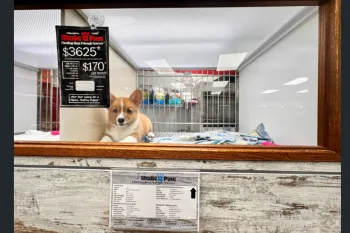
The momentum in our fight to stop puppy mills continues: Not only do 10 states and more than 530 localities have laws on the books ending the retail sale of puppies in pet stores, but our team's research also shows that USDA-licensed commercial dog breeding operations are producing approximately 550,000 fewer puppies each year than they were in 2020.
From Horrible Hundred breeders alone, more than 3,500 animals have been rescued since we first started publishing the Horrible Hundred report, and many more puppy mill dogs have been rescued due to changes in the laws that Humane World for Animals and local advocates helped support.
September is Puppy Mill Awareness Month, and September 19 is Puppy Mill Awareness Day. We’re celebrating these wins by continuing to push for reform.
Meredith Lee/Humane World for Animals
Protect dogs and puppies
We must do more to end the unnecessary suffering of animals in puppy mills and act to save their lives before it is too late.
How you can help dogs stuck in puppy mills
Until puppy mills are gone, there will always be a mother dog being forced to breed and birth litter after litter until her body is exhausted. There will always be puppies desperate for care and attention. And that’s why we won’t stop until the puppy mill industry has nowhere left to sell and no reason to force dogs to breed over and over to meet market demands
You can help dogs languishing in puppy mills right now by supporting the federal Puppy Protection Act and the Better Collaboration, Accountability, and Regulatory Enforcement (CARE) for Animals Act, as well as by following our Stop Puppy Mills Facebook page and downloading and sharing our detailed free guide for advocates. And if you see potentially illegal animal cruelty at a puppy mill, report it to local humane law enforcement authorities and to us.
We will keep building solidarity around the movement to end puppy mill cruelty until everyone understands that a puppy is not a commodity and the puppy mill industry collapses under the obvious weight of its inherent cruelty.
Jo-Anne McArthur/Montreal SPCA / We Animals
Help pass critical legislation
Animals deserve to be protected. Tell your U.S. Senators and U.S. Representative to cosponsor the Better CARE for Animals Act (H.R.3112/S.1538), which will strengthen Animal Welfare Act enforcement.
Kitty Block is president and CEO of Humane World for Animals. Follow Kitty Block on X. Sara Amundson is president of Humane World Action Fund.