We recently called out the Trump administration’s push expand access to hunting as an insult to animals and the wild spaces that all Americans share.
And in Colorado, we are seeing a similar war on wildlife play out with Amendment 83, which is on the ballot for voters to consider in November. The amendment seeks to enshrine a “right to hunt and fish” in the state’s constitution.
Hunting and fishing are already legal—so what’s the point of the amendment? The consequences of Amendment 83 go much further in undermining the public’s ability to protect animals from special interest groups who seek to bring back the cruelest hunting methods like trapping, bear hounding and baiting by undermining previous ballot measures that voters already passed.
And it raises that same fundamental question as President Trump’s recent executive order about hunting at the state level: Who gets to decide the future of wildlife?
Trophy hunters could undermine wild animal protections for generations to come
The public deserves to know what this so-called “right to hunt” amendment actually means.
Amendment 83 is dangerous proposal that could make it harder to protect wild animals from cruelty, and harder for Coloradoans to decide how wildlife is treated. Amendment 83 belongs to a much larger campaign to write hunting and trapping preferences into state constitutions. Its supporters include trophy hunting organization Safari Club International and the Wisconsin-based International Order of T. Roosevelt. The Congressional Sportsmen’s Foundation is also actively supporting Colorado’s measure.
In other words, national trophy hunting special interests are setting their scopes on Colorado to promote a measure that could give their desires to bag wild animals through the cruelest methods constitutional force for generations to come.
‘Traditional’ methods include cruel and archaic practices that voters themselves have prohibited
Amendment 83 does not define “traditional methods.” That is by design. That ambiguity matters when the national trophy hunting interests promoting this approach expressly include trapping and chasing down wildlife with packs of trailing hounds as their vision of preserving “tradition.”
Coloradoans have used ballot measures to pass important protections for wildlife, including banning bear baiting and hounding and banning cruel leghold and body-gripping traps and snares on public lands.
Make no mistake: These methods are the height of cruelty.
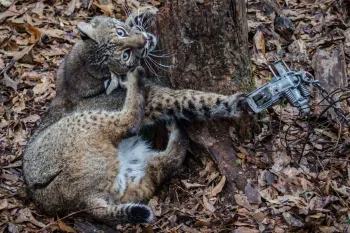
Amendment 14, passed by voters in 1996, banned public lands trapping, including steel-jawed leghold traps that can hold animals in agony. Body-gripping traps intended to kill animals quickly often mis-strike, instead inflicting painful injuries. Neck snares can strangle them.
Proponents of Amendment 83 would also roll back a measure passed by 70% of voters in 1992 that prohibited the killing of bears when cubs are still nursing and disallowed the hunting of bears with packs of hounds and over bait piles. Supporters of human-wildlife coexistence stress how important it is to not feed black bears—but baiting bears with piles of jelly donuts for an easier kill is a method proponents of Amendment 83 have expressly declared they want to bring back. They also want to restore bear hounding, using packs of hunting dogs to chase animals until they are cornered, leaving them terrified for a close-range shot. These are the kinds of practices that we and anyone who cares about protecting wildlife work to restrict; that vague constitutional language could make cruelty harder to regulate.
People could lose power to protect wildlife
Amendment 83 could make future ballot measures prohibitively difficult for citizens. That’s because a law approved by voters must comply with the state constitution. Giving hunting and undefined “traditional methods” special constitutional preference would create a new basis for challenging voter-approved restrictions. Even after people gather signatures, organize a campaign and win an election, their decision could face a lawsuit asserting that it violates the new amendment.
The amendment would not eliminate Colorado’s ballot initiative process, but it could weaken what voters could accomplish through it. This amendment could silence voters who want more protections for animals.
Elected officials at Colorado’s capitol and wildlife officials also face a new constitutional test: The amendment’s language also narrows their authority to create new laws by requiring that legislation must be deemed “necessary” for specified purposes, including preserving hunting and fishing opportunities. Disputes over what qualifies as necessary will likely be decided in court, which could discourage officials from pursuing reforms in the first place to avoid costly litigation.
Amendment 83 may also stifle wildlife policy from being informed by the most relevant research. For example, in July, the Colorado Parks and Wildlife Commission adopted a proposal from Dr. Rebecca Niemiec, a conservation social scientist at Colorado State University, to replace unlimited recreational killing of 17 furbearer species (such as bobcats, foxes, beavers and other wildlife) with a daily limit of two animals per species per person. Her proposal brought the latest research on public attitudes into wildlife policymaking.
Considering scientific evidence alongside the public’s values is essential in shaping public policy. And it is yet another facet of wildlife protection that could be under threat if Amendment 83 passes. Under Amendment 83, opponents could argue that such recreational kill limits are not “necessary,” giving trophy hunters an additional constitutional basis to challenge animal protection policies.
Wildlife ‘management’ could default to a death sentence for animals
The most effective response to a wildlife conflict is preventing it from happening in the first place: securing food that attracts animals, protecting vulnerable areas or helping people coexist safely with wildlife.
The proposal also declares hunting and fishing the “preferred means” of managing fish and wildlife populations. That language would place a thumb on the scale before experts and communities have considered the circumstances. It also disenfranchises that majority who are wildlife watchers. In America, there are 10 times more wildlife watchers than hunters spending six times more money on this recreation, according to U.S. Fish and Wildlife Service data.
The numbers of Americans participating in hunting has been in rapid decline nationwide over the last several decades. Only 4.6% of Americans hold a hunting license; in Colorado it’s 6.3%.
Conservation should protect functioning ecosystems and the animals who depend on them for our children and our children’s children. Writing a favored management method into the constitution could make that work harder for decades to come.
Colorado voters can still stop this
We have helped defeat similar efforts to cement the “right to hunt” and trap in eight different states in 2026 alone. We know the proponents behind Amendment 83 are eyeing new states as future targets.
That’s why it’s so critical that Coloradoans vote no on this dangerous amendment. If you live in Colorado, please help us get the word out and share how disastrous this amendment would be for wild animals.
Kitty Block is president and CEO of Humane World for Animals. Follow Kitty Block on X. Sara Amundson is president of Humane World Action Fund.
Paid for by Humane World for Animals, Inc. Registered Agent: Aubyn Royall