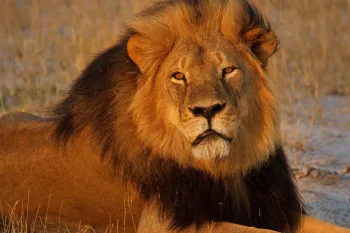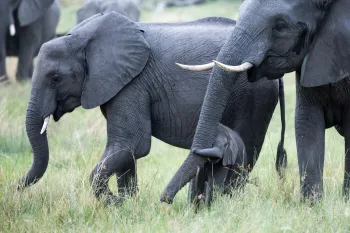
For years, successive UK governments, including the current one, have promised to ban trophy hunting imports from certain kinds of imperiled wild animals, such as the severed heads and feet from elephants, lions and rhinos. In recent years, three bills have been introduced to stop British hunters from bringing home trophy souvenirs, two of which came close to becoming law.
However, on January 8, 2026, U.S. Secretary of the Interior Doug Burgum sent a letter to UK Environment Secretary Emma Reynolds expressing concern about any bill that would crack down on trophy imports, arguing that trophy hunting benefits wildlife conservation and communities around the world.
We are here to set the record straight.
What the letter gets wrong
In the letter, Secretary Burgum makes spurious claims about the benefits of trophy hunting for both communities and wildlife around the world. The reality is that trophy hunting causes far more harm than good.
Trophy hunting often targets and removes socially, genetically, reproductively and ecologically important animals from already vulnerable populations. Research shows it can disrupt family groups, skew age and sex ratios and weaken long-term population stability. These effects cannot be fully mitigated by trophy hunting revenue, nor can trophy hunting revenue effectively bolster animal populations already threatened by the wildlife trade, habitat encroachment, poaching and other pressures. Killing animals who are already in danger as a purported pathway to ultimately saving them at the species level is nothing less than absurd.
Burgum’s letter touts the purported benefits from trophy hunting to local communities or conservation. In practice across Africa—which accounted for about 60% of the global exports of trophies from wildlife threatened by trade between 2019 and 2023—most profits go to foreign operators and private landowners, not to conservation programs or households. And the limited, unevenly distributed funds that do reach communities can worsen inequality (especially among women and children), discourage economic diversification, exacerbate intolerance for wildlife on the part of those people living alongside them, and fail to offset the ecological damage caused by hunting rare and threatened species.
Meanwhile, dependence on trophy hunting revenue actively blocks investment in sustainable and ethical tourism and diversified land use that benefit more people over the long term. When policymakers weigh the full picture (economic, environmental and social), the international trophy hunting industry is a net loss.
“The UK Government was elected on a clear manifesto commitment to ban trophy hunting imports. Every delay is eroding the trust of British voters who expect to see promises to protect wildlife delivered.” –Nick Hawkes, senior program manager for Humane World for Animals UK
Correcting false claims about UK and U.S. policy
Regrettably, Secretary Burgum mischaracterizes the UK proposal as a “blanket ban on all imports.” In fact, the proposed Bill applies only to species listed under Annexes A and B of the UK’s wildlife trade regulations. These species are identified as most threatened by international wildlife trade. Listings on these Annexes are not arbitrary—they are based on rigorous scientific assessments and international consensus that trade is a primary driver of decline for these species. By referencing the Annexes, the proposed UK policy allows for an adaptive, science-based approach that will always apply only where the need is greatest.
Further, the letter calls for the UK to rely solely on the Convention on International Trade in Endangered Species (CITES) as a means of regulating trade rather than adopt domestic measures. However, this is inconsistent with current U.S. policy; the U.S. routinely imposes stricter domestic regulations on wildlife imports than CITES requires, a right afforded to all Parties to the Convention.
The U.S. is the world's largest importer of hunting trophies from wildlife threatened by trade. Given the devastating impact that trophy hunting has on conservation, it’s especially disturbing that the Department of the Interior would seek to intervene in another nation’s attempt to divorce itself from a reckless and wanton industry that exploits animals and people with no legitimate benefits for anyone.
This letter also stands in contradiction to other efforts by the Trump administration, including the U.S. Fish and Wildlife Service (which is under the Department of the Interior), and U.S. lawmakers to crack down on international wildlife trafficking. A disjointed approach to the laws and regulations that control the legal trade of wildlife species gives cover to traffickers, making it easier for them to disguise their illicit activities as legitimate and lawful.
Many governments and communities—including many in Africa—are moving away from the international trophy hunting industry. A number of countries, including Colombia, Costa Rica, Cote d’Ivoire, Djibouti, Eritrea, India, Kenya, Malawi, Singapore and South Sudan prohibit trophy hunting outright or to a significant extent. Others, such as Argentina, Australia, Belgium, Canada (British Columbia), Finland, France, the Netherlands and the United States, have implemented trade restrictions that go beyond those of CITES.
Private industry has taken action, too. Forty-five major passenger and cargo airlines, including the world’s largest airline groups, prohibit the transport of some or all hunting trophies on their carriers.
Secretary Burgum’s approach is out-of-step with these markers of progress.
What now?
In December 2025, UK Nature Minister Mary Creagh MP reaffirmed the government's commitment to introduce a ban on trophy hunting imports. However, that commitment was missing from the government's new Animal Welfare Strategy and no timeline was given by Minister Creagh in her statement to parliament. Instead, she simply stated: “Timeframes for introducing legislation will be provided once the Parliamentary timetable for future sessions is determined.”
A strong bill that would have made the world a better place for animals was defeated in 2023. It was back in 2022 that Henry Smith MP introduced the Hunting Trophies (Import Prohibition) private members' bill to parliament. This bill aimed to ban the import of hunting trophies into the UK from animals threatened by trade (those listed on Annex A and B of the UK’s Principal Wildlife Trade Regulation). The list comprises over 6,000 at-risk species, ranging from lions and elephants to rhinos and black bears. The legislation made its way through the publicly elected House of Commons before failing to pass the appointed and unelected House of Lords. This failure was the result of 60 amendments from pro-hunting members, each of which required extensive debate and thus consumed time that the parliamentary calendar could not and did not afford.
The text of this bill was good and can and should be resurrected by the government. All that is required is conviction from UK Ministers to introduce a government bill in the next session (likely to start in May) and give it the parliamentary time it needs and deserves to become law.
We also believe that the UK Government has a responsibility to stand against attempts to undermine its democratic mandate, whether from foreign pressure groups or governments. Last month's letter from the U.S. Interior Secretary to the UK's Environment Secretary is at odds with the will of both the U.S. and UK public, science and responsible policy. Instead, his comments mirrored the shopworn and inaccurate talking points of the U.S.-based Safari Club International and other pro-hunting lobby groups.
Our team has written to the UK Environment Secretary and to the UK Foreign Secretary, calling on them to stand with the public who elected them, alongside scientists and conservation experts, to ensure that this long-promised ban is delivered without further delay. This is not the time to allow the U.S. government to intervene in British policymaking.
The UK Government now has a clear choice. It can honor its democratic mandate, uphold science and end its role in the international trophy hunting trade, or it can continue to be complicit in decimating the populations of some of the world’s most vulnerable animals.
Kitty Block is president and CEO of Humane World for Animals. Follow Kitty Block on X. Sara Amundson is president of Humane World Action Fund.