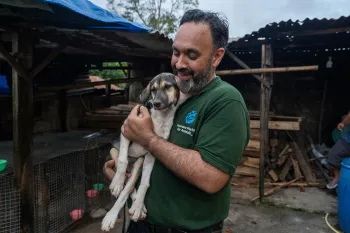
For the past 45 years, two men in Kupang, Indonesia, have been in the dog meat business. The province is a dog meat hotspot; thousands of dogs are snatched from streets or sold into the trade, suffering the cruelty of the trade as well as spreading deadly rabies across the region. Mr. Boly, who owned the dog slaughterhouse, knew that the trade was not only cruel but also dangerous, and Mr. Akim, who owned the dog meat restaurant, had been getting pressure from his family to stop his involvement in the trade because of the health risks involved, but neither of them had the resources to start over in another line of work.
All of that has changed. Both men have closed their businesses as part of our Models for Change program, which has helped dog meat traders in South Korea, Viet Nam and India switch to livelihoods that are less dangerous and more humane.
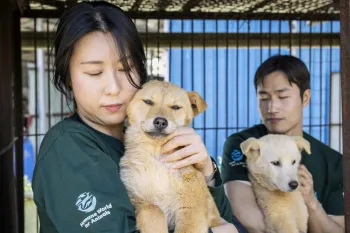
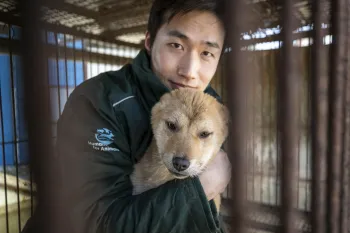
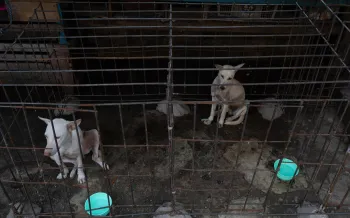
The 10 dogs who were caged at the slaughterhouse have now been rescued by Humane World for Animals and our local partner Jakarta Animal Aid Network.
“I really hope the 10 rescued dogs will go on to have happy lives in families that look after them,” Mr. Boly said. “I am now looking forward to opening my general store supplying all the things our community needs, but no more dog meat!”
Forddhanto Bimantoro
Mr. Akim added: “I have been increasingly worried about the link between the dog meat trade and the spread of rabies, which is a big problem here. But I couldn’t have made the switch without the Models for Change program, so I am very grateful for that. I now feel I have a brighter future for me and my family.”
A whopping 93% of Indonesians support a national dog meat ban, and just 5% have ever consumed dog meat, according to an opinion poll. Yet, in Nusa Tenggara Timur, the cruel and dangerous trade has continued, reporting some of the highest rabies numbers in the country, with 78 confirmed human cases in 2025.
Dog thieves also remove vaccinated dogs from communities, breaking down herd immunity needed to stop the spread of rabies, which is achieved when at least 70% of dogs are vaccinated in an area. Dogs who are captured for the trade are often stuffed into sacks with their legs and mouths bound, undergoing terrifying and painful journeys to slaughter, while also becoming vectors for the potential spread of disease.
The 10 rescued dogs—two males and eight females—are now recovering and receiving veterinary care at Kupang Animal Clinic. They are all under 2 years old, and the youngest is just 6 months old. Two of the dogs had recently given birth; it appears that they were sold to the slaughterhouse after birthing their puppies.
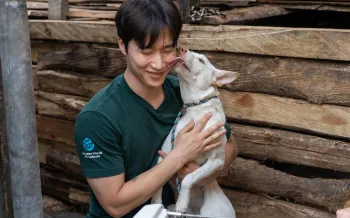
After a quarantine period, they will be flown to JAAN’s shelter in Bogor, West Java, to fully recover physically and emotionally before they are found safe local adoptive homes.
Forddhanto Bimantoro
We are determined to ensure that more dogs don’t go through what these 10 did. Raising awareness about the cruelty and danger of dog meat can increase public demand for an end to the trade. The local government will then be in a stronger position to introduce a ban on the dog meat trade in the province.
Kupang is in the western part of Nusa Tenggara Timur province and acts as the province’s main transport hub, with an airport and seaport connecting it to other parts of Indonesia. The mass transport of unvaccinated dogs that come through the city as part of the dog meat trade means rabies continues to spread, as the transport undermines disease surveillance and brings infected dogs into previously rabies-free areas.
Creating the humane world at the center of our vision involves not just rescuing animals from crisis situations but ensuring that they don’t end up there in the first place. That’s why we are working with our local partner JAAN on a program that tackles two serious issues at the same time: ending the dog and cat meat trade and reducing the spread of rabies. So, while we work on shutting down dog slaughterhouses and restaurants and transitioning business owners to safer and more humane livelihoods, we also run, with the local government, mass rabies vaccination campaigns for dogs and work with communities to raise awareness about rabies prevention, emphasizing the link between the dog meat trade and rabies. We also provide veterinary training to people on the ground. The program directly contributes to the government’s goal of making this province rabies-free by 2030.
This is how we end animal cruelty—through programs that focus on compassion for animals and inspire people to create a kinder, safer world for us all.
Kitty Block is president and CEO of Humane World for Animals. Follow Kitty Block.