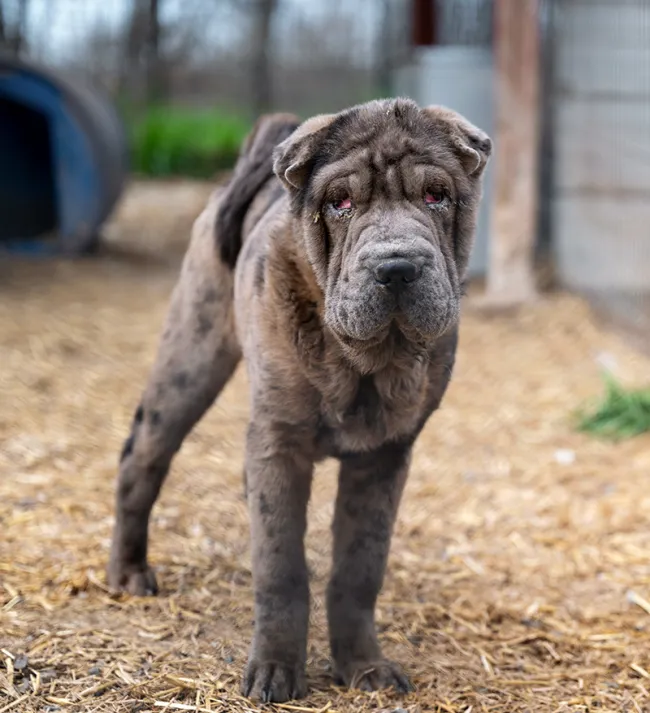
In spring of 2024, more than 200 dogs were temporarily housed inside an Oklahoma warehouse. Our Animal Rescue Team removed them from two puppy mills after local law enforcement requested help. Despite the dogs’ shared past, they were a wildly diverse group, from tiny shih tzus to lanky Dobermans and a giant Saint Bernard mother.
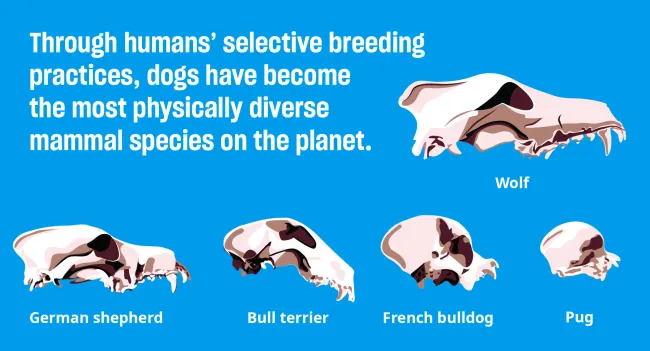
The dogs were a striking visualization of how far dog breeds have departed from their wolf ancestors. They also illustrated how animals can suffer to meet our desire for cute companions.
The French bulldogs struggled to breathe and snorted loudly, particularly on hot days. Rescuers gave them extra fans. The shar-peis had thick facial wrinkles. Some dogs had such heavy skin folds that their eyelids and lashes rolled into their eyeballs and caused painful ulcers. One dog was in so much pain that veterinarians needed to remove an eyeball. The three basset hounds had eye and ear infections, likely caused by their long ears that trapped moisture and saggy skin that dragged their eyelids down.
Meredith Lee/Humane World for Animals
Making “man’s best friend”
The dogs we love today evolved from wolves thousands of years ago. At some point, humans started breeding dogs for tasks and referred to them by the skills they had. Retrievers retrieved; shepherds guarded sheep; bulldogs, tragically, fought tethered bulls for human entertainment.
Dogs developed a wide range of physical features over time, but these differences were pushed to new extremes during the 1800s as people moved away from breeding for function and toward a fixation on appearance.
With this new era of dog breeding came new rules. Breed clubs started creating standards outlining what dogs in the breed needed to look and act like. Then kennel clubs began closing breed registries, meaning only dogs with lineage descending from the founding population could be registered. Overusing dogs with the “right look” for breeding also became common practice. A single male show dog winner could father hundreds of puppies.
These practices are still the norm today—and they’ve made many purebred dogs highly inbred. A 2021 study led by the University of California, Davis, examining data from almost 50,000 dogs of over 200 dog breeds, found the average level of inbreeding was around 25%, the number achieved when two siblings have a child together. Only 12 breeds—“strikingly few” as the authors write—had low levels of inbreeding.
Top 10 pet tips
Sign up to receive our exclusive e-book full of important information about caring for your pet, including training techniques and answers to frequently asked questions.
High rates of inbreeding mean harmful recessive genes are much more prevalent, making puppies more likely to suffer from diseases. Dobermans have average inbreeding levels of around 40% and are at high risk of multiple conditions such as a heart muscle disorder that can cause sudden death. Cavalier King Charles spaniels are 20 times more likely to get heart disease than other breeds. Golden retrievers have abnormally high rates of cancer.
On top of that, some breeds suffer additional health issues caused by the very same features humans desire and selectively breed for. “The more extreme the deviation from ‘normal,’ the more consequences we see,” says Dr. Milan Hess, a reproductive specialist with Colorado Veterinary Specialty Group.
“We’re seeing this very large evolutionary variation within a species that’s only been evolving for a relatively very short amount of time,” evolutionary biologist and lecturer at Cornell University Abby Grace Drake told the Cornell Chronicle. “That’s a remarkable thing to see in evolution, which takes millions of years, but we did it with dogs by pushing them to the extremes.”
cynoclub/Getty Images
From head to tail: Health problems in purebred dogs
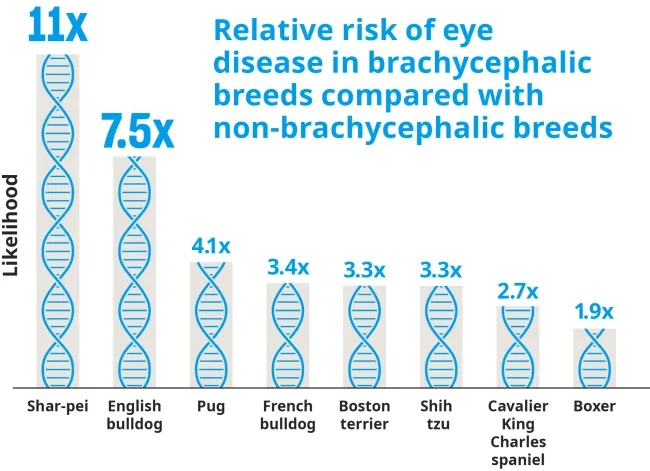
Brachycephalic dogs—a group of 24 breeds including pugs, shih tzus and Cavalier King Charles spaniels—have been selectively bred to have shortened skulls, giving them a flattened-face look.
This unnatural skull structure makes it difficult for many dogs to breathe. “When we squish the face of a dog inward…all of that tissue, all of those structures in the normal dog, are squished into this tiny little space,” says Dr. Barry Kipperman, California state representative for our Humane Veterinary Medical Alliance and a guest lecturer of veterinary ethics at the University of California, Davis. “Now air cannot get through without running into turbulence and blockages.”
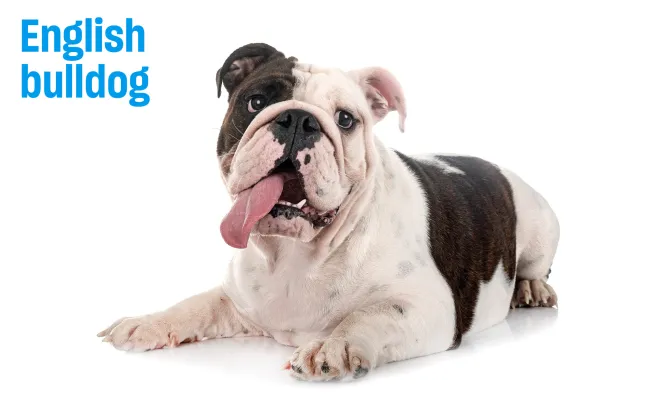
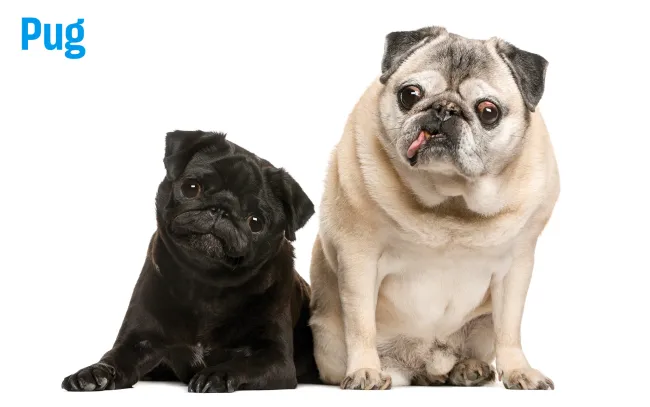
French bulldogs, English bulldogs and pugs are considered the most extreme brachycephalic breeds.
It’s estimated that around half of them have brachycephalic obstructive airway syndrome, called BOAS, the diagnosis for living with breathing problems caused by a shortened skull. These dogs often struggle to sleep, eat, exercise and cool themselves down. Their oxygen-deprived bodies have to work harder, which can cause neck and heart tumors, pneumonia, stomach hernias, acid reflux diseases and heart failure.
The shortened head shape can also cause neurological problems. “What we’ve done is…we’ve miniaturized these dogs first of all, and then we changed their skull shape,” says Dr. Clare Rusbridge, a professor of veterinary neurology at the University of Surrey. But dogs’ brains haven’t become correspondingly smaller, she adds. “It’s just a brain in a smaller package.”
Rachel Stern/Humane World for Animals
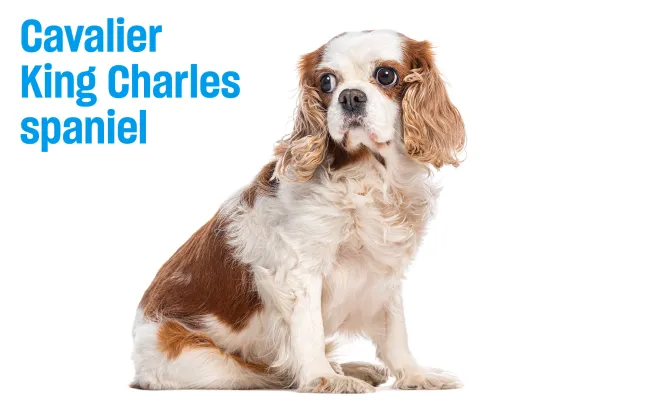
No breed is more impacted by this problem than the Cavalier King Charles spaniel. Almost every cavalier is believed to have a brain too big for their skull. The condition can be painful and some dogs will develop syringomyelia, where the brain pushes into the hole between the skull and spine and causes fluid-filled cavities in the spinal cord. Dogs can be in such severe pain that they’ll yelp when running and struggle to wear collars. Rusbridge’s research has found cavaliers with shorter, rounded skulls are at a higher risk of developing syringomyelia.
Beyond the skull, problems continue through the rest of their bodies. French bulldogs and Cavalier King Charles spaniels commonly suffer spinal issues, linked to the genes that give them shortened legs. In severe cases, their back legs will become paralyzed. Tightly wound corkscrew tails can harbor bacteria and become infected. Many dogs struggle to mate naturally because their short necks, barrel chests and compressed spines make them inflexible, Hess says. And the mother’s narrow hips, plus puppies’ large heads, mean the vast majority of English bulldogs, French bulldogs and Boston terriers are born through C-section.
“You have a situation where people are buying dogs that are inherently unhealthy. And when they have problems, it costs a great deal of money,” says Rusbridge.
Rachel Stern/Humane World for Animals
Throughout their lifetimes, many of these dogs will need surgeries to correct their extreme features. Even so, many will die significantly younger than non-brachycephalic dogs.
“I think the dog’s basic bill of rights should include being able to breathe, breed and walk without pain,” says Hess. “If you can’t do any of those things, you’d be extinct without intervention.”
Brachycephalic dogs aren’t the only group with health issues associated with appearance. Some low-set breeds such as dachshunds, basset hounds and corgis are at a higher risk of spinal issues. Dogs with droopy skin like Saint Bernards, shar-peis and mastiffs suffer skin and eye issues.
GlobalP/Getty Images
Barriers to change
Scientific advancements have led to some positive changes. Since the advent of genetic testing, breeders have been able to test dogs for levels of inbreeding and certain diseases. Veterinary examinations for common conditions can provide additional information about a dog’s health.
In 2023, a grading tool for BOAS was introduced into the U.S. and Canada. But health testing isn’t utilized by breeders very often, says John Goodwin, senior managing director of the Stop Puppy Mills campaign at Humane World for Animals. A large number of purebred puppies in the U.S. come from breeding mills, notorious for maximizing profit without concern for animal welfare.
Goodwin says a kennel club registration can give buyers a false sense of security about a dog’s health. “The only thing American Kennel Club paperwork means is that the puppy is the offspring of two dogs registered with AKC. That means nothing in regard to the health of the puppy.”
Hess is one of the couple dozen veterinarians in the U.S. and Canada trained to test for BOAS. “I have had very, very few people come to do that test even though I'm the only evaluator in Colorado,” she says.
When Hess began requiring health testing of French and English bulldogs whom her clients wanted to breed, most of the clients left for another veterinarian. “Some of these purebred dogs, the owners care about [coat] color and how much they can make from the litters, and nothing else matters,” says Hess.
When embraced by breeders, health testing is an important part of improving dog health, says Goodwin.
But it’s not the only step.
It is undeniable that limited genetic diversity, extreme conformation and breed-related diseases are still major issues in many breeds and that some breeders remain reluctant to prioritise health over appearance or commercial gain.”
2026 Royal Kennel Club report
In the U.S., most breed standards are written by breed clubs and approved by the AKC. The French bulldog standard calls for “heavy wrinkles forming a soft roll over the extremely short nose.” The English bulldog standard says that the distance from the point between the eyes to the tip of nose “should be as short as possible.” Chinese shar-peis should have “profuse wrinkles on the forehead continuing into side wrinkles framing the face.”
Dalmatian breed standards are connected to a health issue believed to impact them more than any other breed: congenital sensorineural deafness. The genetics related to deafness aren’t fully understood, but researchers know it’s connected to their white coats and is moderately heritable.
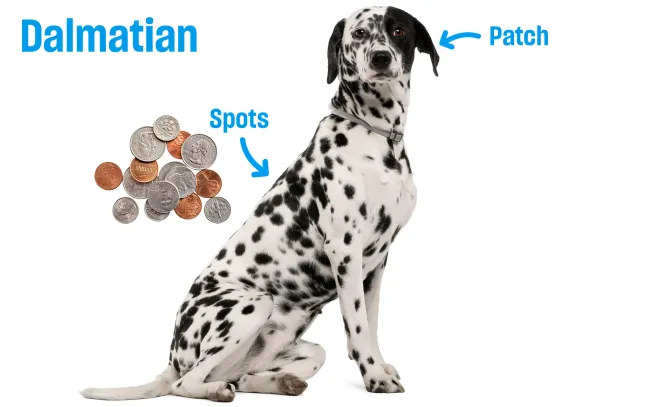
In the U.S., an estimated 22% of dalmatians are deaf in one ear and 8% are deaf in both. Research has found that dalmatians with brown eyes or patches (which are larger than spots and appear at birth) are less likely to be deaf because they have more pigmentation. Yet the U.S. breed standard disqualifies dogs with patches and allows dogs to have brown or blue eyes.
When a puppy is born deaf in both ears, the Dalmatian Club of America says “humane euthanasia… may be an alternative to placement,” according to a 2020 position statement.
Efforts to breed only brown-eyed, fully hearing dalmatians have reduced rates of deafness slightly, but it’s still a big problem, says George Strain, a retired professor of neuroscience at Louisiana State University School of Veterinary Medicine who has spent decades studying canine deafness.
GlobalP/Getty Images
“Unfortunately, the patch is not allowed in the breed standard in the United States,” says Strain. “By not using those dogs, they are sort of breeding away from something that could help decrease the deafness.”
Strain’s viewpoint echoes that of other researchers who have studied dalmatian deafness. “Because a color patch is undesirable, breeders who select against this trait increase the likelihood of deafness in future litters,” says a 2000 paper in the American Journal of Veterinary Research.
The UK Dalmatian breed standard says “some patching on ears or head” will not be penalized and does not allow blue eyes. By using hearing tests to guide breeding decisions, the rate of deafness in UK dalmatians dropped by around a third over 26 years. The rate of dogs deaf in both ears was cut in half.
Experts believe certain standards should be revised to address potential health issues. “Some of the breed standards call for an extreme phenotype and I think that that has to be changed,” says Dr. Jerold Bell, professor of genetics at Cummings School of Veterinary Medicine at Tufts University and chairman of the Hereditary Disease Committee with the World Small Animal Veterinary Association. In breeds where exaggerated traits associated with health risks are common, he thinks the breed standard should make a statement about avoiding extremes.
Changing a breed standard a “fraught and political” process, but it does occasionally happen, says Adam Boyko, a professor at Cornell University, College of Veterinary Medicine and co-founder of dog DNA testing company Embark. The key is to get people to look at the issue scientifically rather than emotionally, he says.
Hess doesn’t think changing breed standards will make a major difference, though. “Changing the perception of what’s cute and educating [the public] about suffering might—might—help.”
GlobalP/Getty Images
Why are brachycephalic dogs so popular?
Despite all their health issues, brachycephalic dogs have become massively popular around the world. A love for flattened faces has even crossed over the canine barrier to cats and rabbits.
In 1985, 318 French bulldogs were registered with the AKC, making it the 94th most popular breed. In 2022, around 108,000 were registered. That year, for the first time ever, the French bulldog was the most popular U.S. dog breed, toppling the Labrador retriever’s 31-year reign. Following closely behind, the English bulldog has been in the top 10 breeds for more than a decade. The Cavalier King Charles spaniel was the 13th most popular breed in 2024.
Researchers theorize that the so-called “brachy boom” may be driven by humans’ gravitation toward dogs with baby-like features such as large foreheads, big eyes and small noses. Their infantile appearance triggers our desire to nurture them, the theory goes.
Behaviors related to breathing difficulties—such as snorting, drifting to sleep while sitting up and sleeping with toys in their mouths—can be seen as endearing and draw us in further. Because these dogs often can’t exercise for long, they’re also viewed as low-maintenance apartment pets.
Even when people recognize these behaviors as symptoms of breathing troubles, they rationalize it as something that is normal for the breed, experts say. “It is common in the breed but it’s not normal for a dog,” says Brenda Bonnett, past CEO of the International Partnership for Dogs.
Multiple organizations have tried to reduce demand for brachycephalic breeds, but efforts have proven difficult. Pet owners develop strong emotional bonds and are “in denial about their [dog’s] disabilities even when they’re informed about them,” says Kipperman.
The high demand for brachycephalic dogs seems to follow a larger trend. Dachshunds, who suffer a high rate of spinal issues due to their body structure, have become massively popular in recent years.
One survey found that French bulldogs, pugs and English bulldogs are three of the four most popular breeds on Instagram.
Paving a path forward
Although veterinarians and other advocates have been raising concerns about breed-related health issues for decades, progress has been slow. Some experts are hoping to change that.
“It is now time for those currently in charge of organized dog breeding to take responsibility for this challenge and to put the health and welfare of the dogs ahead of human goals such as heeding tradition, profit, winning prizes at shows,” Bonnett and other authors of a 2025 Animal Welfare paper wrote.
Veterinary neurologist Rusbridge, who was not an author on the paper, has also been calling for changes to dog breeding practices. “The current breeding paradigm will eventually destroy the most vulnerable dog breeds,” she wrote in 2024.
In January of this year, the Royal Kennel Club in the UK released its own report analyzing the current state of purebred dog health. “It is undeniable that limited genetic diversity, extreme conformation and breed-related diseases are still major issues in many breeds and that some breeders remain reluctant to prioritise health over appearance or commercial gain,” the report says.
The report outlines the kennel club’s plan to address these issues, including by creating a nose-to-tail visual assessment identifying physical features in dogs that can lead to health issues.
Some groups are turning to outcrossing—when a dog is bred with a different breed to introduce healthier genes before breeding those puppies back into the original breed. Both the Finnish and Swedish kennel clubs are supporting outcrossing projects for the Cavalier King Charlies spaniel. The Finnish Kennel Club is also supporting outcrossing for the French bulldog. While many veterinary professionals are supportive of this method, outcrossing is still controversial within the dog breeding world.
Some areas have gone a step further. In 2023, the Norwegian Supreme Court ruled that breeding Cavalier King Charles spaniels violated the country’s animal welfare law. And in November 2025, the European Parliament and the Council of the European Union agreed on provisional legislation to improve the welfare of cats and dogs. If formally adopted, it will ban the breeding of cats and dogs to “give them exaggerated or excessive traits that lead to significant health risks” and ban close inbreeding, along with other protections.
Ojai, California, became the first U.S. city to ban the breeding of dogs and cats with features associated with health issues such as short muzzles, corkscrew tails and excessive skin folds in 2024. Also that year, a bill was introduced in New Hampshire to prohibit the sale of animals with a “birth deformity that causes suffering, such as brachycephaly.”
Experts have varying opinions on what the best solution is. It’s clear, though, that something has to change.
Dogs are our oldest animal companions. We’ve bred them for thousands of years for our benefit, first as workers helping us survive, then as companions molded to fit our aesthetic desires. Maybe now we can do what’s best for them.
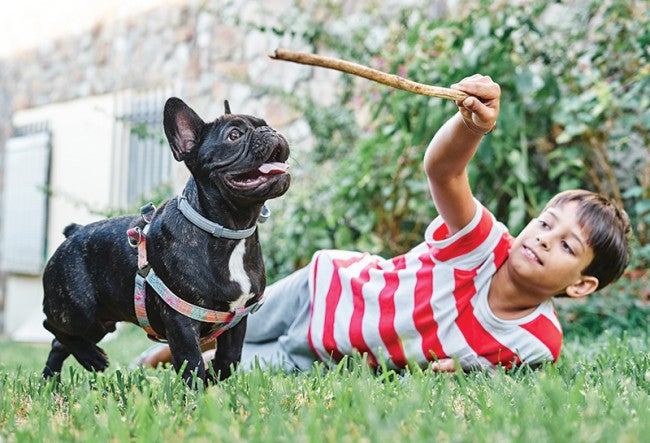
Cavan Images/Getty Images
Have your heart set on a purebred dog?
Here are some tips for welcoming one into your home
Look to shelters and rescues. Many organizations have been taking in more purebred dogs in recent years, so they may have the breed you’re looking for. There are also breed-specific rescue groups you can adopt from.
If using a breeder, find one who focuses on one breed. A breeder with puppies from a variety of breeds may be more focused on consumer demand than breeding healthy puppies.
Ask the breeder if they’ve done health testing on both parent dogs. And ask to see the test results for yourself. Reputable breeders will allow you to verify the information directly with their veterinarian. You can also look at the parent dogs (ask for photos of the father if he doesn’t live there) to see if they have extreme physical traits.
Research common breed-related health conditions. The Dog Breeding Reform Group, PupQuest and Canine Health Information Center have information on breed-related health issues. You can also consult with your veterinarian before getting a new companion.
Think carefully before getting a brachycephalic breed. Many of these dogs will need expensive surgeries to improve their quality of life. They also require extra care such as cleaning their skin folds and close supervision to prevent overheating and spinal injuries from jumping off furniture.
Related stories
Rachel Stern/Humane World for Animals
With lots of patience and veterinary support, we can help our pets lose weight and support them in living healthier, happier lives.
Julia Gerasina/iStock.com
As people struggle to afford pet care, animal shelters are feeling the impact.
Erin Huang/Humane World for Animals
Brachycephalic dog breeds can suffer from a variety of medical problems, and require special care.