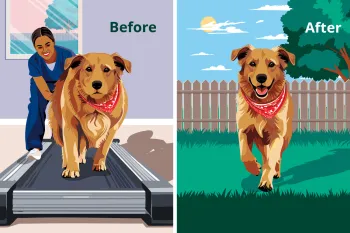
They’re all over the internet. They’re wearing sweaters, rolling on floors and taking naps. They’re overweight pets, affectionately referred to as “chonks” online. They elicit a lot of love and laughs, but they can also suffer serious health issues.
Obesity is a disease impacting millions of pets. Around 60% of U.S. cats and dogs are overweight or obese, according to the Association for Pet Obesity Prevention. Research suggests a similar number of pets may be impacted in the UK, Brazil, China and other countries. And the number of overweight pets appears to be rising.
These pets are at an increased risk of diabetes, joint issues, heart problems and certain types of cancer, among other concerns.
There are many reasons a pet can become overweight. “Too often we just simply say it’s a matter of overfeeding or under-exercising,” says Dr. Ernie Ward, a veterinarian and founder and president of the Association for Pet Obesity Prevention. Those are major components, he adds, but other factors such as genetics and medications can also play a role.
Leading with empathy
People with overweight pets may feel embarrassed or fear being criticized for how they’ve cared for their companion. That’s why it’s so important that conversations around pet obesity are nonjudgmental and focus on improving a pet’s quality of life, says Dr. Ernie Ward, a veterinarian.
If you’re concerned about your pet’s weight, first consult your veterinarian to rule out any underlying medical causes. Your vet can then help create a diet and exercise plan tailored to your pet’s needs. Diet will likely play a major role, particularly for cats.
Keep in mind that progress should be slow and gradual. Losing weight too quickly can cause its own health issues. Plus, cats and dogs are creatures of habit, and sudden lifestyle changes can cause them unnecessary stress, Ward says.
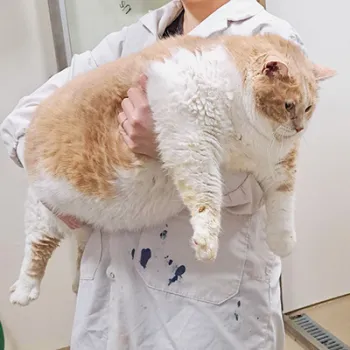
Kristine Seguin has been helping pets lose weight for the past few years. It all started when she was working at an animal rescue in Ottawa, Canada, and a 43-pound cat, nicknamed Biggie, came into their care. Seguin took Biggie home and has been documenting his weight loss journey on TikTok for almost two years now.
ProAnima Shelter
Biggie has garnered thousands of online fans and has been featured in Canadian media. He’s shed around 17 pounds so far, and his pursuit of a healthier physique continues. Seguin opened The Big House Sanctuary and Rehab to help other obese cats lose weight and eventually find adoptive homes.
Seguin’s top tip is to work on portion control. Wendy Van Norden, a staff er at Humane World for Animals who has helped multiple dogs lose weight, agrees. She usually divides a pet’s calorie allotment into several small meals a day. The dogs don’t seem to even notice a difference.
Food can also be strategically used to encourage exercise. Seguin uses food puzzles to slow down cats’ eating and encourage play. When Van Norden was helping a beaglemix named Roxy lose weight, she doled out kibble along their walks to encourage her.
Seguin says seeing animals regain their quality of life has been the biggest reward. When cats first enter the sanctuary, they’re usually meek. After losing weight, they gain confidence and engage in more natural behaviors. When Van Norden first adopted Roxy, the dog could barely walk two blocks. After Roxy lost weight, the pair would go on hikes together. “She was so happy exploring…which brought me so much joy.”
Seguin and Van Norden note that when you’re helping a pet lose weight, it’s important to celebrate incremental accomplishments. “Every little win is a big win,” Seguin says. One week when Biggie didn’t lose any weight, she reminded herself that he recently climbed his cat tree for the first time.
By showcasing the benefits of living at a healthier size, Biggie’s also redefining what it means to be a chonky pet online. Many others are also documenting their pets’ weight loss journeys. Their stories can spark inspiration— or simply entertain anyone needing their fill of cute animal videos.

Rachel Stern/Humane World for Animals
Ask All Animals:
Is my pet sick?
Should my dog’s nose be wet? What color are healthy cat gums? Why is my pet scooting their butt across the floor? By monitoring your pet’s behavior and performing a simple “nose-to-tail” at-home exam, checking their skin, eyes, ears, nose, mouth, tail, paws and claws, you may catch potential health issues before they progress. Learn the basic signs of a healthy pet—and what’s cause for concern—with these guides to an at-home dog exam or cat exam.
Related stories
nd3000/iStock.com
Resources to help you have the best life with your pet.
Rachel Stern/Humane World for Animals
Volunteers share the rewards and challenges of fostering pets while finding ways to protect their own well-being.
FatCamera/Getty Images
Cat vomit can tell you a lot about your pet’s health. We answer all your burning cat vomit questions.