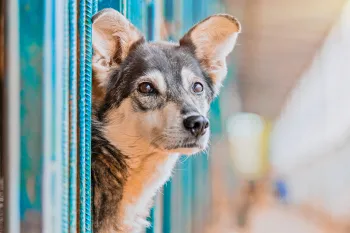
In spring 2020, as people hunkered in their homes during the onset of the COVID-19 pandemic and essential workers put their lives on the line, a sliver of good news helped lift the collective morale: Animal shelters around the country were being emptied as people rushed to adopt quarantine companions, headlines read.
The phenomenon wasn’t quite that simple—it wasn’t increased adoptions that led to empty cages as much as a decrease in animals being brought into shelters in the first place. But shelter workers still say there was a strong sense of community support during the early days of the pandemic.
In the years after, the animal sheltering field has looked much different. Once empty cages have filled again, some with double the number of animals they were built for.
Shelters across the country have been at a crisis point for the past few years now, says Lindsay Hamrick, Humane World for Animals director of shelter outreach and engagement.
Animal shelter stories
During the start of the pandemic, there were very few animals at New York City’s largest animal shelter, the Animal Care Centers of NYC. That started to change a few years ago. By July of this year, the shelter housed over 1,000 animals for the first time in its 30-year history. It suspended non-emergency animal intakes for two months to help manage their capacity. Even with this restriction in place, it still took in an additional 1,500 animals.
The numbers have gotten a little better since then, Katy Hansen, director of marketing and communications, said in October. But at 700 animals, it’s still double what the ideal capacity would be.
Almost 1,400 miles away in Baton Rouge, Louisiana, the animal shelter Companion Animal Alliance is also struggling with capacity issues. In 2018, it opened a new facility equipped to care for 7,000 animals annually—around how many animals it was seeing a year. But since 2021, it’s been taking in over 9,000 animals each year. Getting creative about how to manage the number of animals in their care has been a full-time job for those working in shelters.

Companion Animal Alliance
The animal sheltering landscape
The reason so many organizations are struggling isn’t as straightforward as it may seem. It’s easy to assume that the cause is more animals entering shelters and rescues, and although some organizations are seeing a rise in the total number of animals coming through their doors, it’s not a national trend.
Between 2016 (the first year nonprofit organization Shelter Animals Count has national sheltering data) and 2024, the number of animals entering shelters peaked in 2019 at 8.1 million. That number has hovered around 7 million each year between 2020 and 2024. (These statistics don’t include small animals some shelters care for, such as guinea pigs, rabbits, birds and reptiles.)
But once animals come into shelters, they’re staying longer. Large dogs in particular are having a hard time finding adoptive homes, now staying in shelters twice as long as they were before the pandemic.
Because of this, some shelters are having to make more heartbreaking euthanasia decisions. This August, more than 70 animals came into the Companion Animal Alliance in one day. The organization posted a plea for help on social media: “As the open-intake shelter for East Baton Rouge Parish, we cannot turn any animal away, regardless of our capacity. That means every kennel is full, and every animal, including cats, is at risk of euthanasia simply due to lack of space. These are decisions no one wants to make, and they are absolutely heartbreaking for our staff.”
In response, the shelter saw an outpouring of community support. But pleading for help is not a sustainable solution alone. Over the past four years, “we have been perpetually at or over capacity,” says Holly Danielson, the organization’s development and grants senior manager. “When we do make those calls it's because it's really, really bad.”
A complex convergence of issues brought us to this point.
Thinking about fostering?
Even a short-term foster placement can save a life and make space for another animal in need. Learn how to get started.
A crisis years in the making
During the early days of the pandemic, spay/neuter services across the country were suspended due to social distancing protocols and a lack of medical supplies. In 2020 and 2021, it’s estimated that almost 3 million pets were unable to be spayed and neutered. Because of a nationwide shortage of veterinarians that is hitting shelters and nonprofit clinics especially hard, spay/neuter surgeries have continued to lag behind pre-pandemic levels.
Without the ability to sterilize their pets, some people end up with unexpected litters. Shelters around the country are seeing a rise in the number of puppies brought to their doors, according to data from Shelter Animals Count.
Our Pets for Life program—which brings veterinary care, pet food and other services to underserved communities—has been struggling to keep up with surging demand. Since launching in 2011, the program only had a waitlist for services one time—during the pandemic lockdowns. Now the waitlist is back. “We're having to schedule animals out three months in order to get a spay/neuter because of the veterinary shortages coupled with more people needing support,” says Amanda Arrington, Humane World vice president of access to care.

MoMo Productions/Getty Images
The economy is also playing a major role. Since 2019, the cost of pet services (such as veterinary bills and grooming) has climbed 42% while the cost of pet food has risen 22%. These rising costs are causing considerable strain on families. A July 2022 poll found that nearly a quarter of pet owners have considered rehoming their pet due to inflation.
In recent months, uncertainties around federal aid programs such as the SNAP (Supplemental Nutrition Assistance Program) have caused many Americans to suffer even more financial stress.
Then there’s the housing crisis, which is hitting pet owners particularly hard. As home prices continue to surge, more people are renting. But pet owners often struggle to find affordable housing that allows pets, let alone options without exorbitant pet deposits and monthly pet fees.
Restrictive rental policies that prohibit dogs above a certain size or of a certain breed can push people away from adoption too. Because many people perceive shelters as only having larger, pit bull-type dogs, they may turn to breeders or pet stores to acquire a small dog, not realizing the volume of small dogs available in shelters and rescues.
iStock.com/
Support pet equity
Pets and their families belong together. Stand with us today to increase access to affordable veterinary care, pet food and pet-inclusive housing.
Our owner surrenders have gone through the roof since 2019, just absolutely through the roof. It's because of all these socioeconomic conditions.”
Melanie Sobel, director of the Denver Animal Shelter
Hansen says one-third of people surrendering their pets to Animal Care Centers of NYC are doing so because of housing insecurity. And the lack of pet-friendly housing is making it harder to adopt out large dogs. “Landlords are not as open to embracing animals in their buildings,” she says. “Since New York City has [under] a 2% vacancy rate, the landlords can do whatever they want. It's not like they're fighting for people to come live in their places.”
In Colorado, the Denver Animal Shelter has seen a rise in pet owners struggling to keep their companions. “Our owner surrenders have gone through the roof since 2019, just absolutely through the roof,” says Melanie Sobel, the organization’s director. “It's because of all these socioeconomic conditions.”
The hardships people are facing today aren’t new, says Arrington. We’ve known for decades that financial and housing problems are some of the top reasons people relinquish their pets. What’s new is the growing number of people being impacted.
These same factors are contributing to stalled adoption rates too. For people struggling to afford their daily needs, adding an animal into the family can sound overwhelming.
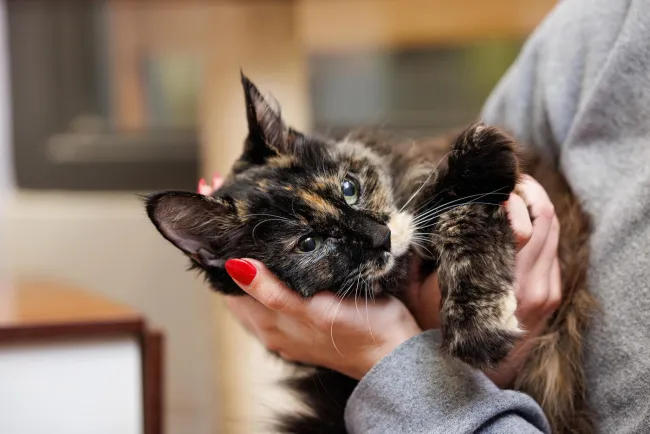
Companion Animal Alliance
How shelters are coping with overcrowding
Hansen says she’s often asked how shelters can get out of this crisis. Her response is simple, yet daunting: “It has to be financial security. People need to be in a better place financially.”
In recent years, many animal shelters have put more resources into pet food pantries, low or no-cost veterinary services, pet-friendly housing support and other programs. In November, Humane World for Animals donated $100,000 in grants to pet food pantries around the country. These grants are in addition to our year-round distribution of pet food and supplies to underserved areas around the country. From January to October 2025, Humane World provided over $27 million worth of pet food to communities across 43 U.S. states and Puerto Rico.
This work is having an impact. Companion Animal Alliance has been part of our Pets for Life program for almost a decade. While they’ve seen an increase in total owner surrenders in recent years, these rates are declining in the two zip codes their Pets for Life program has been working in the longest.
Nationally too there’s been positive changes, even though it doesn’t always feel that way. The number of animals who faced a “non-live outcome”—meaning they were euthanized, died in care or were lost in care—was already declining between 2016 and 2019 before plummeting in 2020. The rates have been slowly rising, but they’re still significantly below pre-pandemic levels.
Despite all the uncertainties surrounding the economy, sheltering professionals are optimistic their work will get easier. The question is when. “It's hard to say, right? I mean, is there going to be a recession? Are a lot more people going to lose their jobs to AI? It's precarious,” Sobel says.
As organizations work to change the tides, Hansen asks people to be empathetic toward shelter workers. “Every shelter's under-resourced. We're doing the best we can. We're in this business because we want to help animals.”
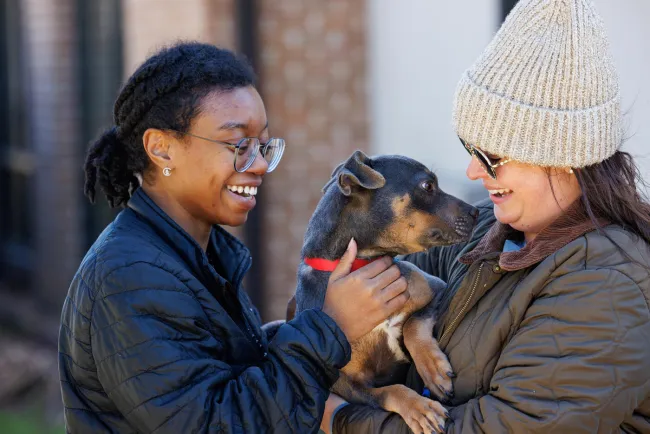
Companion Animal Alliance
How to help to animals in shelters:
- Donate to your local organization. If funds are tight, you can donate supplies such as gently used towels and blankets.
- Adopt your next companion.
- Volunteer with a local organization. There are a wide range of ways you can get involved, from fostering to helping with administrative tasks.
- Foster someone’s pet. If you know someone who is struggling and could use temporary care for their pet, offer to foster. Community-based fostering keeps families together and saves space at the shelter.
- Advocate for your municipal or county shelter to receive the funding it needs to care for animals and provide support services to pet owners in need.
- Spread the word that shelter animals need everyone’s help.
- Say thanks by giving your local organization a shout-out on social media or dropping food off for staff.
Related stories

Rachel Stern/Humane World for Animals
Volunteers share the rewards and challenges of fostering pets while finding ways to protect their own well-being.

Carrie Chapman
Are you thinking of adopting a bunny? Here’s what every potential owner should know about this underappreciated pet.

Zachary Casler/Unsplash
As this animal shelter crisis has been unfolding, we have rallied together to analyze the short- and long-term needs and to bring help to local animal shelters and rescues.