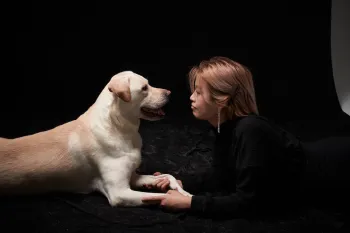
“It’s hard to think about where DeeJay came from. How could anyone eat [him]?” asks Annie Ko as she looks down at her 11-year-old Labrador retriever rescued from a South Korean dog meat farm.
When Ko, a Seoul-based singer-songwriter for the electro rock duo Love X Stereo, first started working with Humane World for Animals as a translator in South Korea in 2015, she had no knowledge of the dog meat industry, except that it was tradition for men to eat dog meat soup during Bok Nal because some believed it increased stamina and virility. As someone who had occasionally partaken in eating dog meat out of curiosity and in protest of gender norms, she didn’t give a second thought about what was happening to the animals.
“When you’re a meat eater, you don’t want to think about the process of how these animals get to our table,” she says. “Most people don’t know how these animals are kept on farms, including cows, chickens and pigs.”
It wasn’t until she stepped foot onto her first dog meat farm that her opinions started to change.
And at South Korean dog meat farms, the cages and the smell are what stood out to her the most.
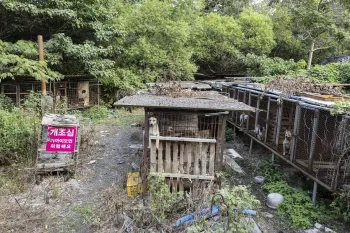
On these farms, dogs are kept in open wire cages without protection from the scorching summers or freezing winters. The cage floors are rusted, wire mesh, through which waste drops to the ground below. The dogs constantly stand with their sensitive paws splayed apart on the wire flooring.
“It is very torturous,” says Ko. “I had no idea the cages could look like that. But [the dogs] were still happy to see people. They wagged their tails and wanted to be loved.”
In February 2027, after more than a decade of our work alongside local authorities, partner organizations and advocates like Ko, South Korea’s dog meat industry ban will come into full effect. From then on, it will be illegal to farm, sell and slaughter dogs or dog meat for human consumption.
But in 2015, when Ko first met DeeJay, things in the country were very different.
Kristen Walker/Humane World for Animals
How the human-animal bond can change hearts and minds
The commercial dog meat industry in South Korea emerged in rural areas in the 1950s, and by the 2010s, an estimated more than 2 million dogs were being slaughtered each year. Since 2015, our Models for Change program has helped dog and cat meat trade workers across Asia transition to humane livelihoods, while finding loving homes for the animals rescued from their farms.
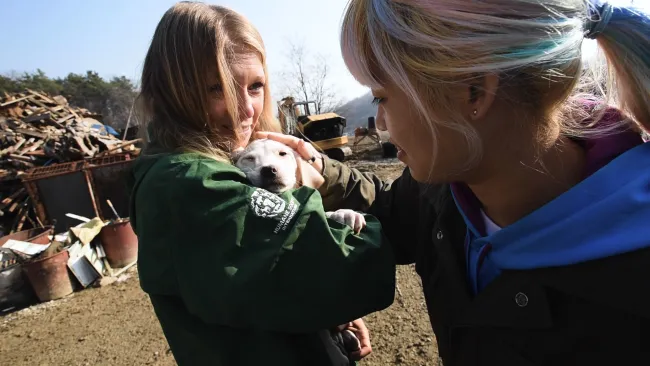
It was during Humane World’s fifth South Korean farm closure that Ko was offered a puppy—the smallest of seven Labradors—to take home with her.
Having never had a dog before, Ko was hesitant about taking on the responsibility of an animal who would grow to be heavier than 60 pounds. But our team reassured her that the most important thing is building a bond with your pet and giving them the love and attention they need.
Ko and her boyfriend agreed to adopt DeeJay, and they watched YouTube videos and a popular Korean TV series about living with dogs to learn and feel comfortable as new dog owners.
“It was one of the best choices I’ve ever made,” says Ko.
Toby Hwang
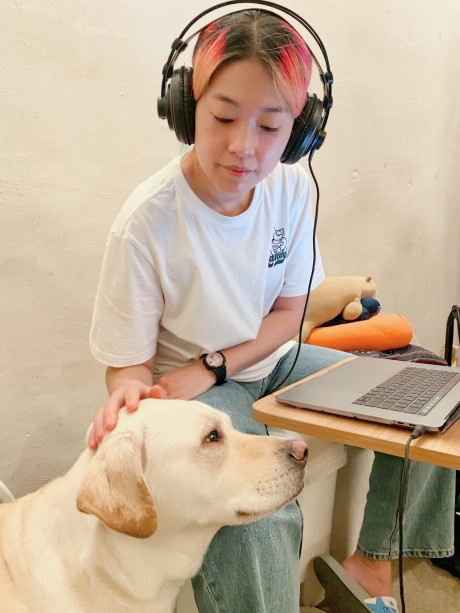
Now DeeJay has his own Instagram and is featured in Love X Stereo’s music videos. He loves meeting new people, going for walks and eating snacks—especially when he’s allowed to occasionally indulge in a few French fries. Ko says he may be 11 years old, but he still looks and acts young.
“We hoped he could be our barometer of whether we make good music or not—hoping he would dance when he likes it—but he has no interest in our music at all,” Ko explains, laughing.
“I love going to sleep with DeeJay, he sleeps at my feet,” she continues. “I thought it would be really hard to keep a dog, but the longer I’ve had DeeJay, I’ve noticed they’re really loyal, very smart and responsive. I feel very blessed and calm with him.”
Leaving misconceptions in the past
When people first meet him, they are usually surprised to learn that Labradors like DeeJay have been raised for food on dog meat farms, Ko explains, because in South Korea, Labradors are known for being very intelligent, often being trained as service dogs and seen as companions. There’s a perception among people in the country that dogs raised for meat are not the same as those kept as pets.
But there’s no difference between a dog who is raised for meat and a dog who is raised as a pet. “Every dog is a dog,” says Ko. “I wish I knew that earlier, and I guess that applies to every animal. Seeing these farms made me think about how we treat all animals.”
In September 2026, our team rescued 71 dogs from one of the last remaining South Korean dog meat farms. They will need time to recover, but once they are ready for adoption, they will be sent to our shelter partners where their journey continues and their search for a loving home begins.
“It’s very natural to be nervous about taking on the responsibility of a dog, and that’s a good sign because you care,” Ko says. “Bringing any dog into your life is a commitment, and if you’re ready for that, there is so much helpful information out there. If I can do it, you can do it!”
FG Trade/Getty Images
Resources to help care for your pets
Find expert tips and trusted resources on pet care, animal behavior, humane wildlife management, and animal advocacy.
Related Stories
Jean Chung/For Humane World for Animals
As the February 2027 ban nears, the South Korean dog meat industry crumbles. Here's what the last days of the industry look like.
Wilis Yudha Baskoro/AP Images for Humane World for Animals
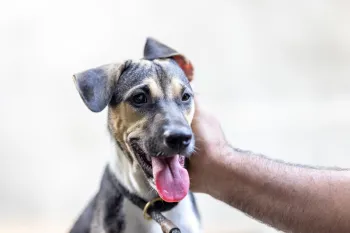
Two Lyras: One a dog in the U.S. and the other rescued from a dog meat farm in Indonesia. Here's what it's like when a rescue story on the other side of the world hits close to home.
Project Moon Bear
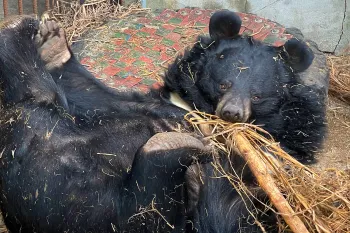
As South Korea ends bear bile farming, bears who once suffered on farms now make their way to sanctuaries. Here's why more help is needed.