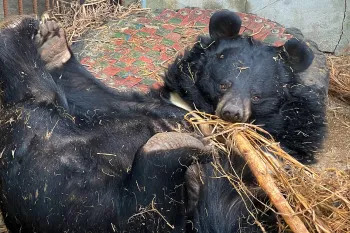
When Toto first arrived in early spring, he paced his enclosure, shaking his head over and over. He was safe now at a South Korean sanctuary run by the organization Project Moon Bear. But after more than a decade in a bear bile farm, it would take him time to adjust.
Bear bile has been used for thousands of years in traditional medicine to treat a wide range of conditions, from fever and inflammation to hangovers. The fluid is sold as a tonic or turned into a powder or pill. Historically, wild bears have been killed for their bile, but around the 1980s a new industry emerged: People began confining bears on farms to repeatedly extract bile from their gallbladders. A synthetic, animal-free alternative has been available for decades, but demand for bear bile has persisted.
As bile farming has grown, so too has momentum to end the industry—only China continues to allow bear bile farming. Viet Nam banned the sale and extraction of bear bile in 2005, although illegal trade remains a problem. This year, South Korea’s 2022 ban came into effect.
A humane alternative
Asiatic black bears naturally produce a lot of ursodeoxycholic acid. In fact, the acid’s name comes from the Latin word for bear: ursus. There has been a synthetic, non-animal alternative available for decades. The medicine is used to dissolve gallstones.
Life on a bile farm
Most farmed bears are Asian black bears like Toto. Also called moon bears, the nickname stems from the crescent-shaped patch of tan across their chests. They’re “raised at low cost to maximize profits, just like any other industrially utilized animal,” says Taegyu Choi with Project Moon Bear, an organization Humane World for Animals has been supporting since 2021.
Project Moonbear
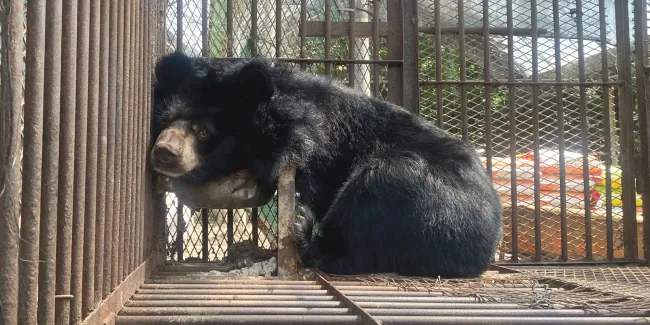
Life for farmed bears is bleak. Animals spend years, even decades, in cages barely larger than they are. Inside dark buildings, some bears rarely see sunlight. Physical and psychological issues are rampant.
Many bears are purposefully starved and dehydrated because farmers believe they produce more bile in this state. Bears also damage their teeth from biting the bars of their cages, and they mutilate their own bodies. Those who share cages sometimes fight each other. Sangkyung Lee, Humane World for Animals campaign manager in South Korea, has seen farmed bears with missing ears and limbs. Without the ability to freely move around, many develop mobility issues such as hind leg paralysis.
The government’s responsibility must not end with legislation alone. The fate of the remaining bears hangs in the balance.”
Sangkyung Lee, Humane World for Animals
In addition to their cruel living conditions, farmed bears often have bile repeatedly drained from their body using needles, catheters and other invasive tools. Prior to the South Korean ban, farmers in the country killed bears before removing their gallbladders to get the liquid.
Project Moon Bear/for Humane World for Animals
A new future for South Korean bears
Bears in South Korea no longer face this fate. But the task of moving all these animals into sanctuaries has proven difficult. There’s not nearly enough space in existing facilities for every rescued bear, says Lee. “The government initially planned to build two sanctuaries to accommodate around 120 bears but…this is clearly inadequate.”
As of press time, one sanctuary has been built and another is in progress. Project Moon Bear runs the only private sanctuary in the country caring for bears rescued from the bile industry.
In June, Lee visited Project Moon Bear to see Toto and a second bear, named Jjille. The two had lived on a bile farm together for more than a decade before they were rescued. Also at the sanctuary were a mother and cub bear who were rescued from a different bile farm in May.
After a few months at the sanctuary, Toto had already come a long way. On a hot day, Lee watched as caregivers gently sprayed him with a hose and he lapped up the water. Caregivers have been using anti-depressants and Toto’s favorite snacks to help him feel more comfortable. His repetitive behaviors are now much less common, Choi says.
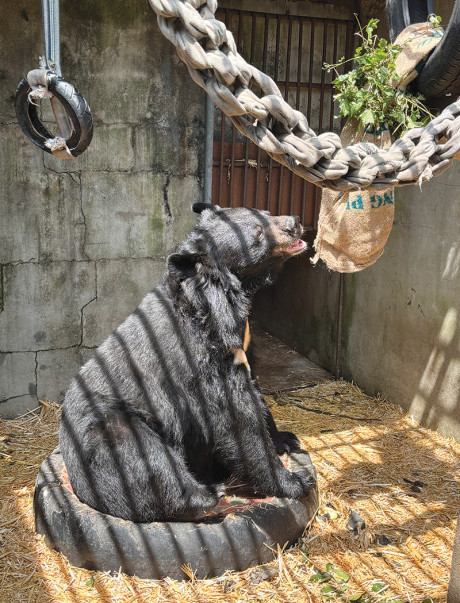
Jjille, on the other hand, quickly adjusted to sanctuary life. She’s known among caregivers as a playful and active bear. During Lee’s visit, she searched for fruit and other foods caregivers had hidden within her enclosure. The enrichment activity encourages the bears to engage in their natural foraging behaviors.
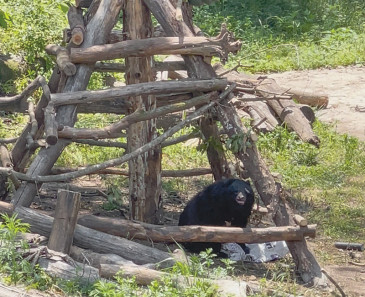
Haewon Lee/Humane World for Animals
Other bears will hopefully soon be making similar journeys from farms to sanctuary. Lee is urging the government to devote more resources to helping nonprofit organizations move the bears as quickly as possible.
“Bringing this cruelty to an end is certainly something to celebrate,” Lee says. “Nonetheless, the government’s responsibility must not end with legislation alone. The fate of the remaining bears hangs in the balance.”
Related Stories
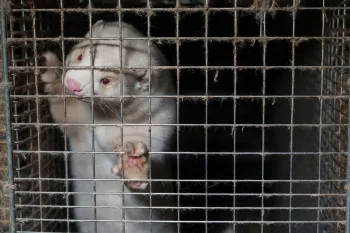
Kristo Muurimaa
Humane World for Animals released the first-ever investigation into Icelandic fur farms in March 2026. All three facilities, and two others, are now closed, reportedly due to financial collapse.
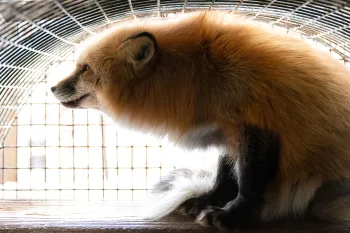
Meredith Lee/Humane World for Animals
Our Animal Rescue Team helps to rescue more than 300 foxes, raccoons, skunks, wolf-dog hybrids, coyotes and opossums from a fur and urine farm in rural Ohio.
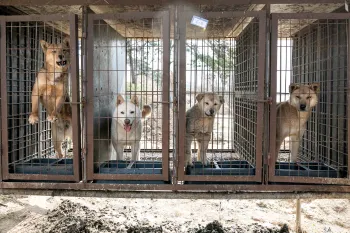
Jean Chung/For Humane World for Animals
Learn how Humane World for Animals rescued 67 dogs from a South Korean dog meat farm, providing urgent vet care and a path to safety after years of cruelty.