MEXICO CITY—Humane World for Animals, formerly called Humane Society International, commends Arcos Dorados for successfully transitioning its shell egg procurement to 100% cage-free sources across its operations in Mexico, fulfilling a 2025 commitment to advance animal welfare. Arcos Dorados is the largest McDonald’s franchisee, operating approximately 2,500 locations across 21 countries in Latin America and the Caribbean.
This milestone marks meaningful progress toward a higher standard of animal welfare for supply chains across Latin America and globally. It demonstrates that large-scale supply chain transitions are not only achievable, but increasingly expected by consumers, companies, and investors alike.
By working closely with suppliers, Arcos Dorados strengthened its sourcing practices to support higher animal welfare standards as part of its broader sustainability commitments. And while this transition applies to shell eggs and does not yet include liquid, powered or other processed egg products commonly used in items such as baked good and mayonnaise, it is part of a broader regional shift.
Arcos Dorados‘s animal welfare commitments are evident in other markets in the region. The company reports that 95% of the fresh eggs served in its Latin American restaurants now come from cage-free systems, reflecting strong regional momentum in key markets including Mexico, Chile, Colombia and Brazil.
This progress aligns with a wider transition across different sectors. Companies such as Kellanova are making progress toward achieving a cage free supply chain, by both increasing cage-free procurement and reducing overall egg use in their portfolios. Kellanova recently reported it has transitioned about 74% of its global egg supply through a combination of egg ingredients reduction and cage-free sourcing, including achieving 100% cage-free egg procurement in Latin America and eliminating eggs entirely from its portfolio in Europe, Asia and Africa, as well.
Together, these developments show that corporations can successfully navigate the complexities and challenges of egg supply chains. For procurement leaders, this progress underscores the importance of long-term supplier engagement, phased implementation and innovation in ingredient sourcing. Moreover, corporate progress from major companies in Latin America shows that continued collaboration with suppliers can help accelerate higher welfare sourcing without losing sight of broader supply realities.
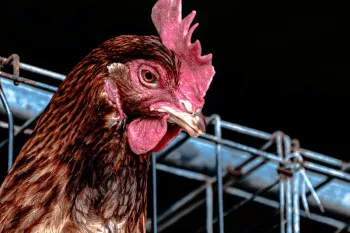
Cage-free systems provide hens with significantly better living conditions than the near-lifetime confinement of battery cages, allowing them to move more freely and engage in natural behaviors such as nesting, perching and dustbathing—activities that are impossible in intensive cage systems. Scientific research shows that chickens are sentient animals capable of learning, forming social bonds and experiencing a range of emotional states. As a result, transitioning to higher welfare systems is increasingly recognized as both an ethical responsibility and a core component of a more sustainable business practice.
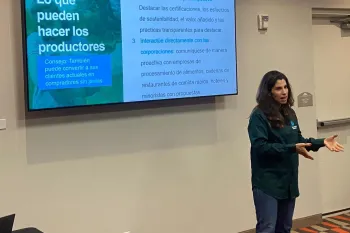
"Companies the size of Arcos Dorados and Kellanova completing this transition in Mexico is a huge milestone,” said Arianna Torres, senior program manager for Humane World for Animals in Mexico. This progress underscores the ability of major companies to drive large scale improvements in sourcing practices, with significant impacts for animal welfare. We congratulate Arcos Dorados and Kellanova for honoring and meeting this commitment, and helping set a clear benchmark for the sector.”
As Arcos Dorados noted on its website, "This milestone reinforces our continued progress in strengthening responsible sourcing practices and advancing animal welfare in our operations. This result reflects the fulfillment of the commitment made in 2016 to supply ourselves exclusively with eggs from cage-free hens in all markets where eggs are part of our menu and the conditions exist for their implementation in Arcos Dorados.”
Humane World for Animals will continue to work with companies, producers and institutions to accelerate the transition to more welfare-friendly production systems in Mexico and around the world.