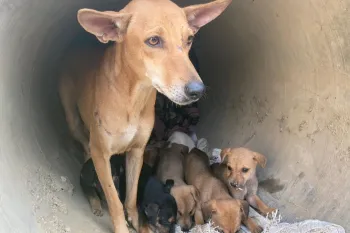
There’s a new development in the controversy facing India’s street dogs.
The story started last year when the Supreme Court of India issued an order to capture all street dogs in Delhi and then extended this nationwide to permanently confine them to shelters, with no return to their home territories.
Because we champion humane, evidence-based approaches to animal welfare, we found the order deeply troubling. It was not only out of step with India’s generally well-advanced animal welfare policies, which safeguard the rights of street dogs, it risks undoing decades of progress in protecting both people and animals in the world’s most populous nation.
After outcry and advocacy, a three-judge bench of the Indian Supreme Court passed an interim order, which included upholding established rules for sterilizing, vaccinating, de-worming street dogs and releasing them back to their original locations. This halted the previous order for the rounding up and permanent sheltering of Delhi’s street dogs and reaffirmed India’s commitment to humane methods of managing street dog populations.
A new ruling, issued by the court on May 19, now supplants the interim order and it’s a mixed bag.
The good news
The court called out the inadequate implementation of Animal Birth Control rules as a major cause for street dog overpopulation in India and demanded that the government take action. States now must urgently invest in needed infrastructure, training and implementation measures to support a largescale program to spay and neuter street dogs as part of managing their populations.
This is a win for dogs and street dog programs like ours, as a push for a national implementation of this proven program is a step toward broader humane coexistence with street dogs, rather than their villainization. If successfully implemented, this approach would be the route toward compassionate, scientific and humane management over the long term, a victory for all.
But that is where the clarity of the ruling ends.
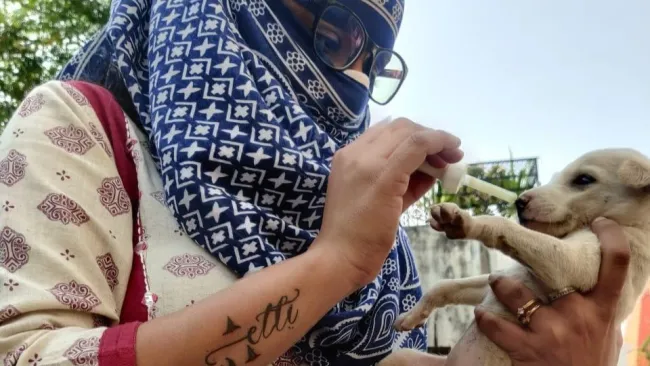
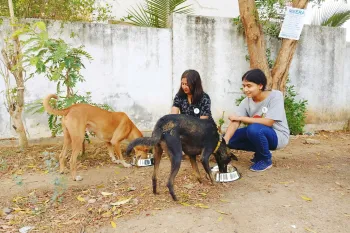
Etti Dhawan/For Humane World for Animals
The dangers
After the Supreme Court issued the initial order to capture all street dogs in Delhi and permanently confine them to shelters, authorities outside Delhi started to replicate this, as well. This dialed back progress that we’ve sought for so long.
And now, India’s path toward rabies eradication and peaceful coexistence between people and street dogs has been thrown into jeopardy by the court’s ruling. That’s because the latest Supreme Court judgement, while upholding the existing legislation—the ABC Rules, 2023—has, with certain prerequisites, opened up the possibility for putting dogs into shelters for life. There are aspects of the judgement that speak of removal of dogs to shelters and the creation or use of existing shelters for their lifetime confinement.
This threatens decades of progress achieved through social sector investment and local governments coming around to the embrace of humane approaches. Time and again, we have seen that removal of street dogs will only lead to cruelty and conflict. And this is a worrying element in the ruling.
The ABC Rules from 2023 say that relocating dogs is illegal. This restriction remains in effect, and in our view the only shelters that should be opened are those for treatment and care of animals subjected to cruelty (as per section 35 of the Act and SPCA Rules 2001).
The path forward
Humane World for Animals India has consistently reiterated and demonstrated that ABC and annual re-vaccinations which engage communities, ensure data transparency and support consistent monitoring are key to disrupting the cycle of suffering and cruelty that haphazard and unscientific management perpetuates.
Moreover, our teams have shown that the approach we’ve forged to meet this challenge worldwide, offers path to a better world for dogs and people. The cities of Lucknow and Dehradun are examples of this model, and our colleagues are ready to replicate this success nationwide.
We have shown the value of this approach in other contexts, too. In 2009, Humane World for Animals India worked with the government of Bhutan, which chose to stay the course with our counsel, transitioning from sheltering in unacceptable circumstances to 100% sterilization and vaccination of street dogs.
In nearly every instance, whether it involves Nepal, Bangladesh, Philippines, Mauritius and so many other nations, India’s example has historically been a powerful and a positive one. But that could now be about to change.
Our focus in the coming years will be on building the capacity of Indian states, municipal corporations and village panchayats to provide quality veterinary care, and to carry out animal welfare-oriented animal birth control services and vaccinations. To succeed, we’re going to need a cadre of compassionate professionals skilled in quality surgery, humane handling, hygienic and effective kennel management, and the use of data to drive further progress.
In a country with an estimated 70 million street dogs and limited resources, we must prioritize humane, scientifically sound mass spay and neuter. The models for success exist and can be replicated. The diversion of funds, resources and capacities into life-long sheltering of animals without any oversight, monitoring or controlled standards opens up the potential for terrible suffering.
Still, there is cause for hope in the countless numbers of people and organizations speaking up to make governments and officials accountable, to question and call out cruelty and to reiterate the message of a compassionate framework for harmonious co-existence in communities with street dogs present. Lucknow and Dehradun, which have promoted mass spay, neuter and vaccination alongside peaceful coexistence with communities, are shining examples of what we see as the norm—not the unscientific removal or cruel sheltering of dogs.
Kitty Block is president and CEO of Humane World for Animals. Follow Kitty Block.
You can experience our incredible work in India first-hand this December on our Humane Journeys trip. For more information, please email HumaneJourneys@humaneworld.org.