Since 2013, our Humane World for Animals India team has been working to change the lives of street dogs. In the past, common approaches by others in dealing with street dog populations have included roundups, relocations, even death. But our dedicated team has been proving on the ground that there are humane ways including sterilization and anti-rabies vaccinations to improve the lives of animals and decrease human-animal conflicts in communities. In Lucknow, a vibrant and rapidly growing city in northern India that is home to 2.8 million people and tens of thousands of dogs, managing animal populations humanely is no small feat, but the impact of our work there is undeniable. Here, Keren Nazareth, senior director of the street dog program for Humane World for Animals India, tells this story.
In North India’s Uttar Pradesh, tucked away from the city of Lucknow’s bustling core, a large yellow building in Jarhara stands out among the grey, newly constructed houses. This is the Animal Birth Control facility provided by the Lucknow Municipal Corporation to Humane World for Animals India. Since 2019, this operations hub has been the heart of a high-volume spay/neuter and vaccination program that has transformed the city’s street dog population.
In December 2025, our team conducted a new dog population estimate survey keyed to the extension of city limits and a request from the government to accurately assess the existing street dog population. The new estimate indicates a total dog population of 66,405 dogs (7.5 dogs per kilometer) in old boundary areas and 19,790 dogs (5.6 dogs per kilometer) in newly added areas. As of December 2025, Lucknow's old areas had nearly 81% sterilization coverage, with approximately 12,724 dogs unsterilized, while new areas had 42.7% coverage, with around 11,336 dogs left to be sterilized. Since 2019, over 100,000 spay, neuter and vaccinations have been completed; the new survey data indicates a significant decline in street dog populations in Lucknow in the span of six years.
Engaging the community
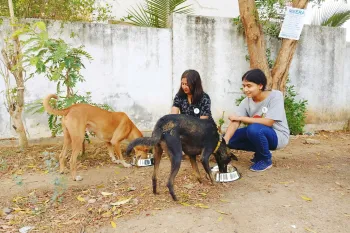
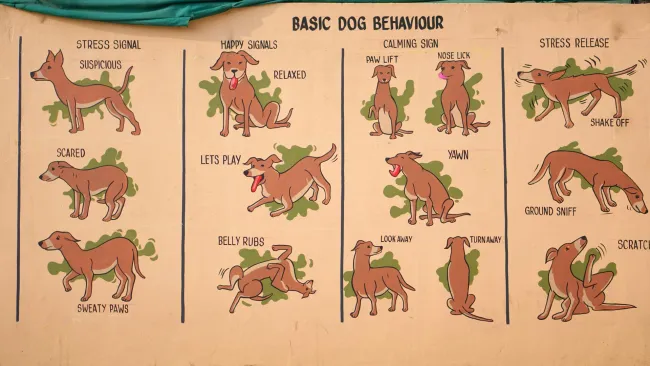
Street dog sterilization isn’t just about the surgeries—it’s about engaging with people, changing perceptions and fostering a sense of community around the care of animals. Humane World for Animals has made community engagement a pillar of its approach, and it’s something our partners on the ground appreciate. To make this clear to all visitors and partners, in collaboration with artists, we have converted the facility into a more welcoming, informative and engaging space with murals about dog behavior, rabies awareness and community participation.
Jerryn/Humane World for Animals
“Sterilization is often misunderstood, but Humane World for Animals doesn’t just perform surgeries—they ensure people understand why it matters,” said Dr. Vishakha Shukla, founder of Nawabi Tails Rescue Foundation, our long-term partner in Lucknow. “Their team goes beyond medical intervention, focusing on educating communities, debunking myths and fostering a culture of responsibility and kindness. Through their volunteer programs, I’ve witnessed children, students and entire neighborhoods learning to care for strays instead of fearing them.”
The program’s collaborative spirit was set early on at a 2019 meeting with local animal welfare groups and activists to define roles and expectations and ensure alignment and cooperation rather than competition. Since then, over 17,000 residents from 475 neighborhoods have participated in workshops, meetings and training sessions. These individuals have played a crucial role by identifying unsterilized dogs, reporting bite cases and suspected rabies cases, and bringing dogs to our facility for treatment. In fact, 20% to 30% of the dogs in the program have been brought in through direct involvement of community members.
And we’re seeing the communities themselves change: In February 2025, members from a neighborhood known as Golf City Ansal mapped their residential complex into zones and collaborated with us to organize a sterilization and vaccination drive on World Spay Day. The drive resulted in 77 dogs being sterilized and vaccinated against rabies. The community even raised funds to provide additional vaccines for treating 64 dogs, with plans to secure more.
A volunteer from the complex, Ghazala Rizvi, said: “We had to bring order where there was once conflict. There was a cycle of endless suffering—puppies dying on the streets, bitter disputes over feeding and failed relocation attempts—all that has now turned into a movement for real, lasting change.”
The numbers
Sterilizing street dogs is no small feat anywhere, and in Lucknow over the past six years, our team faced some unprecedented challenges—including the COVID-19 pandemic and the lockdowns implemented in response.
We laid the foundation of our management program through a 2019 baseline survey that estimated there were 75,000 street dogs in Lucknow. Biannual monitoring surveys and a specially developed mobile application have helped to track progress and ensure that sterilization and vaccination goals remain on course.
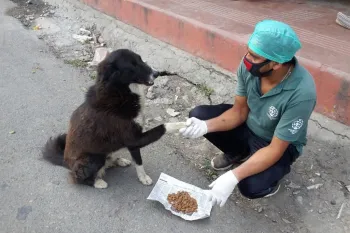
A typical day for our teams begins at 6 a.m., as three animal handlers and a driver head in a van to a designated location. There, each animal care officer approaches unsterilized dogs with characteristic compassion and a gentle demeanor. It is mesmerizing to watch how, with a bit of coaxing and a swift lift into their handlers’ arms, the back of the van quickly fills with 20 or so dogs. They are transported to the Animal Birth Control facility, sterilized, vaccinated, housed for five days (as the law requires) and then returned to the exact locations where they were found.
All this requires trained staff, vehicles, proper holding facilities and funding to keep everything running smoothly. Over the years, running smoothly has required the work of as many as 60 people (at peak), the use of six vehicles and constant communication between senior management and multiple external partners.
This is what it takes to maintain the high welfare standards and protocols for the dogs who come into our care. Each week, we house, feed and provide for the needs of 300 to 400 dogs at the facility.
Lucknow’s success is showing the potential of scaling up humane street dog management in larger cities. “Achieving and maintaining high sterilization and vaccination rates in a city of this size proves that humane and effective street dog management is possible, despite the challenges of an ever-expanding urban landscape,” Dr. Arvind Rao, additional municipal commissioner for the Lucknow Municipal Corporation, recently observed.
Reaching every corner of the city
Managing street dogs in a city as large as Lucknow requires a strong response system. Over the years, we have handled nearly 33,000 public calls regarding street dogs—ranging from nuisance complaints to concerns about aggressive behavior and rabies. Community engagement team members actively listen, respond and visit locations to facilitate difficult conversations, always in the interest of humane solutions.

CE Lucknow/Humane World for Animals
The two major types of dog-related calls to which we respond involve requests for sterilization or relocation. Increased public awareness has boosted the number of sterilization requests. The situation with relocation is more complicated, as relocating street dogs is illegal in India. To raise awareness about this, our community engagement program now includes a “No Relocation” campaign, to help people find humane solutions that do not involve moving the dogs elsewhere.
We also organized training for staff members of the government agency that fields all public grievances, including those related to street dogs. The training focused on helping them understand dog behavior and techniques to respond to community complaints more effectively. A month after the training, relocation requests went down by 30%.
“The training helped us gain effective knowledge about dog behavior and has enabled us to respond to complaints in a more humane manner,” said Subodh Singh, team leader for the agency unit.
A lasting impact for animals
In Lucknow, what began as a small-scale sterilization initiative has evolved into a citywide movement, proving that humane solutions can resolve human-animal conflicts. By the end of 2027, we aim to reach a 90% sterilization rate—bringing the city and its street dog populations one step closer to a compassionate future.
Our team’s unwavering commitment to collaboration, education and humane approaches has changed the future for Lucknow’s street dogs. And that’s something to celebrate.
Keren Nazareth is the senior director of the street dog program for Humane World for Animals India.
This December, a select group of travelers will gain rare, behind-the-scenes access to this groundbreaking work through Humane Journeys India. Email humanejourneys@humaneworld.org to sign-up or learn more.