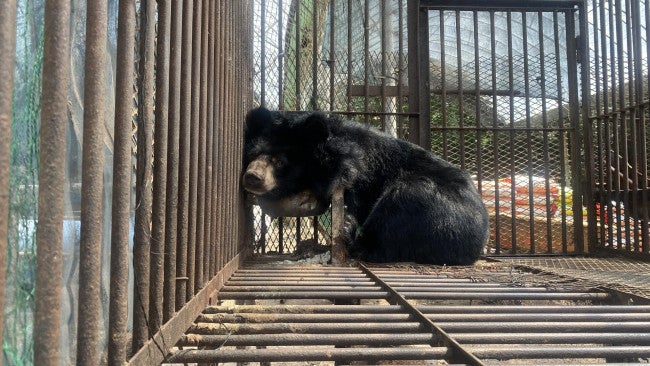
At the end of this week, as we ring in 2026, South Korea will officially end its bear bile industry. Once the ban is fully implemented, the bears will no longer be bred and kept in tiny cages on bear bile farms, where their bile is extracted from their gallbladders through painful and invasive procedures involving open wounds and catheters.
This is the result of years of tireless advocacy for these bears by several local animal welfare organizations. The beginning of the end of this cruelty came when a bill to ban bear bile farming was passed in South Korea a couple of years ago. It will be enacted on Thursday.
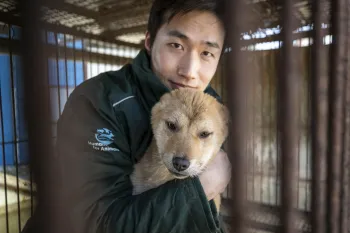
Now is the time to also ensure that the roughly 200 bears remaining in these bear bile farms receive the lifelong sanctuary retirement they deserve. Small sanctuaries with limited capacity do exist, but not enough for all the remaining bears. Sangkyung Lee, our campaign manager at Humane World for Animals Korea who has witnessed firsthand the cruelty of bile farms, is urging the creation of more or larger sanctuaries to accommodate the influx of bears and their prompt transfer to better lives.
Project Moonbear
“For decades, these wild bears have spent their entire lives confined in barren, restrictive cages, deprived of the ability to express essential natural behaviors, enduring prolonged suffering for bile extractions. Bringing this cruelty to an end is certainly something to celebrate,” Lee said. “Nonetheless, the government’s responsibility must not end with legislation alone. The fate of the remaining bears hangs in the balance, so we urge the authorities to take a proactive leadership role in facilitating dialogue between civil society groups and the remaining bear farms to remove the bears from captivity without further delay.”

Project Moon Bear
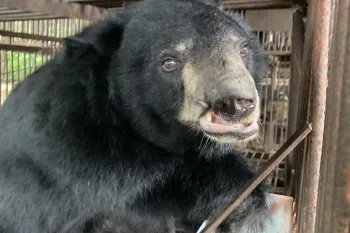
Lee has seen first-hand what these bear bile farms are like. During an investigation, he saw bears confined to tiny cages, where they are typically kept for at least 10 years, and in many cases for more than 20. At one farm, the bears were fed dog food and fried noodle snacks, a diet entirely different from what they would naturally eat. Some bears repeatedly rubbed their heads against the metal bars.
He also observed bears who had missing ears and limbs. “In such conditions, it was difficult to imagine how any animal could remain physically or psychologically intact,” he told me. “They were being raised as commodities.”
For several years now, Humane World for Animals South Korea has been funding and supporting a local organization: Project Moon Bear has stepped in to give bears rescued from bile farming peaceful and safe lives at a sanctuary. Those rescued bears enjoy the freedom of climbing trees, eating fresh fruit, taking baths and exploring their mini sanctuary with loads of interesting enrichment.

Project Moonbear
The end of the bear bile industry in South Korea is exactly the manifestation of the vision we have for animals. When we talk about ending animal cruelty and creating permanent change, it is the eradication of systems that have profited from animal suffering and the creation of systems of care that bring kindness to the survivors of such industries.
I am so proud of the hand we helped to play in creating a more humane world for bears. As we move into the future, I have no doubt that industries that profit from animal cruelty will continue to topple, thanks to the conviction held by so many people that animals deserve better.
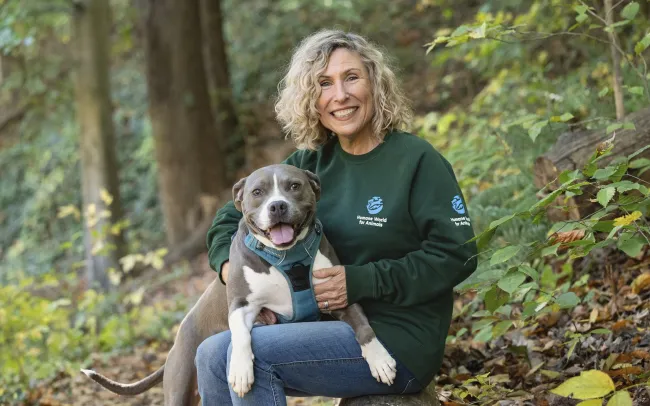
Kitty Block is president and CEO of Humane World for Animals. Follow Kitty Block.