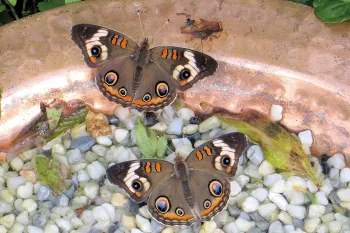
Like all living creatures, bees and other pollinators need fresh, clean water, especially in the summer months, to survive and stay cool. But thanks to droughts, extreme heat and urbanization, reliable sources of water can be hard to find. Insects desperate for a drink may visit birdbaths or swimming pools and inadvertently drown. Although birdbaths with stones or shallow edges can make a great water source, a pollinator bath offers clean water that bees and other insects can reliably and easily access.
Your garden—whether a large yard or pots on an apartment balcony—can offer a respite for these tiny visitors. And making your own pollinator bath is a quick and easy project that can be completed with items from around your home. Here’s how.
Supplies for your bee bath
- Container (saucer, shallow dish or jar lid)
- Rocks, river stones, pebbles or marbles
- (Optional) Sticks, flower petals for color and a plant pot
Instructions
- Add stones, pebbles or marbles to your container of choice (a shallow pet dish works well). Cover the entire bottom and place the largest rocks in the center—these will help prevent insects from drowning. You can also add a couple of sticks to act as a life raft for bugs who fall in.
- Fill the basin with water. You don’t need too much—just enough to keep the tops of most rocks above the waterline.
- Place the filled dish in a shady spot in your garden, close to the native flowers and plants that pollinators frequent. An upside-down plant pot can also act as a stand if you’d like to give the bath more height. Just like a birdbath, consistency is key to getting frequent visitors. Be sure to refill the water often and replace it weekly to prevent mosquito breeding.
And there you have it! In just a few minutes, you’ve created a safe water source for pollinators. If you want to help even more insects, consider making multiple baths by using various containers with different depths and widths and then scattering them high and low throughout your outdoor space. These will draw beneficial insects to your garden, boost the health of your plants and make your backyard a more diverse habitat.
JPecha/iStock.com
Make your backyard a safe place for wildlife
No matter how big or small your outdoor space, you can create a haven for local wildlife. By providing basic needs like water, food and shelter, you can make a difference in your own backyard.
Related stories
Kevin Trimmer/Getty Images
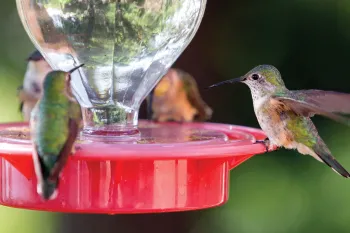
Backyard feeders, baths and houses meant to attract animals can sometimes do more harm than good.
Meredith Lee/Humane World for Animals
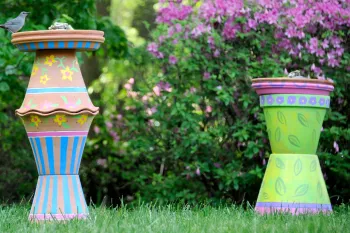
Give backyard birds clean, fresh water with this DIY project made from repurposed flowerpots.

Meredith Lee/Humane World for Animals
Shrink your lawn to balance family fun with a wildlife habitat. You'll be supporting nature and reducing the use and extra expense of water, fossil fuels, and chemicals.