Protein is having a moment. The macronutrient is everywhere: in sodas, cereals, tortilla chips and just about any other grocery item you could imagine. This new trend challenges the idea that people need to eat meat to get protein, but the cost of these products can quickly add up.
Fortunately, one humble pantry staple has been there all along: beans. Affordable, protein-packed, and rich in fiber, beans deliver big nutrition in a simple, versatile package.
Beans have been nourishing us for thousands of years. In fact, they are one of the oldest crops in the world. It’s difficult to discern when and where our love for beans first started, but recent research suggests bean cultivation began in West Asia around 10,000 years ago. Today the legume is commonly used in everything from East Asian cuisine (miso is a paste made from fermented soybeans) to Mediterranean diets and North African dishes (chickpeas, black-eyed peas and fava beans to name a few staples).
This June we launched Beansday to celebrate this underappreciated ingredient and encourage people to embrace more plant-based meals. Every Wednesday, we’re swapping meat for beans. This is one small action—and one delicious meal—that can make a big impact for animals.
Beansday is just one way we’re encouraging small actions that lead to big impact. The challenges animals face around the world can sometimes seem overwhelming, but easy choices we make every day can help drive meaningful change.
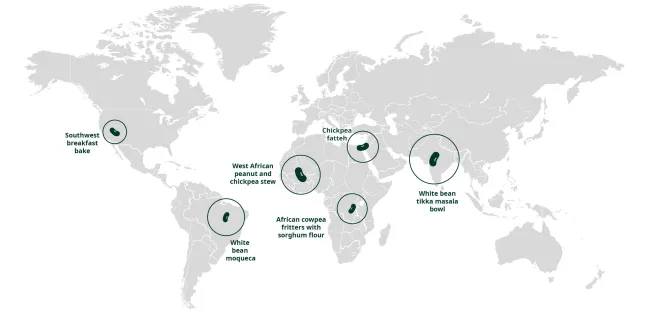
Here are a few bean recipes from around the world to help inspire your plant-based cooking!
Paul Roberts/Humane World for Animals
Big Bean Energy. Make the swap. Spread the word.
Little beans can make a big difference. Every Wednesday, your small step helps spare animals and build a kinder food system. Simply sign the pledge to swap meat for beans on Wednesdays. Each week, you’ll get delicious plant-based recipes from celebrity chefs and the Humane World for Animals team—making it easy (and tasty) to stick with it.
Some heroes wear capes—and some eat beans.
Leah Tamblyn/Humane World for Animals
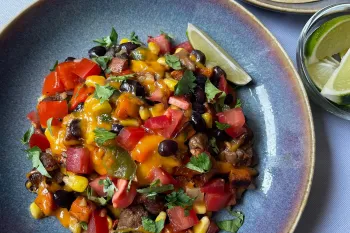
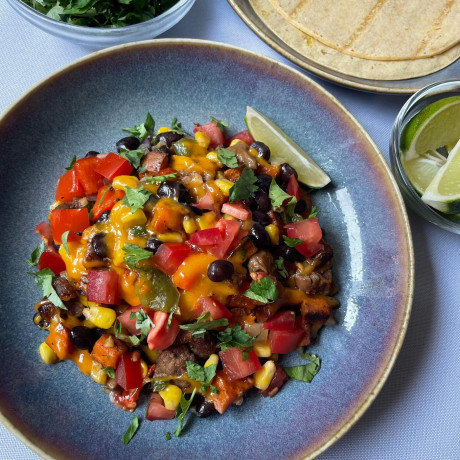
Southwest breakfast bake
Prep time 1 hour | Bake time 30 minutes | Serves 8
5 cups sweet potatoes, trimmed, scrubbed, diced
2 1/3 cup vegetable oil
1 Tbsp chili powder
1 tsp, plus dash of salt, divided
1 tsp, plus dash of black pepper, divided
2 1/3 cup of plant-based sausage crumbles, optional
2 cups yellow onion, diced
1 ½ cups green bell pepper, diced
1 ½ red bell pepper, diced
2 ¼ cups corn kernels
1/3 cup garlic, minced
1 medium jalapeño pepper, seeded and minced
3 cups black beans, canned, unsalted, drained and rinsed
2 cups dairy-free cheddar-style cheese shreds, optional
Optional garnishes:
2 cups Roma tomatoes, fresh, chopped
2/3 cup cilantro or parsley, chopped
1 lime cut into wedges
1 cup avocado, chopped
Hot sauce
Note: Whole, thawed plant-based breakfast sausages can be crumbled or cut into pieces and cooked in place of the packaged sausage crumbles. Black beans can be switched out for pinto beans, red beans or a combination depending on preference.
-
Preheat oven to 425 F (220 C). Line a baking sheet with parchment paper.
-
In a large mixing bowl, toss sweet potato cubes with vegetable oil, chili powder, a teaspoon of salt and teaspoon of pepper. Thoroughly combine everything, then evenly spread sweet potatoes on baking sheet. Roast in the oven for 20 to 25 minutes, flipping at halfway point. Remove from oven when just fork tender. Allow to cool on the baking sheet. Turn oven down to 350 F (177 C).
-
While potatoes cook, preheat a pan with a little oil. Cook plant-based sausage crumbles according to package directions. Place cooked sausage in a dish; set aside. Wipe down pan.
-
Fold in corn, garlic, jalapeños and dash of salt and pepper; cook for 3 to 5 minutes. Add beans and sausage crumbles; heat through for 4 to 5 minutes.
-
Put casserole in a baking dish. Use spatula to gently even out top of casserole.
-
Sprinkle plant-based cheese on top. Bake 12 to 15 minutes, until the cheese has melted.
Per serving 553 cal, 13.54 polyunsaturated fat, 8.18 g sat fat, 26.79 g pro, 41.85 g carb
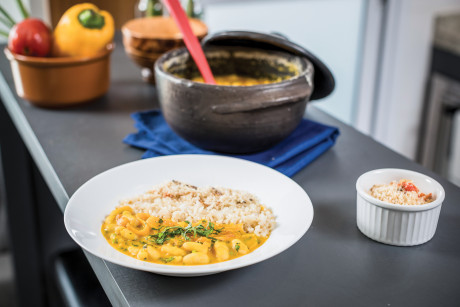
Keiny Andrade/AP Images for HSI
White bean moqueca
Serves 5
2 Tbsp palm oil, sustainably produced
2 Tbsp olive oil
5 cloves of garlic, finely chopped (almost crushed)
1 small onion, sliced
1 small yellow bell pepper, sliced (seeds and ribs removed)
3 cups cooked cannellini beans
1 medium tomato, sliced
1 tsp salt
1 ½ cups full-fat coconut milk
½ cup chopped fresh cilantro
Cooked rice, for serving
Note: Find sustainably produced palm oil at international markets. You also can substitute with additional olive oil, but palm oil gives the dish its signature flavor.
- In a large pot, heat the oils on medium. Add garlic and sauté briefly until golden; add onion and let brown for 5 minutes.
-
Lower heat and add pepper. Mix well; cover and cook 5 minutes until soft and wilted.
-
Add beans, tomato, salt and coconut milk. Mix well and cook covered for 10 minutes.
-
Top with fresh cilantro and serve hot over rice.
Per serving (not including rice) 403 cal, 25 g fat, 12 g protein, 33 g carbs, 479 mg sodium, 3 g sugar
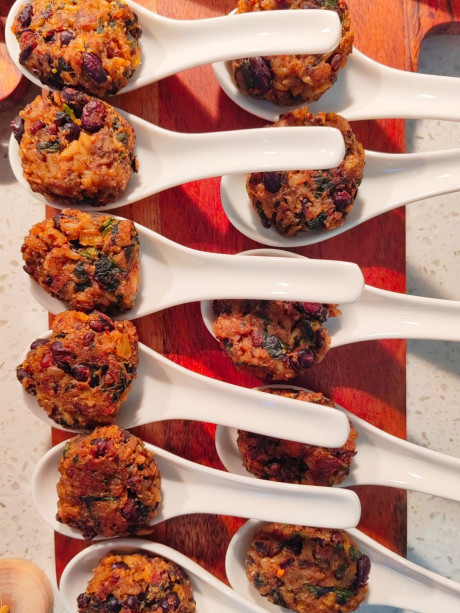
Norah Hudson/Humane World for Animals
African cowpea fritters
Serves 4
2 cups cowpeas (black-eyed peas), soaked overnight
½ cup sorghum flour, adjust as needed for consistency
1 cup corn flour
1 medium onion, roughly chopped
1 to 2 hot peppers (scotch bonnet or habanero), minced (adjust to taste)
2 cloves garlic, minced (optional)
1 tsp salt (or to taste)
½ tsp black pepper (optional)
½ tsp baking soda (helps with fluffiness)
Oil for frying (peanut or vegetable oil is ideal)
Note: Using sorghum flour results in a potentially crispier and naturally gluten-free fritter compared to those made with standard all-purpose flour.
- Prepare the cowpeas: After soaking overnight, drain beans. Rub beans between your hands to remove skins. The skins will float, allowing you to discard. Rinse skinned peas thoroughly.
- Make the batter: In a food processor or blender, combine skinned cowpeas, chopped onion, hot peppers, garlic (if using), salt, black pepper and baking soda. Blend until mixture forms a thick, smooth paste, adding a tablespoon or two of water as needed to achieve a thick batter consistency (similar to a very thick pancake batter or hummus).
- Transfer paste to a mixing bowl and mix in sorghum flour. (Flour helps bind the mixture and provides structure.) Batter should hold shape when scooped.
- Add a bit of corn flour in a bowl. Dip fritter on both sides to get a crispier crust.
- Heat about ½ to 1 inch of oil in a heavy-bottomed skillet or pot over medium-high heat until it shimmers or reaches around 350-360 F (175-182 C).
- Drop spoonfuls of batter into the hot oil. Avoid overcrowding the pan. Fry in batches until golden brown and crispy on both sides, typically 2 to 4 minutes per side.
- Remove cooked fritters with a slotted spoon; drain on paper towels to absorb excess oil. Serve fritters warm with favorite dipping sauce (try chakalaka for even more African flair) or chutney.
Per serving 244 cal, 1.96 g fat, 6.1 g pro, 52.09 carb, 4.41 g sugar, 746 mg sodium
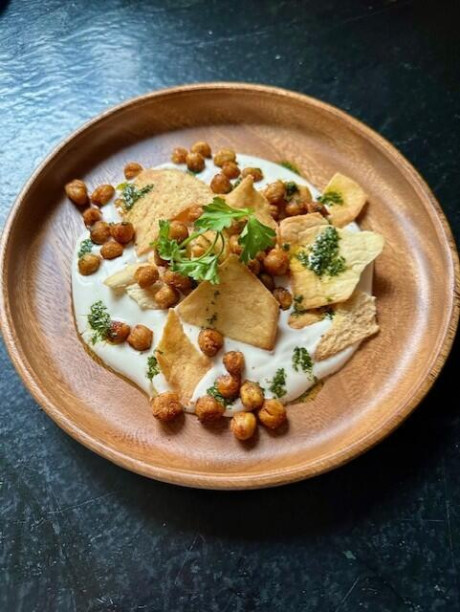
Paige Haringa/Humane World for Animals
Chickpea fatteh
Serves 4
Baked pita chips
2 pieces of pita bread, cut into 1x1 inch squares
2 Tbsp olive oil
1 tsp Italian seasoning
Seasoned chickpeas
1 14-ounce can of garbanzo beans
2 Tbsp olive oil
1 tsp paprika, ground
½ tsp cumin, ground
½ tsp garlic, granulated
½ tsp kosher salt
Yogurt sauce
4 cups plain vegan yogurt
3 Tbsp lemon juice
2 Tbsp sunflower butter, unsalted
1 ½ tsp garlic cloves, minced and dried
1 tsp kosher salt
Optional: dried parsley oil and paprika for topping:
2 Tbsp olive oil
2 tsp dried parsley flakes
2 tsp distilled white vinegar
2 tsp ground paprika
- For baked pita chips: Preheat oven to 350 F (175 C). In a large mixing bowl, toss pita squares, olive oil and Italian seasoning until combined. Transfer pita to a lined baking sheet; bake for 20 minutes, flipping halfway. Remove from oven.
- For seasoned chickpeas: In a mixing bowl, combine chickpeas, olive oil, paprika, cumin, garlic and salt until chickpeas are evenly coated. Transfer to a lined baking sheet; bake for 20 to 25 minutes, flipping halfway.
- For yogurt sauce: In a large mixing bowl, combine vegan yogurt, lemon juice, sunflower butter, garlic and salt; whisk until ingredients are incorporated. Reserve in a cooler until mealtime.
Per serving 453 cal, 11.75 g sat fat, 11.42 g pro, 26.29 carb
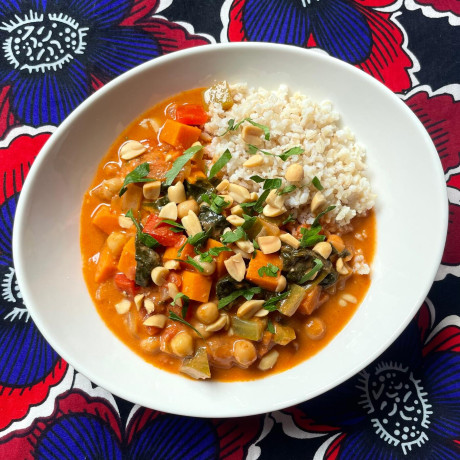
Leah Tamblyn/Humane World for Animals
West African peanut and chickpea stew
This stew can be served with fufu, rice, quinoa or on its own.
Prep time 40 minutes | Cook time 33 minutes | Serves 8
2 tsp olive oil
1 large yellow onion, diced
2 tsp salt, divided
1 garlic clove, minced
1 can of diced tomatoes, with juice
1 large sweet potato, peeled and diced
1 large red bell pepper, diced
1 large green bell pepper, diced
2/3 cups smooth peanut butter
34 oz low-sodium vegetable stock (or water)
1 1/3 tsp chili powder or paprika, divided
1 tsp ground cumin
2/3 tsp black pepper, ground
1/3 tsp cayenne pepper
2 cups chickpeas, cooked (or canned, drained and rinsed)
2 cups baby spinach or kale, chopped
1/3 cup cilantro or parsley, finely chopped
1 1/3 cups roasted peanuts, chopped (optional)
-
In a large pot over medium heat, warm olive oil. Add diced onions and a teaspoon of salt. Sauté for 5-7 minutes until translucent, stirring frequently. Add the garlic and cook for 2 minutes.
-
Mix in diced tomatoes, sweet potatoes, bell peppers and remaining salt. Increase the heat to medium-high, cover and cook for 6 to 7 minutes.
-
While vegetables cook, whisk together the peanut butter and 10 ounces of the vegetable stock in a medium mixing bowl until smooth.
-
When the vegetables have cooked for 6 to 7 minutes, add peanut butter mixture; stir with remaining stock, chili powder (or paprika), cumin, black pepper and cayenne pepper.
-
Cover the pot and reduce heat to medium-low; cook for 10 to 15 minutes until sweet potatoes are tender.
-
Stir in chickpeas and spinach (or kale); reduce heat to low and simmer for additional 5 minutes.
-
Taste and make necessary adjustments with salt and pepper; garnish with cilantro (or parsley) and the roasted peanuts.
Per serving 490 cal, 4.47 g sat fat, 22.15 g pro, 48.72 carb
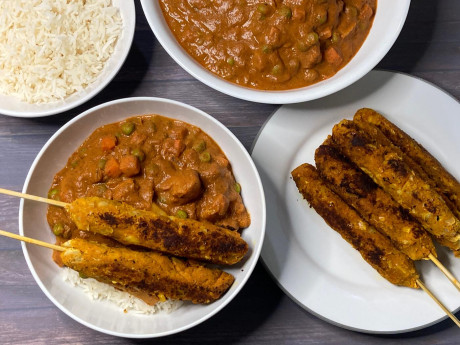
Mary Bonsall/Humane World for Animals
White bean tikka masala bowl
Prep time 35 minutes | Cook time 1 hour| Serves 4
For skewers:
1 cup cannellini beans, canned and rinsed
3 tbsp white onion, diced
¾ tsp garlic, minced
1 ½ tsp plus 2 tsp canola oil
2 ¼ tsp tomato paste
3 tbsp dried breadcrumbs
1/3 tsp salt
1/3 tsp pepper
2 tsp turmeric
1 ½ tsp paprika
1 tsp oregano
For tikka masala:
4 tsp canola oil
½ cup white onion, diced
5 tsp garam masala powder
1 tsp ginger
1 tsp paprika
1 tsp turmeric
5 tsp tomato paste
1 ½ cup crushed tomatoes, canned and undrained
2 1/3 cup cauliflower florets
1 2/3 cup peas and carrots, frozen
1 cup soy milk, unsweetened
4 cups cooked basmati rice
For the skewers:
-
In a food processor, pulse all the ingredients except the 2 tsp canola oil. Stop when the mixture gets combined and flaky but before it becomes a paste.
-
On a parchment-lined sheet pan, form 2-ounce portions of the mixture onto skewers.
-
Cover and place in fridge for at least 30 minutes. Skewers can also be stored in freezer until ready for service.
-
Heat 2 tsp of canola oil in a pan over medium-high heat.
-
Cook skewers 4 minutes on each side or until dark golden brown.
For tikka masala:
-
In a stock pot over medium-high, heat oil and cook onions for 4 minutes, until translucent.
-
Add garam masala, ginger, paprika, turmeric and tomato paste. Mix well and cook for 5 minutes, until thickened.
-
Add canned tomatoes, cauliflower, peas and carrots and soy milk and bring to a boil. Let boil 15-20 minutes, stirring frequently.
-
Serve 1 cup of rice with 1 cup tikka masala and 2 skewers.
Per serving 802 cal, 12 g total fat, 1.5 g sat fat, 34 g pro, 152 g carb, 10 g sugar, 27 g fiber, 970 mg sodium
Michelle Riley/The HSUS
Beansday recipes
From bean burritos to bean salad to beans that go on toast, we’ve got tons of recipes that make a world of difference for your health, your wallet and animals everywhere.
Related stories
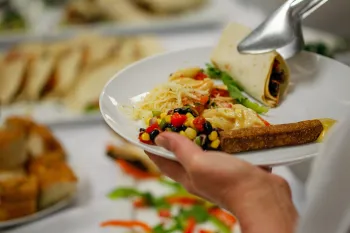
Lance Murphey/AP Images for Humane World for Animals
One simple swap can make a big difference for animals. Every Wednesday, we make delicious, healthy and filling bean-based meals, leaving meat off our plates.
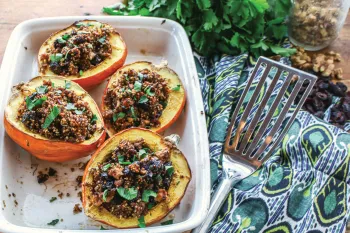
Sharon Palmer
Discover how to meet your protein needs with plant-based foods. Experts and athletes share tips on fueling performance and improving health.
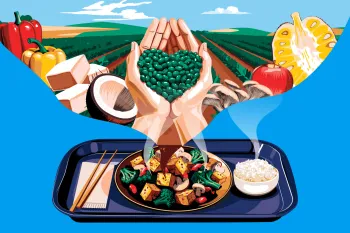
Rachel Stern/Humane World for Animals
We're helping schools, hospitals, and institutions shift from meat and dairy to delicious plant‑based meals, improving health, sustainability and animal welfare worldwide.