
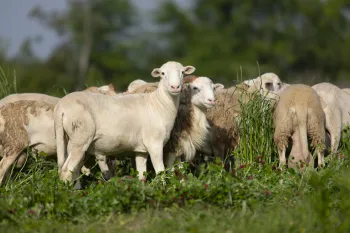
CAPE TOWN – In advance of “Ban Live Exports: International Awareness Day” on 14 June, Humane World for Animals is calling on the South African government to prohibit the export of live animals by sea for slaughter. The long-distance transport trade exposes thousands of animals each year to significant and avoidable suffering and welfare risks.
Once animals leave South Africa’s shores, they are no longer protected by the country’s animal welfare laws. This creates a gap that allows preventable suffering to occur beyond the reach of national oversight. Humane World for Animals urges the government to address this gap and uphold South Africa’s legal obligation to protect animals from unnecessary harm.
"Live export by sea treats sentient animals as commodities, ignoring the significant sufferings they face during these journeys,” says Candice Blom, senior specialist for farmed animal welfare and protection at Humane World for Animals. “Across the African continent, there are rich traditions that recognise animals as part of our communities, our landscapes and our shared existence. Ending this trade is an opportunity to reembrace our shared values of care, dignity and justice.”
The South Africa Veterinary Association has identified a range of serious animal welfare concerns inherent to sea transport. These include constant motion of vessels, which can cause stress and injury; the difficulty of monitoring and caring for vast numbers of animals on board; and the accumulation of waste and ammonia in confined conditions. These risks and stress factors are part of every sea voyage.
There are additional risks, which, while not always present, can have severe consequences when they arise. These include extreme temperatures and humidity, insufficient numbers of qualified personnel to properly care for animals, ship design, hygiene standards and protocols, unequal access to food and water due to stocking densities and social hierarchies, and the potential for starvation.
The ruling in National Society for the Prevention of Cruelty to Animals v Minister of Justice and Constitutional Development and Another(2016), decided in the Constitutional Court of South Africa, affirmed that animal welfare is closely connected to South Africa’s constitutional values and concern for environmental protection.
Humane World for Animals is calling on the Minister of Agriculture, John Steenhuisen, to take decisive action under the Animals Protection Act, 1962 (Act 71 of 1962) by:
- Introducing an immediate ban on the export of live animals by sea for slaughter or any other purpose.
- Strengthening oversight and transparency within the farmed animal industry.
- Ensuring that animal welfare is prioritised in all agricultural trade policy decisions.
#