
Prairie dogs are one of the most controversial and widely misunderstood wildlife species in North America. Since early European migration onto the North American grasslands, prairie dogs have been celebrated as an essential keystone species for healthy grasslands ecosystems, but they've also been vilified and, in some locations, managed as destructive rodent pests.
Human-caused changes to the grasslands stemming from crop agriculture, livestock grazing, energy development, residential and commercial development, prairie dog shooting, poisoning campaigns and plague (an introduced disease) have caused the five species of prairie dogs to disappear from an estimated 87%-99% of their historic (1800s) range, depending on the species.
Though prairie dog habitat has decreased tremendously and their numbers have dwindled dramatically, people are still trying to wipe out these highly social creatures. For some, prairie dogs can present challenges as their burrow mounds and colonies use the same space as crops and can make grasslands difficult to navigate for livestock. Because prairie dogs also eat grass, ranchers and farmers view them as a threat to their livelihoods. Common methods used to remove prairie dog colonies include shooting, poisoning, contest kills and even bulldozing when they face a developer’s path in urban areas.
Organized shoots on public lands kill large numbers of prairie dogs in a single day and negatively affect the social structure and health of the colony for years to come. Over 150 wildlife species, including hawks, eagles, songbirds, foxes and even nematodes, are associated with prairie dog colonies. Prairie dogs are like the canary in the coal mine—what happens to them is happening to other animals on the prairie.
Conflict reduction plans and coexistence offer a more wildlife-friendly and humane solution to issues that arise for both wildlife and people.
A group of grassland experts recently updated the species found in the State Wildlife Action Plan/Species of Greatest Conservation Need list of species benefitting from prairie dog and black-footed ferret conservation. We used past efforts and the most recent updates to the State Wildlife Action Plans to create a table of Species of Greatest Conservation Need to look at the overlap of species within the grassland ecosystem. The importance of this list is to demonstrate the ecosystem engineering component the prairie dog fills in the grassland ecosystem and the significant role they fulfill in grassland conservation.
62 Species of Greatest Conservation Need (SGCN) found to benefit from prairie dog and black-footed ferret conservation efforts are the categories that were searched in the state SWAPs. We also searched for more than 200 additional species and classified them as minimal, contradictory (ambiguous data from studies) or negative associations (unambiguous studies saying no relationship); no data and gray area category were also included.
Kathy Milani/Humane World for Animals
Practical Solutions for Prairie Dog Conservation
Case Studies for Coexistence shares real-world successes, challenges, and proven strategies for managing prairie dog habitats on multiple-use lands. Learn how to prevent conflict and create healthy lands for both people and prairie dogs.
Creating prairie dog management plans: A guidebook for local governments and stakeholders
- Part 1: Background and context [PDF]
- Part 2: The management plan [PDF]
- Part 3: Appendices and attachments [PDF]
Building understanding and tolerance
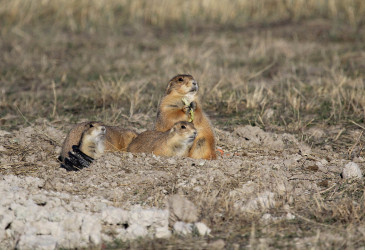
Noelle Guernsey/Humane World for Animals
Sometimes the damage that animals do is much less than believed, and sometimes what some see as "damage" is actually a benefit that goes unappreciated.
Recent studies on the overall ecological benefits of prairie dogs suggest that their critical role in encouraging biological diversity has been overlooked. For example, many folks don’t like the look of dirt patches on prairie dog colonies, but those dirt patches are the perfect camouflage place for the mountain plover (a songbird in decline) to build a nest and lay their eggs.
Additionally, it's hard for some folks to give up a grassy looking turf. Prairie dogs' clipping and digging activities create more small shrubs and forb plants and sometimes less grass. This creates more biodiverse and healthy habitat even though it may not look the way some people want it to.
Many grazing animals, including domestic cattle, prefer to graze within prairie dog towns. Interestingly, prairie dogs prefer to build their colonies in areas that have been overgrazed since the low vegetation allows a clear view of potential predators.
Modify the habitat
You can change landscaping to increase or decrease cover or available food or to encourage predators. Before making major landscaping changes, determine what species of prairie dog is on your property and do a little research on its preferred habitat. Black-tailed prairie dogs, for instance, actively clear vegetation so they can see predators from a distance. If you create a visual barrier along the edge of a colony, thereby blocking the line of sight, you can effectively limit the spread of the colony or even force an existing colony to relocate.
Barriers
Creating visual and physical barriers can be very effective. It may not be 100%, but it’s a tool we can certainly work with. Barriers and buffer zones can be made of many materials:
- Vinyl barrier fencing
- Snow fencing
- Wood-slatted privacy fencing
- Hay bales
- Tall sturdy plants
- Fast-growing tall grasses
- Shrubs
- Trees
- Electric fencing to keep livestock out of 90’-wide zones
Establishing vegetative barriers and buffers may mean new plantings or simply allowing existing plant life in grassy areas to become taller and denser by mowing and clipping less often. Because black-tailed prairie dogs will actually clip plants that are taller than their preferred height, you may want to begin with vinyl barrier fencing or hay bales with tall plants planted behind them. The hay bale will break down over a few years, but by then, the tall plants will be established and difficult for prairie dogs to clip down.
Tolerate predators
Once you understand the role native predators can play in helping to reduce prairie dog colony size, you may want to tolerate their presence in order to set up a natural balance that will reduce your problems.
To attract raptors—such as hawks, owls and kestrels—you can provide suitable-sized nesting boxes and artificial perching sites near the colony.
Prairie dogs and plague
Prairie dogs can carry fleas with a bacterium known as yersinia pestis: Yersinia is the bacteria that causes sylvatic plague in an animal, including prairie dogs. Research has shown that "dusting" colonies with insecticides such as deltamethrin (delta dust) or pyraperm not only kills fleas but may also stop the outbreak of this exotic disease in colonies that have already been infected.
Additional resources
- Prairie dog barriers: An overview [PDF]
- Reverse dispersal translocation [PDF]
- Prairie dog action pack [PDF]
- Prairie dogs, people and plague: A report collated by the Prairie Dog Coalition, HSUS and the Colorado CDC [PDF]
- USGS: Sylvatic plague vaccine and management of prairie dogs [PDF]
- USGS: Ecology of plague
- CDC: Protect yourself from plague [PDF]
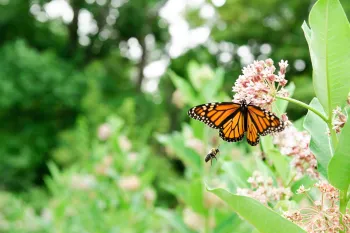
Meredith Lee/Humane World for Animals
Learn how to support beneficial insects that pollinate plants in gardens, feed birds, help decompose organic matter, or eat parasites or other pests.
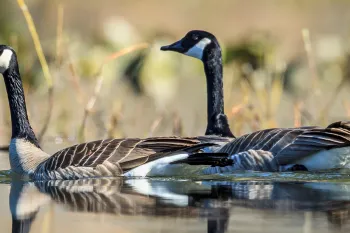
gjohnstonphoto/iStock.com
Killing geese is inhumane, ineffective and unnecessary. Learn better ways to keep flocks off your property or facility.
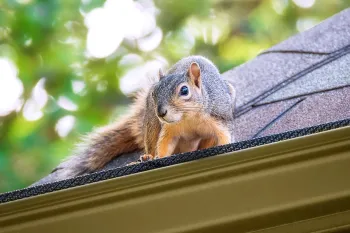
leekris/iStock.com
This season, combine gutter cleaning with inspections of your roof, attic, chimney and siding to keep wildlife from moving into your house.