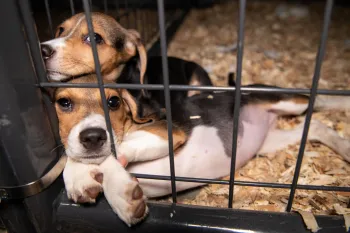
TORONTO— Ontario has banned invasive medical research on dogs and cats under Schedule I of Bill 75, the Keeping Criminals Behind Bars Act, 2026, following sustained advocacy from animal protection organizations, including Humane World for Animals, formerly called Humane Society International. This historic legislation, which passed third reading without amendments late last week, was introduced in response to a whistleblower exposé concerning a secret dog lab in St. Joseph’s Hospital in London, Ontario. There, dogs and puppies were being subjected to invasive and lethal cardiac experiments.
Violations of the Act carry significant penalties, including fines of up to $260,000 and potential jail time for individuals, and up to $1 million in fines in the case of corporations.
“We are thrilled to see Ontario move forward with this landmark legislation, which is a major step towards ending the use and breeding of dogs and cats in research. By recognizing that dogs and cats deserve protection from invasive experimentation, the government is setting an important precedent for animal welfare in Canada. We welcome this progress and clear commitment to strengthening protections for animals in research. As the regulatory process advances, we look forward to working closely with the Ontario government to ensure the full spirit and intent of this legislation are meaningfully implemented,” says Shaarika Sarasija, Ph.D., program director, research and regulatory science at Humane World for Animals.
As the Ontario Ministry of Agriculture, Food and Agribusiness (OMAFA) advances its proposed regulatory changes under the Animals for Research Act, there is a critical opportunity to further strengthen protections for dogs and cats in research. Bill 75 does permit invasive medical research to be conducted for veterinary purposes. This underscores the need for strong regulatory clarity to prevent unintended misuse of the exemption clauses.
Humane World for Animals is also advocating for an end to the practice of pound seizure, under which municipal shelters must transfer unclaimed animals to research facilities, upon request, after just three days—a practice unique to Ontario. According to the Canadian Council on Animal Care, in 2024, 72% of dogs and 97% of cats used in Canadian research facilities were “random‑source”, meaning they were obtained from shelters or surrendered by owners. Addressing this practice is essential to protecting animal welfare, maintaining public trust, and improving scientific rigor.
Humane World for Animals will also work with the Ontario government to ensure greater transparency and accountability, including making animal use data publicly available, strengthening reporting on animal outcomes, and requiring rehabilitation and adoption plans for dogs and cats used in research as a standard component of study protocols reviewed by Animal Care Committees.
#