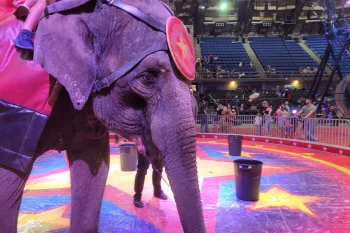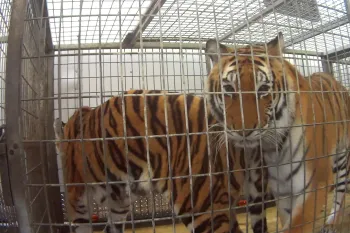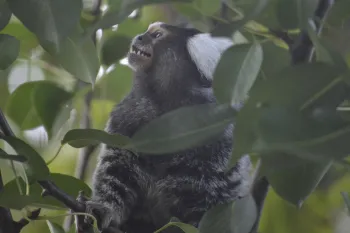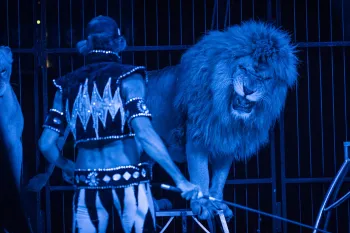
NEW YORK—Today the New York State Senate passed S.3629-A/A.5850, which prohibits the use of certain animals in traveling animal acts. This includes the use of wild cats, non-human primates, bears and other wild animals in circuses, fairs and other performances. Sponsored by Senator Nathalia Fernandez (D-34), the bill passed by a bipartisan vote of 54 to 8 as part of the Senate’s Animal Welfare Package this week. On April 28, A.5850 sponsored by Assemblymember Deborah Glick (D-66), passed by a vote of 100-38. The bill now heads to Gov. Kathy Hochul’s desk for signing.
This legislation builds on New York’s leadership in protecting wild animals following measures such as the 2017 Elephant Protection Act, which prohibited the use of elephants in entertainment acts, and the 2014 prohibition on direct public contact with big cats sponsored by Assemblymember Linda B. Rosenthal (D-67).
“This bill protects people and wild animals from outdated traveling acts that serve no purpose and endanger public safety,” said Brian Shapiro, New York state director for Humane World for Animals, formerly called the Humane Society of the United States. “These inhumane acts use wild animals as props and force them to perform silly tricks that put families, first responders and communities in danger. The New York State Legislature has a proven record of protecting captive wild animals and the public, and we ask Gov. Hochul to please sign this bill into law.”
Wild animals forced to perform in these acts have a documented history of escapes and injuries in communities across the state. In recent years at least a dozen traveling exhibitors using wild animals addressed by this legislation have toured across New York, many with known violations of the federal Animal Welfare Act including inadequate veterinary care, improper housing, unsafe handling practices and alarming public safety incidents.
- In 2025, Ryan Easley, an exhibitor who toured with a circus that made over a dozen appearances across New York state, was mauled and killed by his own tiger in Oklahoma. A 2017 undercover investigation by Humane World for Animals exposed the violent training methods of Easly, a controversial big cat handler, in which a tiger was whipped 31 times in less than two minutes for refusing to get off a pedestal.
- In 2024, Wild World of Animals, a traveling show which featured big cats and primates, returned to New York after the NYS Department of Environmental Conservation prohibited the operator from applying for a permit until 2023. This enforcement action came after the exhibitor refused to comply with Department of Environmental Conservation mandates following a 2018 citation and fine for numerous violations of state law, including allowing public contact with tiger cubs and a lion at a Long Island residence.
- In 2017, a performing grizzly bear clawed a handler’s face at the Saratoga County Fair, the same site where in 2006 a tiger clawed a 4-year-old boy’s head, requiring stitches.
- Banana Derby, a Florida-based traveling show that has visited New York with capuchin monkeys dressed as jockeys and forced to ride on the backs of racing dogs, has been cited by the U.S. Department of Agriculture for keeping monkeys, a highly social species, in solitary confinement and failing to provide adequate space for both primates and dogs.
- In 2004, a 450-pound tiger escaped Cole Bros. Circus performing in Queens and ran onto the Jackie Robinson Parkway, causing a multi-car pileup and injuries.
This legislation has significant bipartisan public support according to a December 2025 poll that showed nearly 80% of New York voters support prohibiting traveling wild animal shows.
The bill earned strong backing from law enforcement agencies statewide, including county sheriff’s offices and leading SPCA law enforcement divisions, reflecting broad recognition that wild animal acts are incompatible with public safety.
By population, more than half of New York already has local laws in place prohibiting wild animal acts including in New York City, and Suffolk and Westchester counties. This legislation extends protections for wild animals in some of the worst acts statewide.