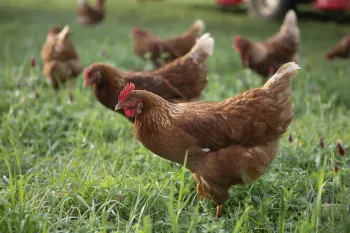
KUALA LUMPUR (July 20, 2026)—A newly released Nielsen survey of 700 household egg purchasers across Malaysia has found that Malaysians care about how farmed animals are treated. The responses suggest that while consumers are increasingly interested in eggs from cage-free systems, confusing packaging and labeling practices make it difficult for shoppers to make informed purchasing decisions.
The survey found that only 16% of respondents correctly understood that eggs marked as “farm fresh” primarily come from hens confined for a near lifetime in cages. The results indicate that many consumers may assume such labels reflect higher animal welfare, when, in many cases, they do not. Instead, they are unknowingly buying eggs from inhumane cage systems they may want to avoid.
Nine out of ten participants (90%) agreed that “Animals on farms deserve humane and ethical treatment” and nearly as many agreed that “There is a need to improve the welfare of animals on farms in Malaysia”.
Consumers also associate animal welfare with sustainable food production. Nearly all participants (99%) considered animal welfare practices (such as cage-free housing and more humane treatment of hens) to be an important part of sustainability.
The findings present an opportunity for Malaysia’s egg industry, retailers and policymakers to better align production systems and labeling practices with consumer expectations.
Across Malaysia and throughout Asia, most eggs come from hens confined in battery cages—small, wire enclosures that severely restrict movement and prevent the natural behavior that hens are intrinsically motivated to perform, including perching, nesting, exploring and foraging. Hens are naturally active, social animals and yet in these small cages, they are deprived of the most basic ability to freely spread their wings. As awareness of these conditions grow, consumers are increasingly considering animal welfare as part of their purchasing decisions.
The Nielsen study found that 57% of consumers were willing to pay more for cage-free eggs. When provided with more information about the difference between cage and cage-free production systems, their willingness to pay more increased to 62%. Younger consumers and lower income households showed some of the greatest changes in purchasing intention after learning more about how hens are treated.
“This opinion survey shows that Malaysians want to make more humane choices” said Dr Saravankumar, senior principal for farm animal welfare at Humane World for Animals. “Cage confinement is inconsistent with consumer expectations. However, forward-minded egg producers are already making a change. In 2024, Malaysia welcomed its first cage-free aviary system and since then we have witnessed continued expansion of cage-free production on multiple farms. To drive progress, consumers can look for the cage-free label, policy makers can incentivize cage-free production and egg producers can continue to free their hens from cage confinement.”
The survey, commissioned by Humane World for Animals and spanning the country, encompassing North, South, East, East Coast and Central Malaysia, included household decision makers aged 21-55 years of age.
The results of the study will be released at the Global Animal Production & Veterinary Industry Summit to be held from 21-23 July in Putrajaya.
The full study can be accessed here.
#