WASHINGTON—Animal protection groups today filed a lawsuit against the U.S. Department of Agriculture’s Animal and Plant Health Inspection Service for unlawfully exempting an untold number of birds from protection under the federal Animal Welfare Act. Plaintiffs Humane World for Animals (formerly called the Humane Society of the United States), American Anti-Vivisection Society and Avian Welfare Coalition argue that APHIS is again defying congressional intent and putting birds in harm’s way.
The lawsuit challenges an exemption in a federal rule that sets minimum care standards for birds covered by the Animal Welfare Act, including those sold as companion animals or used in exhibitions.
In 2002, Congress amended the Animal Welfare Act so that it would unambiguously apply to birds not bred for use in research. For over 20 years, however, the federal government refused to protect birds and failed to issue the necessary regulations to fulfill Congress’s mandate that birds used across animal industries benefit from the AWA’s protections. It was only after animal welfare groups successfully sued the agency that APHIS ultimately issued a final rule in 2023 requiring bird breeders to be licensed and to comply with minimum care standards. Those same animal welfare groups—AAVS and AWC—now join Humane World for Animals as co-plaintiffs in this lawsuit.
That rule, however, contains a significant carve-out: breeders who sell 200 or fewer “small” birds per year are exempt from these standards entirely. The organizations’ lawsuit argues that such an overbroad “de minimis” exemption is unlawful and that APHIS lacked any sound basis to include it in its rule.
“While no birds should ever be bred to suffer in the companion animal trade or exhibition, the government agency responsible for protecting birds under the Animal Welfare Act is simply not doing its job,” said Kate Hendrix, staff attorney for Humane World Animals. “The law requires that APHIS ensure the humane treatment of all birds, regardless of how many sales a breeder makes per year. But as long as APHIS continues to shirk its duties, birds who are owed AWA protection will remain invisible and unprotected—kept in facilities that can subject them to inhumane, cramped and dangerous housing or provide them with inadequate nutrition, veterinary care or enrichment with impunity.”
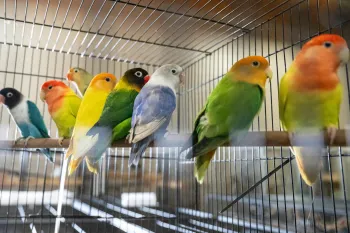
Often incorrectly labeled as “easy” companion animals, small birds have unique social and behavioral needs, require specialized diets and housing, and can live for over 20 years. The minimum standards set under the AWA are basic and include fresh water, unspoiled food and safe housing. These requirements should be enforced for every bird covered by the law.
“For decades, we and our co-plaintiffs have fought to ensure that birds have basic protections under the Animal Welfare Act,” said Luke Klein, president of the American Anti-Vivisection Society. “Yet the USDA has too often deferred to the very industries it is supposed to regulate, even as its own Inspector General has repeatedly criticized the agency’s enforcement of the Animal Welfare Act. After years of delay, the USDA finally issued basic care standards for birds not bred for research—only to create a sweeping loophole that leaves an untold number of birds and breeders outside federal oversight and keeps critical information out of public view. We hope this lawsuit not only helps birds but also makes clear that the USDA must put animal welfare ahead of business interests.”
“The ethical concerns surrounding the commercial breeding and sale of birds are significant, with serious lifelong welfare implications. After years of work to secure basic protections under the Animal Welfare Act, the USDA’s decision to create what amounts to ‘protection by the pound’ was a stunning step backward,” said Denise Kelly, president of the Avian Welfare Coalition. “Basing standards of care on an animal’s size or economic value is fundamentally flawed. By that logic, a Chihuahua would receive fewer protections than a Golden Retriever. That’s not how humane policy should work—and it’s not what the public expects.”
Today’s lawsuit, filed in federal court in the District of Columbia, seeks to have the “de minimis” exemption held unlawful and set aside, while ensuring that the remainder of the rule (setting minimum standards for the care of birds covered by the AWA) remains in effect. Plaintiff organizations are represented by attorneys from the Animal Protection Law department of Humane World for Animals and Bruce Wagman of Riley Safer Holmes & Cancila.