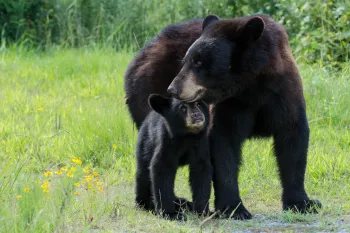
Election night results show Colorado voters rejecting Amendment 83, which would have enshrined the “right to hunt” into the state’s constitution. Amendment 83’s vague and troubling language, including the allowance of undefined “traditional methods” to kill wildlife, could potentially have led to the overturning of the state’s bans on cruel and widely despised practices such as luring bears with piles of smelly bait for an easy shot, chasing down bears with packs of trailing hounds, or catching and killing wildlife with steel-jawed leghold and body-crushing traps and snares.
Amendment 83 was intentionally designed to severely restrict Coloradans' longstanding ability to shape wildlife policy through the democratic ballot initiative process, and to limit the authority of the legislature and Colorado Parks and Wildlife Commission to enact future protections for wildlife. By cementing in the Constitution that hunting would be the “preferred means” of managing wildlife in Colorado, it would have also prevented local jurisdictions from passing ordinances or adopting policies that could protect wildlife or focus on non-lethal methods of conflict mitigation and prevention.
The early results also show Denver voters are likely to pass a ban on the production and sale of foie gras. The cruelty involved in producing this “delicacy” is anything but appetizing. To make foie gras, workers force tubes down the throats of ducks and geese, force-feeding them until their livers become painfully enlarged and diseased, swelling up to 10 times the organ’s natural size.
Aubyn Royall, Colorado state director for Humane World for Animals (formerly called the Humane Society of the United States), issued the following statement:
“Between Amendment 83’s likely defeat and the likely passage of Denver’s foie gras ban, animals are winning in Colorado. Amendment 83 posed a serious threat to Coloradans’ ability to shape wildlife policy, and votes reported so far clearly show that they recognized what was at stake. Colorado’s wildlife belongs to all of us—not just those who want to kill it—and we all deserve a say in how these animals are treated. We’re grateful to the advocates, volunteers and organizations who worked tirelessly to defeat this dangerous proposal and we will continue our fight to protect Colorado’s treasured wildlife.”
Amendment 83 was funded primarily by out-of-state special interests, like the pro-trophy hunting group Safari Club International, the Congressional Sportsmen’s Foundation and the International Order of T. Roosevelt. These groups attempted in vain to pass similar amendments in as many as nine states across the country in the past two years, as part of a national agenda to lock out certain voices on wildlife management and force states to prioritize hunting and trapping over other outdoor activities and wildlife protections.
By allowing only laws deemed "necessary" for undefined purposes such as "sound scientific wildlife conservation and management" or preserving hunting opportunities, Amendment 83 would have certainly led to years of costly litigation at the taxpayers’ expense.