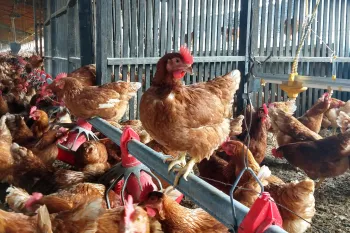
BANGKOK—Chatrium Hospitality Thailand now uses 100% eggs from cage-free hens across over 10 properties in Thailand. Chatrium Hospitality has implemented cage-free egg sourcing across its Thailand properties, working closely with suppliers to align procurement practices and integrate the new standard across current and future operations.
Cage-free systems spare hens from the near-lifetime of intensive cage confinement, allowing them to move more freely and engage in natural behaviors such as nesting, perching, and dustbathing. By transitioning to 100% cage-free eggs, Chatrium demonstrates how hospitality companies, and in fact, any companies, can strengthen responsible sourcing practices while driving meaningful animal welfare progress and outcomes.
“Reaching this 100% milestone sets a baseline for our standard operations one that respects the environment, supports humane farming, and elevates your dining experience. When you stay with us, you can enjoy your favorite dishes with total peace of mind. Knowing every detail has been thoughtfully crafted to support a kinder, more sustainable world,” says Kanokwan Chamchoy, sustainability director at Chatrium Hospitality.
“We congratulate Chatrium Hospitality Thailand on completing the implementation of its transition to sourcing 100% eggs from cage-free hens. This is a commendable milestone, and we look forward to continuing our collaboration to help ensure long-term success and consistency across its operations for the long term,” says Lalada Tangjerdjaras, country program manager in Thailand at Humane World for Animals.
Humane World for Animals works globally to persuade corporations, financial institutions, food service companies, governments and farmers to eliminate the worst practices of industrial animal agriculture that subject the greatest number of animals to the longest duration of suffering, including intensive confinement. Humane World for Animals has farmed animal welfare teams in Australia, Brazil, Canada, Chile, the European Union, India, Malaysia, Mexico, South Africa, Thailand, the United Kingdom, the United States and Viet Nam. The organization also promotes a shift toward a more plant-forward, climate-friendly global food system by providing culinary resources and training to institutions serving millions of meals daily and advocating for policy change at national and international levels.
#